
SWAYAM Plus Platform
- Ministry of Education (MoE) launched SWAYAM Plus Platform.
- SWAYAM is a Massive Open Online Course platform for learners.
About SWAYAM plus platform:
- SWAYAM Plus now includes courses supporting industry needs for employability.
- Features multilingual content, AI-enabled guidance, credit recognition, pathways to employment.
- IIT Madras is the nodal agency for implementation.
- Funded by MoE, Department of Higher Education.
Amrit Bharat Station Scheme (AMBS)
- Prime Minister laid foundation stone for redevelopment of 554 Railway stations under AMBS.
About Amrit Bharat Station Scheme:
- Launched under Ministry of Railways to enhance and modernize railway stations.
- Stations will have modern passenger amenities like roof plaza, intermodal connectivity, kids play area, kiosks.
- Design inspired by local culture, heritage, and architecture.
- Emphasizes integration with surrounding city areas, facilities for individuals with disabilities, eco-friendly solutions.
Women Exporters in the Digital Economy (WEIDE) Fund
- The WTO and International Trade Center (ITC) have launched a $50 million global fund called WEIDE Fund.
- The fund aims to assist women-led businesses and entrepreneurs in developing economies and least-developed countries in adopting digital technologies and expanding their online presence.
ITC, a joint agency of the UN and WTO, is fully dedicated to supporting small businesses in developing countries to trade.
-
- Originally created by the General Agreement on Tariffs and Trade (GATT) in 1964.
Nature Restoration Law (NRL)
- The European Parliament has adopted the Nature Restoration Law (NRL) to restore 20% of the EU's land and sea.
- NRL will restore degraded ecosystems in all member states, help achieve the EU's climate and biodiversity objectives, and enhance food security.
- It is a key element of the EU Biodiversity Strategy, which calls for binding targets to restore degraded ecosystems.
- The objective of NRL is to enable long-term and sustained recovery of biodiverse and resilient nature.
- EU countries are expected to submit National Restoration Plans to the Commission within 2 years of the Regulation coming into force for implementation.
Representative Concentration Pathways (RCPs):
- RCPs are a new method for determining emission scenarios.
About RCPs:
- They describe four different pathways for greenhouse gas emissions, atmospheric concentrations, air pollutant emissions, and land use in the 21st century.
- Developed using Integrated Assessment Models (IAMs) to project climate consequences.
- Used for impacts and adaptation assessments.
Africa Club:
- The African Union established the Africa Club (AAMFI) at its 37th Summit.
About Africa Club:
- It is a coalition of African Multilateral Financial Institutions to address global and continental financial architecture shortcomings.
- Aims to introduce innovative financial instruments and facilitate debt management discussions.
- Core membership includes institutions like African Export Import Bank, Trade and Development Bank, Africa Finance Corporation, African Reinsurance Corporation.
- Membership will be open to all African Multilateral Financial Institutions.
Clean Air Flagship:
- Launched by Climate and Clean Air Coalition (CCAC) at Climate and Clean Air Ministerial 2023.
The goal of Clean Air Flagship is to:
- Aims to achieve cleaner air in line with WHO air quality targets.
- Seeks to reduce emissions of short-lived climate pollutants and other harmful pollutants.
- Focuses on maximizing co-benefits for agricultural productivity, economic development, and overall quality of life.
Ecocide:
- Belgium is the first country in Europe to recognize 'ecocide' as a national and international crime.
- Ecocide refers to unlawful acts causing severe and long-term damage to the environment.
- Term coined by American Biologist Arthur Galston in 1970.
- India has yet to make it an offense.
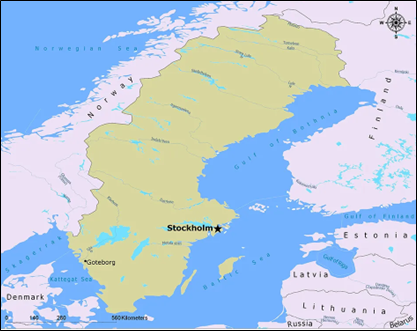
Sweden (Capital: Stockholm)
- Sweden is all Set to join NATO.
- Political Boundaries:
- Located on Scandinavian Peninsula in northern Europe.
- Land borders with Finland and Norway, maritime borders with Denmark, Germany, Poland, Russia, Lithuania, Latvia, and Estonia.
- Bounded by Baltic Sea, Gulf of Bothnia, Kattegat, Skagerrak, and Öresund straits.
- Geographical features:
- Highest point: Kebnekaise.
- Largest lake: Vänern.
- Major rivers: Torne, Dalälven, Ume.
- Abundant natural resources including iron ore, copper, lead, zinc, gold, silver, tungsten, uranium, etc.
Value of Antarctic and Southern Ocean (A&SO) Ecosystem Services:
- Recent study estimated economic value of A&SO ecosystem services at $180 billion per annum.
- Ecosystem services impact human well-being and quality of life.
Ecosystem Services provided by A&SO:
- Provisioning services: Humans obtain products from ecosystems like Antarctic toothfish and krill.
- Regulating services: Natural processes like climate regulation and water transport.
- In addition to helping to move water throughout the world, the Southern Ocean absorbs CO2 from the atmosphere.
- Cultural services are non-material advantages that humans derive from ecosystems, like leisure time and spiritual uplift.
- Antarctica tourism and scientific research.
Governance of A&SO:
- Antarctic Treaty (1959): Peaceful use of Antarctica south of 60° South latitude.
- Antarctic Treaty System: Includes agreements for scientific cooperation and environmental protection.
India’s interests in A&SO:
- Scientific Research: Operates research stations Maitri (1989) and Bharati (2012) in Antarctica.
- In 1990, Dakshin Gangotri was taken out of service.
- Indian Antarctic Act, 2022: Aims to protect Antarctic environment and ecosystems.
- India is a signatory to Convention on the Conservation of Antarctic Marine Living Resources and Madrid Protocol.
PM inaugurates three Space Infrastructure Projects in Kerala worth Rs 1800 crores:
- Projects launched at Vikram Sarabhai Space Centre in Thiruvananthapuram to reform country's space sector.
There are three projects:
- Polar Satellite Launch Vehicle (PSLV) launches will occur more frequently, with the PSLV Integration Facility (PIF) at Satish Dhawan Space Centre in Sriharikota increasing the frequency from 6 to 15 per year.
- It also supports the launch of smaller launch vehicles, such as the Small Satellite Launch Vehicle (SSLV), that are created by private space businesses.
- The PSLV is a four-stage rocket that can send spacecraft into geostationary and geosynchronous orbits.
- SSLV is a 3-stage launch vehicle that can economically launch satellites into low-Earth orbit.
- The ISRO Propulsion Complex at Mahendra Giri’s Semi-Cryogenics Integrated Engine and Stage Test Facility will facilitate the development of semi-cryogenic engines and stages, enhancing the launch vehicles' current payload capacity.
- The facility has systems for supplying kerosene and liquid oxygen, enabling it to test engines with a maximum thrust of 200 tons.
- Aerodynamic testing for characterizing rockets and airplanes during flight in an atmospheric domain is conducted in the VSSC Trisonic Wind Tunnel.
- The PM also discussed the status of the Gaganyaan Mission, which is India's first human spaceflight mission, and gave four astronaut-designates "astronaut wings," which stand for bravery, discipline, and trust.
About VSSC
- Lead Centre of ISRO under Department of Space.
- Named after Dr Vikram A Sarabhai.
- VLCC at VSSC played important role in Chandrayaan-3 launch.
- VLCC Conducts system checks on launch vehicle remotely.
Methodology for Calculation of Green Credits (GC)
- Government notified methodology for calculating Green Credits for Tree Plantation Activity
- Recommended by ICFRE and notified by MoEFCC in 2023.
Tree Plantation Activity Guidelines:
-
- Forest Department to identify degraded land parcels for increasing green cover.
- Land parcel must be free from encumbrances and at least 5 hectares in size.
- Tree plantation to be carried out within two years by Forest Department.
- One grown tree equals one GC, with a minimum density of 1100 trees per hectare requirements.
- GC is a unit of reward given for doing a given task that has a good environmental impact.
- Tree Plantation is one of the activities under GCP
- Aims to incentivize environmental positive actions through market-based mechanism.
- GCs are tradable on a domestic market platform.
- ICFRE as GCP Administrator: Responsible for program implementation, management, monitoring, and operation
- HQ in Dehradun, registered under Societies Registration Act, 1860
Other Sectors Identified for GCP
- Water Conservation.
- Sustainable Agriculture.
- Water Management.
- Air Pollution Reduction.
- Mangrove Conservation and Reduction.
- Ecomark label development.
- Sustainable building and infrastructure.
Expert Committee on Arbitration Law report submission
- Committee set up in Jun 2023 to review Arbitration Law and suggest reforms to A&C Act, 1996.
- Arbitration is a quasi-judicial process where parties appoint an arbitrator to resolve disputes.
Key recommendations of the committee:
- High Courts (HCs) with separate arbitration divisions: The Government may set aside special funds for certain HCs with a high volume of pending arbitration cases, at least in some HCs.
- Legal framework: In the long term, different laws will apply to local and international arbitration.
- Given the variety of domestic arbitration formats, courts must exercise greater supervision.
- Diversity in Arbitral Appointments: Arbitral Institutions should work on appointing an excessive number of female arbitrators to panels of arbitrators.
- The creation of an arbitration ecosystem in SEZs with prompt visa facilitation for foreign arbitrators is a step toward arbitration in GIFT cities and SEZs.
- AI and virtual arbitration: Watch and analyze the impact of the arbitrations' shift to a virtual format and evaluate how AI will advance the field of arbitration going forward.
Alternate Dispute Resolution (ADR):
- Method of resolving disputes without formal litigation
- Includes arbitration, negotiation, mediation, conciliation, facilitated settlements, ombudsman, etc.
Government declares ‘Jamaat-e-Islami Jammu Kashmir (JeI)’ as an 'Unlawful Association' for a further period of 5 years.
- The Union Ministry of Home Affairs (MHA) notified the parties in accordance with Unlawful Activities (Prevention) Act (UAPA), 1967, Section 3.
- JeI was previously prohibited in February 2019.
- Reasons for declaration: JeI continues to support secessionism in Jammu and Kashmir by promoting terrorism and anti-Indian propaganda, which is detrimental to internal security and public order and may threaten the unity and integrity of the nation.
- Allegations of employment as Over Ground Workers (OGWs) are common among JeI members.
- OGWs: Those who help militants move covertly and give them with logistical support.
OGWs' function in supporting terrorist groups:
- Recruitment: Encouraging young people in the area to join the terrorist organization, including coerced recruitment.
- Funding sources for OGWs: Illegal trade, counterfeit currency, tax evasion, Hawala transactions, etc.
- Coordination with other stakeholders: Secessionist leaders, organised crime networks, etc.
- Legitimization tactics: Propaganda, radicalization, exploitation of local grievances, etc.
Measures to neutralize OGW influence:
- Rehabilitating orphans and women for social welfare.
- Improving intelligence infrastructure to track radicalization attempts.
- Fast track courts for speedy conviction of terrorists and OGWs.
Unlawful Activities (Prevention) Act (UAPA), 1967
- Prevents unlawful activities of individuals and associations, deals with terrorist activities.
UAP (Amendment) Act, 2019:
- Empowered government to designate individuals as terrorists.
- Added International Convention for Suppression of Acts of Nuclear Terrorism (2005) to define terrorist acts.
Department of Biotechnology (DBT) completes sequencing of 10,000 Human Genome
- Sequencing done on healthy individuals from diverse Indian populations under Genome India Project (GIP).
- GIP funded by DBT in 2020 to collect 10,000 genetic samples from citizens across India.
- It is an alliance of 20 national institutes under the direction of the Indian Institute of Science's Bengaluru-based Centre for Brain Research.
Significance of GIP:
- Creating a database of Indian genomes to learn about unique genetic variants in population groups.
- Customizing drugs and therapies based on genetic information.
About Genome and its sequencing:
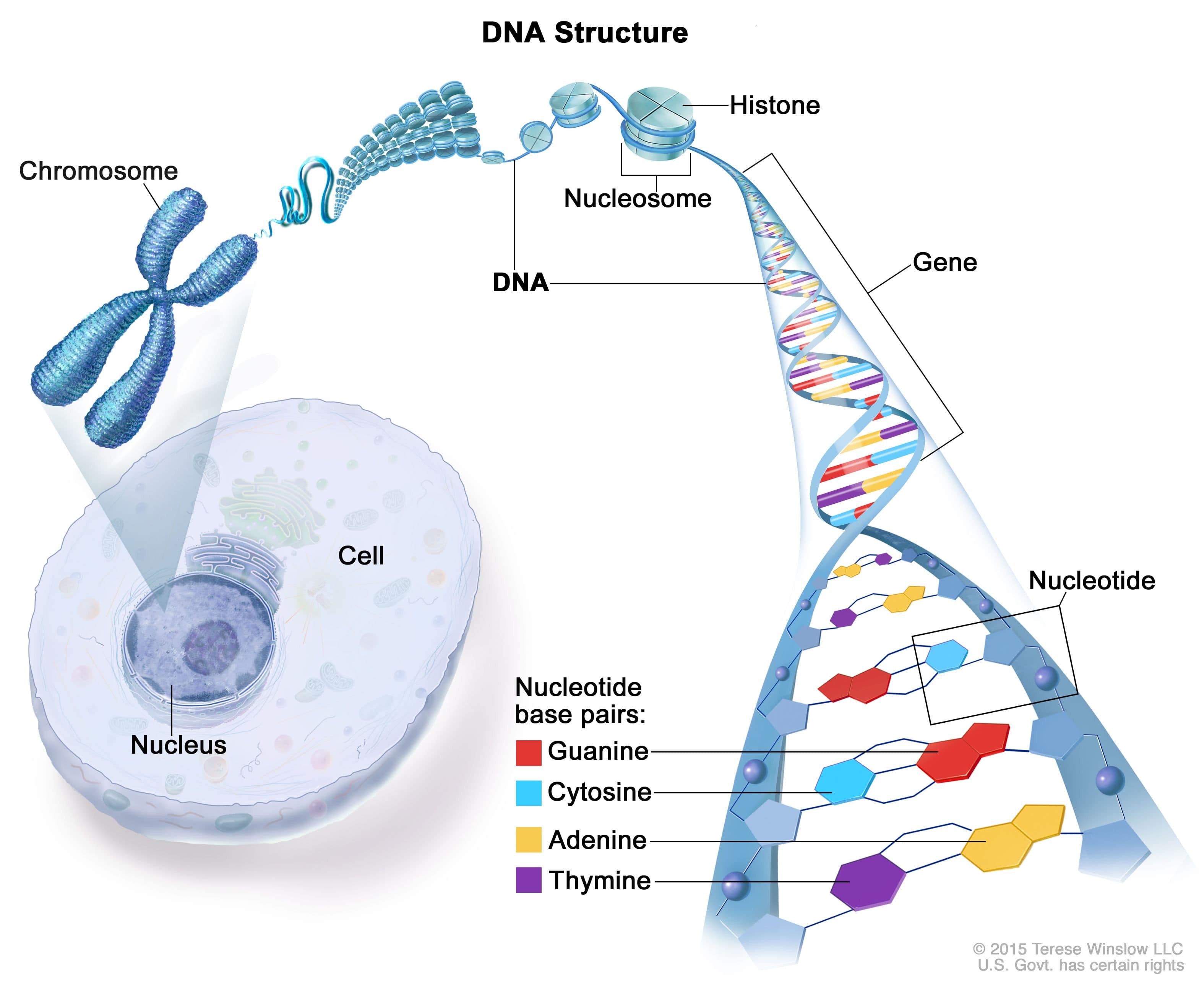
- Genome is entire set of DNA instructions in a cell.
- Humans have 23 pairs of chromosomes in nucleus and small chromosome in mitochondria.
- DNA carries genetic information with unique chemical codes.
- The arrangement of the four nucleotide bases that make up DNA—adenine (A), cytosine (C), guanine (G), and thymine (T)—determines the distinct chemical codes that each DNA molecule has.
- Determining the sequence of DNA nucleotides in a genome—that is, the order of As, Cs, Gs, and Ts—is known as genome sequencing.
Other initiatives for Genome sequencing
- Human Genome Project completed in 2003, covering 92% of human genome.
- IndiGen programme for whole genome sequencing of diverse ethnic groups in India.
- Global Alliance for Genomics and Health sets standards for genomic data use within human rights framework.
DNA Structure: