
Daily Current Affairs UPSC 04 and 05 August 2024
Welcome to our daily current affairs blog post for UPSC aspirants! In today's edition, we will be discussing the most significant events and news updates that took place on 4th and 5th August 2024. Staying updated with current affairs is crucial for UPSC preparation, as it not only helps you stay informed but also enhances your understanding of various subjects. So, let's dive into the important happenings of the day and explore their potential impact on the upcoming UPSC examinations.

Forest Advisory Committee
- The Forest Advisory Committee (FAC) has decided to exempt surveys that involve drilling and felling of up to 100 trees for hydro and other developmental projects in forest areas from requiring prior forest clearance.
- FAC is a statutory body established under the Forest (Conservation) Act, 1980 and operates under the Union Ministry of Environment, Forest and Climate Change (MoEF&CC).
- FAC is responsible for approving the diversion of forest land for non-forest purposes.
- FAC evaluates the validity of land requests, assesses impact minimization plans, and considers potential damage to local ecology and wildlife habitats.
- The role of FAC is recommendatory in nature when it comes to diverting forest land for non-forestry purposes.
Butterfly
- The rare Four-ringed butterfly has been spotted in Namdapha National Park in Arunachal Pradesh, India, near the border with Myanmar.
- Butterflies are part of the insect Order Lepidoptera and can be found in various habitats, including underground.
- Butterflies are important for conservation efforts, as they are considered flagship species for invertebrates.
- Butterflies play a crucial role in pollination and are an essential part of the food chain, serving as prey for birds, bats, and other insectivorous animals.
- Monarch butterflies have poison in their wings, which serves as a defense mechanism against predators.
Substantive Equality
- The Chief Justice of India emphasized the importance of Substantive Equality in the State of Punjab v. Davinder Singh Case 2024, specifically in relation to sub-classification in SC/ST reservation.
- Substantive Equality is a principle that takes into consideration the diverse backgrounds and historical injustices experienced by individuals or groups.
- This principle prioritizes equality in outcomes and the effects of laws and policies.
- Unlike formal equality, which applies uniform rules, substantive equality seeks to achieve social redistribution through ethical principles.
Flag Code of India
- The Union Minister for Home Affairs is encouraging people to participate in the 'Har Ghar Tiranga' campaign by hoisting the Tricolour at their homes.
- The rules for hoisting and displaying the Indian National Flag are outlined in the Flag Code of India, 2002, which has been amended in 2021 and 2022.
- The Flag Code specifies that the National Flag should be made of certain materials such as cotton, polyester, wool, silk, or Ichadi bunting.
- The public is allowed to display the National Flag both day and night.
- The National Flag should be rectangular in shape, with the ratio of the length to the height (width) being 3:2, and can be of any size.
Carry Trade
- The Yen carry trade has recently gained attention due to the decline in US technology stocks.
- Carry trade involves borrowing in a low-interest currency to invest in a higher-interest currency or asset.
- This strategy is commonly used in foreign currency trading.
- Carry trade can be risky because of fluctuations in currency values and interest rates.
Village Defence Guards Scheme – 2022
- The Union Minister announced that Village Defence Guards (VDGs) in the Jammu region have been equipped with advanced weapons to address the increasing incidents of terrorism.
- The VDGs were established under the VDGs Scheme 2022 to organize volunteer armed civilians in specific villages in Jammu to promote self-protection and ensure the safety and security of the villages and their infrastructure.
- Village Defense Groups were initially formed in 1995 in vulnerable villages to support security forces in maintaining internal security.
- Each VDG will be led by a retired officer from the Army, Central Paramilitary Forces, or J&K Police.
ASEAN-India Trade in Goods Agreement (AITGA)
- The 5th AITIGA Joint Committee and related meetings were held in Jakarta, Indonesia to review the ASEAN-India Trade in Goods Agreement (AITIGA).
- AITIGA was signed in 2009 and entered into force in 2010.
- The agreement aims to promote the free flow of goods in the region, reduce trade barriers, strengthen economic ties among Member States, lower business costs, increase trade, and create a larger market and economies of scale for businesses.
AstroSat and Vampire star
- Researchers found a vampire star named WOCS 9005 in star cluster M67 using data from AstroSat
- Vampire stars, also known as Blue Straggler Stars, do not follow traditional models of stellar evolution and exhibit characteristics of younger stars
- Vampire stars rejuvenate by consuming material from a binary companion star through mass-transfer in a binary system
- AstroSat, launched in 2015, is India's first space observatory dedicated to studying celestial sources in X-ray, optical, and UV spectral bands simultaneously
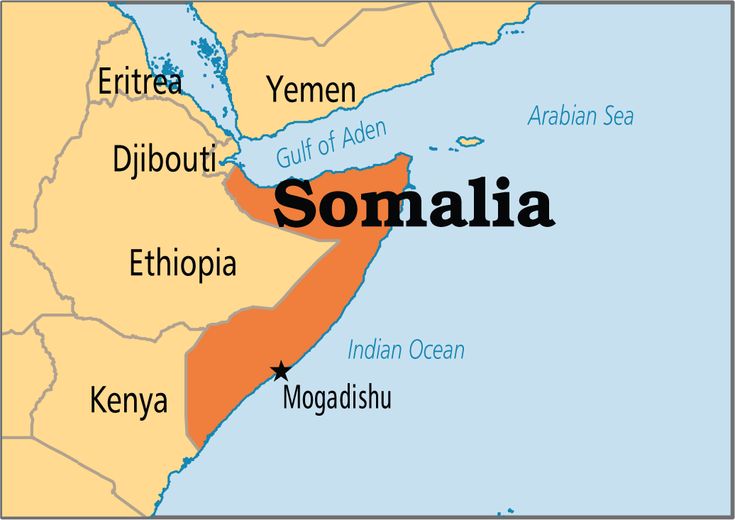
Somalia (Capital: Mogadishu)
- A tragic incident in Mogadishu involving a suicide bombing and gun attack led to the loss of numerous civilian lives.
Political Features
- Situated on the Horn of Africa, Somalia is the easternmost country in continental Africa.
- It shares borders with Djibouti to the northwest, Ethiopia to the west, and Kenya to the southwest.
- It is also bordered by the Gulf of Aden and the Indian Ocean.
Geographical Features
- The highest peak in Somalia is Mount Shimbiris, also known as Mount Surud Cad.
- The major rivers in the country are the Jubba and Shabele.
- The coastal plains along the Gulf of Aden are referred to as Guban.
- The Bur region is known for its inselbergs, which are isolated hills or mountains that rise abruptly from a flat surrounding plain.
Navigating India's Relations in West Asia
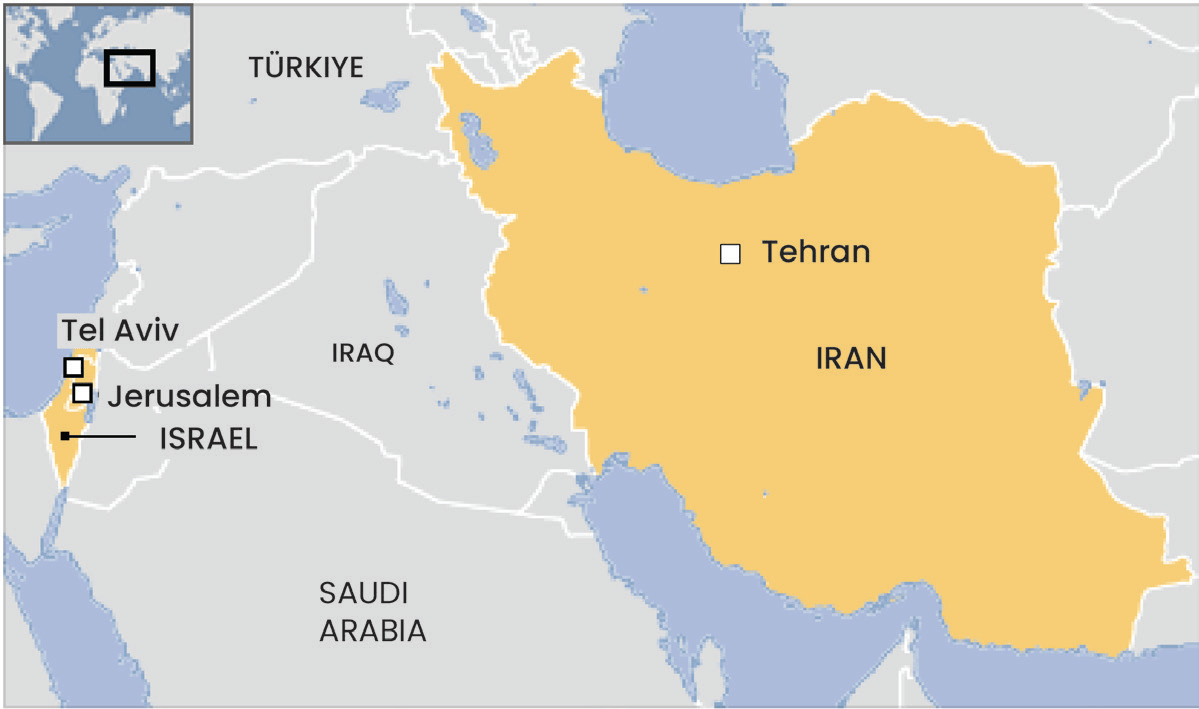
- The recent increase in tensions between Iran and Israel, sparked by the assassination of leaders of Hamas and Hezbollah, has prompted the US and other regional powers to increase diplomatic efforts to avoid a full-scale war in West Asia.
- India is in a difficult position due to its relationships with both Iran and Israel, as it has important interests to pursue with both countries.
India's Foreign Policy towards West Asia
- Extended Neighbourhood: India views the Gulf region as part of its extended neighbourhood, with Iran considered a part of India's proximate neighbourhood.
- Look West Policy: Adopted in 2005 to deepen cooperation with West Asian countries and meet India's national interests in the region.
- Policy of de-hyphenation: India has chosen to separate its relations with Israel and Palestine, emphasizing independent diplomatic relations based on merit.
India's stakes in the region
- Energy security: The Gulf-West Asia-North Africa region contributes over 2/3rd of India's total imports of crude oil.
- Diaspora and remittances: Around 8 to 9 million Indians reside in West Asia, with countries like UAE, Saudi Arabia, Kuwait, and Oman among the top sources of inward remittances.
- Strategic: India is involved in projects such as the India-Middle-East-Europe Economic Corridor and the development of the Chabahar Port in Iran.
"Alarming Increase in Global Methane Emissions"
Research conducted by a group of global specialists has shown a significant increase in methane emissions worldwide since 2006, with a particularly sharp rise since 2020. This upward trend is projected to continue throughout the rest of the 2020s.
Key Highlights of the Study
- Global methane emissions have been rapidly increasing since 2006, especially since 2020, and this trend is expected to continue throughout the 2020s.
- Anthropogenic methane emissions from 1850-2019 have caused about 65% as much warming as CO2.
- The sudden increase in methane growth rates in the early 2020s is likely due to the response of wetlands to warming and additional contributions from fossil fuel use.
About Methane Emissions
- Methane is a short-lived climate pollutant and is the second-largest contributor to climate warming after CO2.
- Emission sources include natural sources like wetlands, wildfires, and oceans, as well as anthropogenic sources like agriculture, fossil fuel extraction, and waste management.
- Methane has a Global Warming Potential (GWP) that is about 28 times higher than CO2 and can lead to the formation of ground-level ozone and explosion hazards from leaks.
Initiatives to reduce CH4 emissions
Global
- The Global Methane Pledge aims to collectively reduce methane emissions by 30% by 2030.
- Initiatives like Earth Surface Mineral Dust Source Investigation (EMIT) and Airborne Visible InfraRed Imaging Spectrometer - Next Generation (AVIRIS-NG) are working to monitor and reduce methane emissions.
- The Global Methane Initiative and Methane Alert and Response System are also working towards reducing methane emissions globally.
India
- India has initiatives like the National Mission on Sustainable Agriculture, Direct Seeded Rice & Crop Diversification Programme, Gobar (Galvanizing Organic Bio-Agro Resources) –Dhan Scheme, and the National Livestock Mission to reduce methane emissions.
"Sea Level Rise Report for Indian Coastal Cities"
- A report released by the Bengaluru-based think tank, Center for Study of Science, Technology and Policy (CSTEP), provides data on the fluctuations in sea levels for 15 coastal cities and towns in India.
Sea Level Rise (SLR)
- SLR refers to the gradual increase in the average height of the world's oceans and seas.
- From 1901 to 2018, the average worldwide sea level rose by 15 to 25 cm, reaching a record high in 2022. It is projected to further rise by 15 mm per year by 2100.
Key Highlights of Report
- Mumbai experienced the highest SLR (4.44 cm) between 1987 and 2021.
- By 2040, more than 10% of land in Mumbai, Yanam, and Thoothukudi is expected to be submerged.
- A rising SLR trend was observed in cities like Mumbai, Kochi, Mormugao, Haldia, Paradip, Visakhapatnam, and Chennai.
Factors responsible for SLR
- Ocean Thermal Expansion: Oceans absorb over 90% of the heat trapped by accumulating greenhouse gases.
- Ice melting: Melting of ice from glaciers, ice caps, and ice sheets in Greenland and Antarctica contributes to SLR.
Impacts of SLR
- Increased coastal erosion leading to the loss of beaches and coastal habitats.
- Freshwater salinization contaminating drinking water sources and reducing agricultural output.
- Loss of coastal ecosystems like mangroves, salt marshes, and coral reefs, impacting fisheries and biodiversity.
Adaptation and Mitigation Strategies for SLR
- Implementation of sea walls, surge barriers, and other coastal defenses.
- Experimentation with floating homes as seen in South Korea and Maldives.
- Adoption of efficient city strategies like sponge cities and the use of technology such as digital twin.
- Working towards achieving net zero targets and limiting global mean temperature increase in accordance with the 2015 Paris Agreement.
"Union Law Ministry Report on District Court Infrastructure"
- The Ministry of Law & Justice released a report called 'Empirical Study on Enhancing Justice Delivery through Improved Infrastructure' that examined the infrastructural challenges experienced by Chief Administrators, Judicial Officers, Advocates, and Support Staff.
Key Findings of the Report
- Basic infrastructure: Nearly 38% of Judicial Officers lack adequate space in courtrooms.
- Human resource: Shortage of trained Judicial Officers leads to delays in case disposition.
- Digital infrastructure: Offices of District Legal Services Authority and Taluk Legal Services Committee lack computerization.
- Advocates struggle with digitization process, putting pressure on support staff.
- Other issues: Lack of cooperation among court departments, temporary support staff employment.
Key Recommendations
- Establish independent IT department with trained staff at District and Taluka courts.
- Emphasize maintaining electronic records for efficiency.
- Create separate Civil and Criminal Courts with dedicated Judicial Officers.
Initiatives to improve district courts
- Centrally Sponsored Scheme for Development of Infrastructure Facilities for the Judiciary (1993-94): Improve physical infrastructure of courts.
- National Mission for Justice Delivery and Legal Reforms (2011): Reduce delays and enhance accountability in the legal system.
- E-Courts Integrated Mission Mode Project: Computerize District and subordinate courts to improve access to justice.
"Potential Martian/Lunar Research Station in Ladakh"
- An analogue research station is a location that resembles a planet or extreme space environment.
- There are currently 33 analogue research stations worldwide, but none are located in the Indian sub-continent.
- Examples of analogue research stations include BIOS-3 in Russia, HERA and Biosphere 2 in the USA, Mars One in the Netherlands, and D-MARS in Israel.
Need for Analogue sites
- Testing new technologies, robotic equipment, vehicles, power generation, and infrastructure is necessary for long-term space missions.
- Studying or simulating human habitats in space helps understand the effects of isolation, confinement, team dynamics, and menu fatigue.
- Simulation tests are crucial for ensuring that the units can handle all possible situations independently.
Why is Ladakh ideal as Martian/Lunar Analogue?
- Similarities in geomorphology between early Mars and the Moon include dry, cold, arid desert environments with rocky ground.
- Both early Mars and the Moon have vast flat lands without vegetation, dunes, or drainage networks.
- Segregated ground ice, permafrost, and rock glaciers are present in both environments.
- Geochemical similarities to the Martian surface include volcanic rocks, saline lakes, and hydrothermal systems.
- Exobiological similarities include evidence of water in the past through permafrost, increased UV and cosmic radiation flux, reduced atmospheric pressure, hot springs rich in boron, and sufficient isolation for potential life forms.
Ladakh as an Astronomical Hub of India
- Indian Astronomical Observatory in Hanle with an optical infrared telescope.
- Hanle Dark Sky Reserve for Astro Tourism.
- Host to various space programs like NASA's Spaceward Bound India Programme and ExoMars 2020 HABIT Instrument validations.
Devastation in Himachal Pradesh: Cloudbursts and Flashfloods
- Recently, cloudburst events were reported in Kullu, Mandi, and Shimla regions of Himachal Pradesh by the District Disaster Management Authority.
About Cloudbursts
- Cloudbursts refer to heavy precipitation in a short period over a limited geographical area.
- Any unexpected precipitation exceeding 100 millimetres per hour over a region of 20 to 30 square km is categorized as a cloudburst according to the IMD.
Vulnerability of Himalayas to Cloudbursts:
- The topography and orography of the Himalayas cause moist air to rise rapidly, leading to intense condensation and precipitation conducive to cloudbursts.
- Studies show that cloudbursts often occur in low elevation high-temperature zones of the Himalayas with low rainfall and high land surface temperatures between 18°C-28°C in July and August.
Consequences of Cloudbursts- Cloudbursts can result in flash floods, landslides, and damage to infrastructure like roads and bridges.
Cloudbursts Disaster Risk Reduction (DRR)
- Understanding risk involves compiling and maintaining data on cloudburst events and Landslide Hazard Zonation.
- Investing in DRR includes repairing and maintaining natural drainage systems and rivulets to ensure the unhindered flow of stormwater.
- Capacity building efforts aim to enhance the capabilities of local bodies to prepare for and cope with cloudburst events, as well as promoting the use of insurance and risk transfer mechanisms.