
Daily Current Affairs UPSC 05 October 2024
Welcome to our daily current affairs blog post for UPSC aspirants! In today's edition, we will be discussing the most significant events and news updates that took place on 5th October 2024. Staying updated with current affairs is crucial for UPSC preparation, as it not only helps you stay informed but also enhances your understanding of various subjects. So, let's dive into the important happenings of the day and explore their potential impact on the upcoming UPSC examinations.

National Agriculture Code (NAC)
- The Bureau of Indian Standards is developing a National Agricultural Code (NAC) similar to the National Building Code and National Electrical Code.
- The NAC will consist of two parts: one with general principles for all crops and the other with crop-specific standards for paddy, wheat, oilseeds, and pulses.
- The code will cover all agricultural processes and post-harvest operations, including crop selection, land preparation, and sowing/transplanting.
- The objectives of the NAC are to create a national agricultural code that considers agro-climatic zones and crop types, and to provide a comprehensive guide for the farming community to make effective decisions in agricultural practices.
- The NAC will also address horizontal aspects of agriculture such as SMART farming and sustainability.
Bihar Floods
- Bihar is currently experiencing extensive flooding, impacting over 1.184 million individuals who have been displaced from their homes.
- The flooding in Bihar is primarily caused by the vulnerability of North Bihar to floods from upstream rainfall from Nepal's rivers like Kosi and Gandak, which carry heavy sediment from the young Himalayas.
- The construction of embankments has exacerbated the flooding issue by disrupting sediment distribution and raising the riverbed.
- The consequences of the Bihar floods include damage to crops, infrastructure, loss of livestock, and distress migration among other issues.
- Possible solutions to address the flooding in Bihar include the construction of dams or an additional barrage on the Kosi river, as well as the implementation of adequate laws, policies, and risk reduction strategies.
Co-District Initiative
- Assam has introduced a new concept called co-districts, which replaces the current civil sub-divisions within district administration.
- Co-districts are smaller administrative units led by an Assistant District Commissioner, with powers and duties comparable to district commissioners.
- The significance of co-districts includes decentralizing administration, improving governance, offering citizen-centric services, and providing services in closer proximity to the people.
Pygmy Hog (Porcula salvania)
- Nine captive-bred pygmy hogs were recently released in Assam's Manas national park.
- Pygmy hogs are the smallest and rarest wild suid in the world, living in tall, dense grasslands with shrubs and trees.
- They construct dome-shaped nests from vegetation and are found in Manas and Barnadi Wildlife Sanctuaries in Assam.
- Pygmy hogs are considered an indicator species, reflecting the health of their primary habitat of tall, wet grasslands in the region.
- They are non-territorial and live in small family groups of 4-5 members, with adult males being solitary but loosely connected to family groups.
- Pygmy hogs are classified as endangered on the IUCN Red List and are protected under Schedule I of the Wildlife (Protection) Act, 1972.
Emergency Use Listing (EUL)
- The World Health Organization (WHO) has approved the first Monkey pox (mpox) In Vitro Diagnostic (IVD) kit through its EUL procedure.
- The EUL procedure is a risk-based assessment process for unlicensed medical products.
- The EUL procedure includes three product streams: Vaccines, Therapeutics, and In Vitro Diagnostics.
- The significance of the EUL procedure is to provide global access to products during public health emergencies and help countries without strong regulatory systems.
- Criteria for product listing under the EUL procedure include covering serious, life-threatening diseases, addressing gaps in existing treatments, and ensuring products meet set standards.
Lipulekh Pass
- The first group of pilgrims saw Mount Kailash from the Old Lipulekh pass, which is considered the abode of Lord Shiva.
- Previously, pilgrims had to go to Tibet Autonomous Region (TAR) to see the peak.
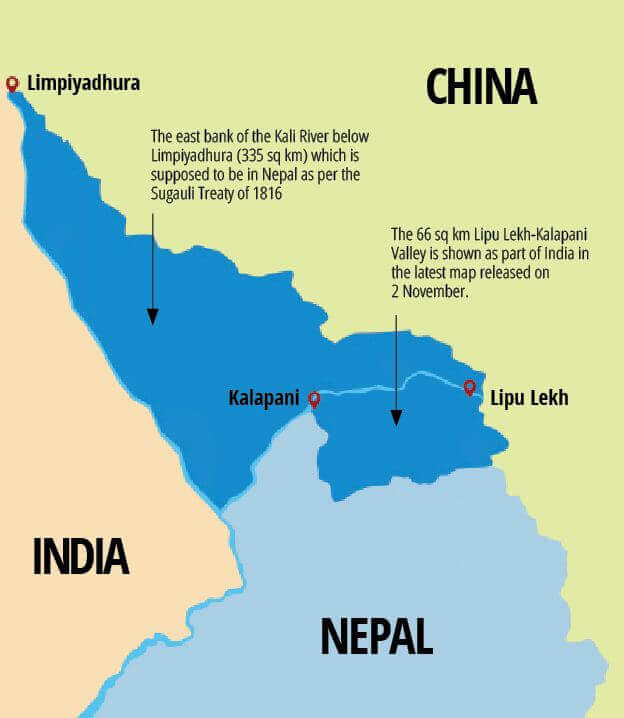
- Lipulekh Pass is an international mountain pass located above the Kalapani valley, serving as a trijunction between India, Nepal, and TAR (China).
- It is situated in Vyas valley in the Pithoragarh district of Uttarakhand and is inhabited by the Bhutiya people.
- The pass is significant as an ancient trade and pilgrimage route, which was closed by India in 1962 due to fears of Chinese incursions but was reopened in 2020.
Greening of Antarctica
- The plant cover across the Antarctic peninsula is increasing due to the climate crisis.
- The Greening of Antarctica refers to the growth of vegetation like moss on a continent that is mostly covered in ice and bare rock due to extreme heat waves.
- The warming in the region is happening at a much faster rate than the global average, with acceleration between 2016 and 2021.
- Vegetation has expanded over tenfold between 1986 and 2021.
- The impact of this greening includes the introduction of invasive species and harm to local wildlife.
- It will also reduce the continent's ability to reflect sunlight (albedo), worsening the effects of climate change.
Charon
- Carbon dioxide and hydrogen peroxide have been found on Charon using NASA's James Webb Telescope.
- The discovery is important for understanding the origins of Charon and other moons of Pluto.
- It could also provide insights into the origins and evolution of icy bodies in the outer Solar System.
- Charon is the largest of Pluto's five moons and is so big that it and Pluto orbit each other like a double planet.
- Pluto is a dwarf planet located in the Kuiper Belt, a distant region of our solar system beyond Neptune.
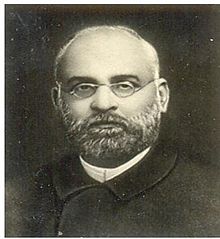
Shyamji Krishna Varma (4th October, 1857 - 30th March, 1930)
- PM pays tribute to freedom fighter Shyamji Krishna Varma on his birth anniversary
- Shyamji Krishna Varma's Background and Contributions
- Born in 1857 in modern-day Gujarat
- Established the Indian Home Rule Society and India House in London to conduct anti-British activities.
- Influenced Veer Savarkar, a member of India House in London.
- Published an English Monthly journal called "Indian Sociologist."
- Became the inaugural President of Bombay Arya Samaj and was a follower of Dayanand Saraswati.
- Was prohibited from practicing law by Inner Temple in 1905 due to sedition charges.
- Moved from England to Paris in response to criticism and continued his activism.
Values of Shyamji Krishna Varma
- Patriotism, Courage, Selfless Service, etc.
"World Bank Introduces Business-Ready Index"
- An evaluation is conducted on 50 economies, with plans to expand to 180 economies by 2026, excluding India.
- This assessment is a follow-up to the Ease of Doing Business (EoDB) rankings by the World Bank.
- The EoDB report ranked countries according to the ease of starting and running a business.
- The EoDB rankings were terminated in 2021 due to ethical issues.
About Business-Ready (B-Ready) Index
- It offers a numerical evaluation of the business climate, with a focus on three key areas, to support private sector growth.
- The report is released yearly and includes information on a wide range of economies globally.
- It helps the World Bank Group achieve its objectives of reducing poverty and promoting economic growth for all.
Features of B-Ready vis-a-vis EoDB
- Comprehensive Evaluation: This approach looks at the business environment from the perspective of both individual firms and the private sector as a whole. It considers the development of the private sector in addition to individual firm assessments.
- Qualitative Analysis: This method focuses on examining the regulatory burden on firms and the quality of regulations in place. It specifically looks at how regulations impact businesses and the overall quality of those regulations.
- Balanced Information Collection: This approach involves gathering both de jure (statutory laws) and de facto (practical) information on firms. It ensures a well-rounded view of the regulatory environment by considering both the laws on paper and how they are implemented in practice.
- Diverse Coverage: This method covers all major topics relevant to the business environment, unlike some other evaluations that may exclude important topics such as labor practices. It ensures a comprehensive assessment by including a wide range of relevant factors.
Pillars of B-Ready Index
- Regulatory Framework: Guidelines and laws that businesses must adhere to when starting, running, and shutting down operations
- Public Services: Resources and support systems in place to help businesses comply with regulations and facilitate their operations
- Operational Efficiency: The ability for businesses to easily follow regulations and utilize public services efficiently to enhance their operations.
"IRENA's 2024 Annual Review: Renewable Energy and Jobs"
IRENA is a global organization that helps countries with their energy transitions and promotes international cooperation. India is a member of this intergovernmental agency.
Key findings
- The global renewable energy workforce increased to 16.2 million in 2023, up from 13.7 million in 2022.
- India had an estimated 1.02 million renewable energy jobs in 2023.
- Hydropower was the largest employer in India's renewable sector, followed by Solar Photovoltaic (PV).
- In 2023, India added 9.7 GW of solar PV capacity and ranked fifth globally for new installations and cumulative capacity, reaching 72.7 GW by the end of the year.
- India had 2.38 lakh jobs in grid-connected solar PV in 2023.
- India's wind power capacity reached 44.7 GW in 2023, ranking fourth globally, and added 2.8 GW.
India’s RE Status
- Renewable energy capacity increased by 165% over a decade, going from 76.38 GW to 203.1 GW between 2014 and 2024.
- It is ranked as the fourth country in the world in terms of installed renewable energy capacity.
Key Skill Challenges for RE industry
- The rapid expansion of the renewable energy sector is surpassing the availability of a skilled workforce.
- Countries are struggling to keep up with the demand for skilled workers in renewable energy due to a lack of systems to anticipate and monitor skills needed in the market.
- The gap between the skills needed in the renewable energy sector and the skills available in the workforce is widening due to a lack of effective monitoring and adaptation of education and training programs.
Recommendations
- Effective energy transition strategies require strong policy coherence, social dialogue, and public-private partnerships.
- An example of this is the Sectoral Human Resource Development Plan for Renewable Energy in the Philippines.
- Incorporating work-based learning into Technical and Vocational Education and Training programs can provide students with practical skills needed for careers in renewable energy.
- Zimbabwe's Green enterPRIZE program is a good example of this approach.
Major India’s Initiatives driving RE Growth
National Green Hydrogen Mission, PM Surya Ghar: Free Electricity Scheme, Green Energy Corridors, and Renewable Energy Certificate (REC) Mechanism are some of the initiatives in the field of renewable energy.
"Cross-Border Electricity Trade Pact Signed"
- Nepal will sell hydroelectricity to Bangladesh using Indian transmission lines.
- This highlights a trend of increased collaboration on energy between countries in South Asia.
Initiatives for Cross-Border South Asian Energy Co-operation
Cross-Border Electricity Trade:
- India-Bangladesh: There is a planned electricity corridor from Katihar in Bihar to Bornagar in Assam to facilitate electricity trade between the two countries.
- India-Nepal: Projects like Arun III and Upper Karnali hydropower projects are being developed to enhance electricity trade between India and Nepal.
- India-Bhutan: Projects like Kurichu, Tala, Chukha, and Mangdechhu are examples of the electricity trade cooperation between India and Bhutan.
Energy Pipelines:
- TAPI Pipeline: This pipeline is being constructed to transport natural gas, promoting energy trade between countries in the region.
Renewable Energy Cooperation:
- OSOWOG: This initiative focuses on promoting cooperation in the development of offshore wind energy projects among countries.
Significance of Energy Co-operation
- China is working on building energy infrastructure to bring in energy from South Asian countries in order to counter their influence.
- Energy trade plays a crucial role in promoting economic integration among countries in the region.
- In addition to economic benefits, energy security and environmental sustainability are also important factors to consider.
Challenges in Energy Co-operation
- Environmental harm: The UKHP project in Nepal is being opposed due to concerns about its impact on the Himalayan environment.
- Hurdle rates: These costs are related to the structural grid barriers between countries that must be considered when trading electricity.
- Additional concerns: Regional tensions, such as conflicts between India and Pakistan, and the limited usefulness of hydropower projects.
Institutional Mechanisms For Energy Cooperation
- SAARC Energy Centre is an organization focused on energy cooperation in South Asia.
- SASEC stands for South Asia Sub Regional Economic Cooperation and is involved in promoting economic cooperation in the region.
- BIMSTEC Energy Centre is a center that focuses on energy issues within the Bay of Bengal region.
- SARI/El, which stands for South Asia Regional Initiative for Energy Integration, is an initiative aimed at promoting energy integration in South Asia.
"UK Transfers Chagos Islands to Mauritius"
- A historic political agreement has been reached between both countries to transfer control of the Chagos Islands to Mauritius, pending the finalization of a treaty.
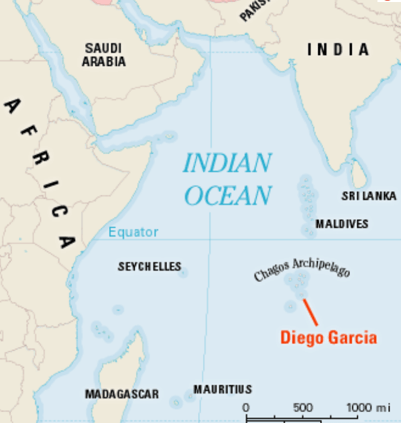
- The US-UK military base on Diego Garcia atoll will continue to operate.
About Chagos Archipelago
- An island group situated 500 km south of the Maldives in the Indian Ocean Region (IOR).
- Initially uninhabited until the 18th century, the islands were later colonized by the French and then ceded to the British in 1814.
- The British Indian Ocean Territory (BIOT) was established by the UK in 1965, with Chagos as a key component.
- Some islands of BIOT were given to Seychelles in 1976.
- The archipelago was separated from Mauritius by the UK in 1965, just three years before Mauritius became independent.
Significance of Treaty
- Resolving a historical conflict over the final British colony in Africa.
- Mauritius may need to manage its relationships with major countries for regional security reasons.
- The Diego Garcia base is vital for US monitoring of the Malacca Strait and maintaining a presence in the Indian Ocean region.
- The decision to hand over the island aligns with the rulings of the International Court of Justice and a United Nations General Assembly resolution from 2019.
- In 2019, India voted in favor of Mauritius' claim at the UNGA, showing support for their stance.
- This decision aligned with India's belief in decolonization and their support for the sovereignty and territorial integrity of nations.
"Supporting Sustainable Chemicals Management in Developing Economies"
GFC Fund has announced its inaugural project call focused on promoting the safe and sustainable handling of chemicals and waste.
About GFC Fund
- The Executive Board was established at the fifth International Conference on Chemicals Management (ICCM5) in 2023 in Bonn, Germany.
- The board is responsible for making operational decisions and ensuring the organization functions effectively.
- It is made up of two national representatives from each United Nations region, as well as representatives from all donors and contributors.
- The board works alongside other financial mechanisms such as the Global Environment Facility to support biodiversity and climate action initiatives.
Objectives:
- Provide assistance to low- and middle-income countries, as well as small island developing states, in managing chemicals and waste according to global standards.
- Focus on implementing projects of a moderate size that enhance the capacity of nations and regions to handle chemicals and waste effectively.
- Chosen projects will be granted between 300,000 to 800,000 USD over a maximum of three years to reduce the negative effects of chemicals and waste on the environment and human health.
- The financial support for these projects comes from donations made voluntarily.
About GFC (Bonn Declaration adopted at ICCM5)
A comprehensive agreement involving multiple sectors that establishes a list of 28 goals to tackle issues related to chemicals and waste management. This includes measures to prevent illegal trade, phase out highly hazardous pesticides in agriculture by 2035, and more.
Other Global Initiatives for sustainable management of chemicals and waste
- SAICM is a worldwide strategy aimed at reducing the negative effects of chemicals on health and the environment at every stage of their existence.
- The Basel Convention is an agreement among nations to oversee the cross-border transportation and disposal of dangerous wastes.
- The Stockholm Convention is a global pact designed to safeguard human health and the environment from the harmful impacts of persistent organic pollutants.
RBI Study on Monetary Policy Transmission and Labour Markets in India
Research examines how the presence of informal employment in labor markets affects the ability to stabilize inflation and implement monetary policy, providing fresh perspectives on Modern Portfolio Theory.
About Monetary Policy (MP)
- Monetary policy (MP) is a set of actions used by a nation's central bank, such as the RBI in India, to promote sustainable economic growth and maintain price stability by adjusting the money supply.
- The statutory basis for MP in India is the RBI Act of 1934, which was amended in 2016.
- The MP framework involves the Central Government, in consultation with the RBI, determining an inflation target based on the Consumer Price Index (CPI) every five years.
- Currently, India's flexible inflation targeting is set at 4% with a tolerance of +/- 2% until March 2026.
- The tools used in MP include direct and indirect instruments like the Repo Rate and Reverse Repo Rate.
- There are two main types of MP: Expansionary, which involves lowering interest rates to stimulate economic activity, and Contractionary, which involves increasing interest rates to slow down activity and prevent inflation.
Key findings of Study:
- MP Transmission is enhanced by increased formality in the labor market.
- Unemployment increases in both formal and informal markets due to Contractionary Monetary Policy (CMP).
- Contractionary Monetary Policy (CMP) results in a decrease in aggregate consumption, inflation, investment, output, and capital stock among other macroeconomic variables.
Monetary Policy Committee (MPC)
- Established by the Central Government to set policy rates like the Repo rate in order to achieve inflation targeting.
- Consists of 6 members, including the Governor of the RBI who serves as the chairperson, 2 members from the RBI, and 3 members appointed by the Government.
- Each member has one vote, with the Governor having the casting vote.
- Meets at least 4 times a year.
- A quorum of 4 members is required for meetings.