
Daily Current Affairs UPSC 23 October 2024
Welcome to our daily current affairs blog post for UPSC aspirants! In today's edition, we will be discussing the most significant events and news updates that took place on 23rd October 2024. Staying updated with current affairs is crucial for UPSC preparation, as it not only helps you stay informed but also enhances your understanding of various subjects. So, let's dive into the important happenings of the day and explore their potential impact on the upcoming UPSC examinations.

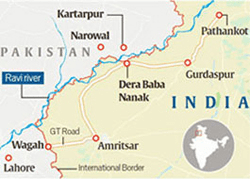
Sri Kartarpur Sahib corridor
- India and Pakistan have agreed to renew the Sri Kartarpur Sahib Corridor agreement for the next five years.
- The original agreement was signed in 2019 and was valid for five years.
Sri Kartarpur Sahib Corridor:
- Allows pilgrims from India to visit Gurdwara Darbar Sahib Kartarpur in Pakistan without a visa.
- Guru Nanak spent the last 18 years of his life at Kartarpur, located on the west bank of the river Ravi.
- The corridor provides a 4.5-kilometer route from the Indian border at Dera Baba Nanak in Punjab to the Kartarpur corridor.
Maternity Benefit Act, 1961
- The Madras High Court ruled that contractual employees are entitled to maternity benefits under the Maternity Benefit Act, 1961.
- The court held that the provisions of the Act would prevail over contractual conditions if they deny or offer less favorable benefits.
Maternity Benefit Act, 1961:
- Provides paid maternity leave to women workers.
- An amendment in 2017 increased paid maternity leave from 12 weeks to 26 weeks for women with less than two surviving children.
- Depending on the nature of work, the Act allows for work from home for nursing mothers.
- The extension of 12 weeks of maternity benefit to commissioning mothers and adopting mothers was also included in the amendment.
Parboiled Rice
- The Union Government has removed export tax on parboiled rice to boost rice exports.
- This decision could lead to an increase in global supplies and soften international rice prices.
About Parboiled Rice:
- Parboiled rice is rice that has been partially boiled at the paddy stage before milling.
- It is known as miniket in West Bengal and Odisha.
- The process of parboiling involves soaking, steaming, and drying.
- Parboiled rice has benefits such as increased rice yield, protection from insect attacks, higher B-vitamin content, and a bran higher in oil content.
India’s Fourth Nuclear Submarine
- India's fourth nuclear-powered ballistic missile submarine (SSBN), known as S4*, has been launched into water.
- India currently has two operational SSBNs, INS Arihant and INS Arighaat (S3), with the third SSBN, Aridhman (S4), undergoing sea trials.
About S4*:
- The S4* submarine has nearly 75% indigenous content and is equipped with K-4 ballistic missiles with a range of 3,500 km.
- SSBNs are a crucial component of nuclear deterrence and are operated by a few countries including the US, Russia, China, UK, France, and India.
Global Energy Monitor
- Fossil capacity in BRICS bloc to drop below half of power capacity mix in 2024.
Other Key Findings:
- Wind and solar capacity in development double coal, oil, and gas power capacity.
- BRICS countries have enough renewables projects to triple capacity by 2030.
- BRICS Members: Brazil, Russia, India, China, South Africa, UAE, Iran, Saudi Arabia, Ethiopia, Egypt.
National Water Awards (NWA)
- President of India presented fifth NWA in New Delhi.
About National Water Awards:
- Nodal Ministry: Ministry of Jal Shakti.
- Aim: Create awareness about water importance and promote best water usage practices.
- Presented in nine categories including Best State, Best District, Best ULB, Best School/College, Best Industry, Best Civil Society.
- Odisha named best state and Surat, Gujarat named Best ULB.
Atlantic Meridional Overturning Circulation (AMOC)
- Climate scientists are warning Nordic ministers about the potential collapse of AMOC due to global warming.
- Collapse of AMOC would lead to cooling of Northern Hemisphere, rising sea levels in the Atlantic, decreased precipitation in Europe and North America, and changes in monsoons in South America.
About AMOC:
- AMOC is a system of ocean currents that moves warm water north and cold water south in the Atlantic Ocean.
- Shutdown of AMOC would result in cooling of the northern hemisphere and reduced rainfall in Europe, impacting the El Nino phenomenon.
- AMOC plays a crucial role in distributing heat and nutrients across the world's ocean basins.
Commonwealth Games (CWG) 2026
- CWG 2026 edition will be held in Glasgow and will feature only 10 sports.
About CWG 2026:
- Six of the 12 disciplines in which India won a medal at the 2022 CWG have been dropped from the 2026 edition.
- India contributed 30 out of the total 61 medals in the 2022 CWG.
- The dropped sports include badminton, cricket, hockey, squash, table tennis, and wrestling.
About CWG:
- The Commonwealth Games were first held in 1930 in Hamilton, Canada.
- The Games are held every four years.
- India hosted the Games in 2010 in Delhi.
Ashfaqulla Khan (1900-1927)
Birth and Background:
- Ashfaqulla Khan was born in 1900 in Shahjahanpur, Uttar Pradesh.

Key Contributions:
- Co-founded the Hindustan Republican Association in 1924 with Ram Prasad Bismil, Sachindra Nath Bakshi, and Jogesh Chandra Chatterjee.
- The manifesto of HRA, titled "The Revolutionary," aimed to establish a federal Republic of United State of India through organized and armed revolution.
- Participated in the Kakori Train Action in 1925 and was sentenced to death along with Ram Prasad Bismil, Rajendra Lahiri, and Roshan Singh.
Values:
- Demonstrated courage, integrity, and a commitment to justice in his actions.
Remove Debris In-Orbit Servicing (RISE) Mission is a promising step towards Circular Economy in Space
- RISE is the first in-orbit servicing mission of the European Space Agency.
- It aims to refuel, refurbish, and assemble satellites in orbit.
- Launch planned for 2028 with the ability to dock and control geostationary satellites.
Circular Space Economy:
- Draws inspiration from the broader concept of a circular economy.
- Focuses on minimizing waste and maximizing resource efficiency in space.
- Includes satellite refurbishment & repair, space debris removal, and resource utilization.
Importance of Space Circular Economy:
- Mitigates the risk of collisions and further debris generation.
- Conserves resources through reusing and recycling materials in space.
- Reduces costs by extending the lifespan of satellites.
- Speeds up development times by assembling and manufacturing space systems directly in orbit.
Challenges to Space Circular Economy:
- Technological limitations: Developing technologies for in-orbit servicing, recycling, and asteroid mining.
- Funding: Significant investment required for specialized equipment and R&D.
- Regulatory Challenges: Establishing global standards and regulations for space sustainability.
Initiatives Promoting Circular Space Economy:
Global:
- ESA's Circular Economy in Space Goal by 2050 and achieving debris neutrality by 2030.
- NASA's Consortium for Space Mobility and ISAM (in-space servicing, assembly, and manufacturing) Capabilities (COSMIC).
- Reusable Launch Vehicles like SpaceX's Falcon 9.
India:
- ISRO's Reusable Launch Vehicle Technology Demonstrator program for developing a reusable rocket.
- Debris-Free Space Missions by all Indian space actors by 2030.
Closing Window of Opportunity: Mapping Threats to Important Areas for Conservation in Pantropics Report Released
- Report unveiled at Convention on Biological Diversity COP16 in Cali (Colombia).
- Highlights overlap of oil, gas, and mining concessions with Key Biodiversity Areas (KBAs) in Amazon Basin, Congo Basin, and Southeast Asia.
- These regions play a crucial role in regulating global climate and sustaining life on earth.
Key Findings:
- 518 KBAs in pantropics are under active and potential oil and gas concessions.
- Oil and gas blocks overlap with 14% of KBAs and 12% of Indigenous Territories in Amazon.
- Over 180 million hectares of high-integrity forests are affected by fossil fuel extraction projects in pantropics.
About KBAs:
- KBAs are sites of global importance for biodiversity and planet's health
- Sites qualify as global KBAs based on 11 criteria in five categories..
- Include Threatened biodiversity, Geographically restricted biodiversity, Ecological integrity, Biological processes, and Irreplaceability.
Challenges in protecting KBAs:
- Competing interests between conservation and resource extraction.
- Vulnerability of unprotected KBAs to degradation from infrastructure development for oil, gas, and mining projects.
Recommendations:
- Provide Indigenous peoples with resources and authority for self-governance
- Implement legal frameworks to stop new resource extraction in protected areas..
- Limit green energy resource extraction to non-critical habitats with strict environmental standards.
Initiatives for KBAs:
- Global Standard for the Identification of Key Biodiversity Areas 2016 by IUCN.
CAQM ordered the implementation of Stage II of Graded Response Action Plan (GRAP) in Delhi NCR
- Centre’s Sub-Committee directs relevant agencies to enforce measures outlined under Stage II of GRAP.
- Measures include ban on use of coal, firewood, and diesel generator sets except for emergency and essential .services.
About GRAP:
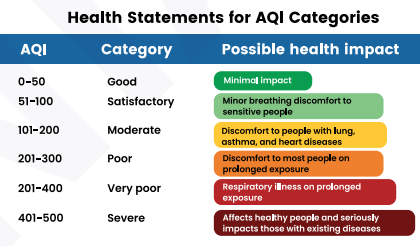
- Emergency response mechanism based on AQI level of Delhi.
- Divided into four stages based on AQI levels.
- Stage 1: Poor category (AQI 201 to 300).
- Stage 2: Very poor category (AQI 301-400).
- Stage 3: Severe category (AQI 401-450).
- Stage 4: Severe + category (AQI 451+).
- CAQM in NCR and adjoining areas oversees implementation of GRAP.
Reasons for Winter Air Pollution in Delhi:
- Change in wind direction brings dust from Rajasthan, Pakistan, and Afghanistan.
- Decrease in wind speed during winters leads to accumulation of pollutants.
- Other sources include farm fires, dust, and vehicular pollution.
Initiatives to Prevent Air Pollution:
- CAQM's 11-point action plan includes mechanical sweeping and dust suppressants.
- SAFAR system for air quality and weather forecasting.
- Spraying PUSA bio-decompose in farmlands.
About Air Quality Index (AQI):
- Government agencies issue AQI to measure air pollution levels and inform the public.
- Eight pollutants are considered for calculating AQI, including PM10, PM2.5, NO2, and CO.
About Commission for Air Quality Management (CAQM):
- Established under Commission for Air Quality Management in NCR and Adjoining Areas Act, 2021.
- Replaced Environment Pollution Authority.
- Aims to manage air quality in NCR and adjoining areas through coordination, research, and resolution of air quality issues.
International Monetary Fund (IMF) releases World Economic Outlook (October 2024) Report
- Published twice a year.
- Provides analyses and projections of global economy in short and medium term.
Key Highlights of Report:
- Global growth projected to remain stable at 3.2% in 2024 and 2025.
- Uncertainty factors include geopolitical conflict, trade tensions, elections, and leadership changes.
- India's growth expected at 6.5% in 2025-26.
- Urgency of structural reforms emphasized, strategies discussed to enhance social acceptability.
Structural Reforms:
- Definition: Policy changes that aim to improve resource allocation in the economy by modifying acquired rights and economic rents.
- Social Acceptability: Difficulty in securing social acceptance due to uneven distribution of gains and losses from reforms across society and time.
- Determinants of Attitude: Personal beliefs, perceptions, and other behavioral factors about policy effects, including misinformation and socioeconomic characteristics.
Strategies for Boosting Support for Structural Reforms:
- Information: Providing clear and nonpartisan information to correct misperceptions.
- Engagement: Two-way dialogue between officials and the public to allow input in shaping policies.
- Mitigation: Addressing concerns of groups affected by reforms with tailored mitigating measures.
- Trust: Establishing credible and independent government bodies and implementing first generation reforms to address corruption and improve governance.
Delhi High Court closed contempt proceedings against Wikipedia
- Contempt proceedings ended after Wikipedia removed article criticizing ANI news agency's lawsuit.
- ANI sued Wikimedia Foundation over a Wikipedia page calling ANI a propaganda tool for the government.
- Court ruled in favor of closing proceedings as the article violated the sub-judice principle.
High court ruling on Wikipedia article:
- Court found the article interfered with ongoing court proceedings.
- Sub-judice principle prohibits publications that could influence or prejudice a case.
- Wikipedia's criticism of ANI lawsuit was seen as interference in court proceedings.
Contempt of Court:
- Contempt of Court Act, 1971 categorizes Contempt of Court as Civil Contempt or Criminal Contempt.
- Civil contempt involves willful disobedience to court judgments, decrees, orders, etc.
- Criminal contempt includes actions like scandalizing the court, interfering with judicial proceedings, or obstructing justice.
Constitutional Provisions for Contempt:
- Article 129 designates the Supreme Court as a 'court of record' with the power to punish for contempt.
- High Courts are also granted similar powers under Article 215.
- Article 142 allows the Supreme Court to issue orders for the punishment of contempt of itself.
Ministry of Cooperatives released Standard Operating Procedures (SOPs) on ‘White Revolution 2.0’
- SOPs released during NDDB's diamond jubilee celebration.
- Aim to increase milk procurement by 50% over next 5 years.
About NDDB:
- Founded by Dr. Verghese Kurien in 1965.
- Merged with Indian Dairy Corporation in 1987.
- Declared as an institution of national importance.
- Implemented Operation Flood program leading to White Revolution.
White Revolution 2.0:
- Goal: Increase milk procurement by dairy cooperative societies by 50% in the next 5 years.
- Objectives: Empower women, generate employment, and expand cooperative coverage.
- NPDD 2.0: Targets of White Revolution 2.0 included in newly proposed Central Sector Scheme.
- Financial assistance provided for setting up village level milk procurement system and milk chilling facilities.
- Plan to establish/strengthen 1 lakh Dairy Cooperative Societies.
India’s Milk Production Status:
- India is the world's top milk producer with 230.58 million tonnes production in 2022-23.
- National per capita availability of milk is 459 grams/day, higher than the global average of 323 g/day.
Other Initiatives to Boost Dairy Sector:
- Rashtriya Gokul Mission, National Programme for Dairy Development, Livestock Health & Disease Control Programme, Animal Husbandry Infrastructure Development Fund, etc.