
Daily Current Affairs UPSC 28 and 29 July 2024
Welcome to our daily current affairs blog post for UPSC aspirants! In today's edition, we will be discussing the most significant events and news updates that took place on 28th and 29th July 2024. Staying updated with current affairs is crucial for UPSC preparation, as it not only helps you stay informed but also enhances your understanding of various subjects. So, let's dive into the important happenings of the day and explore their potential impact on the upcoming UPSC examinations.

Saffron
- Erratic weather patterns in J&K have caused saffron farmers to switch to apple and mustard plantations.
- Saffron is a fragrant spice found in Crocus flowers.
- It is one of the most expensive spices in the world, requiring 75,000 flowers to make one ounce.
- Saffron contains aromatic essential oil croncin and the color crocerin.
- Saffron cultivation requires sub-temperate climate, altitude, annual rainfall, and well-drained soil.
PMGDISHA
- The Union Government recently reported to Parliament that over 6 crore individuals have been trained and over 4.7 crore candidates have been certified under PMGDISHA.
- PMGDISHA was launched in 2017 to promote digital literacy in rural India.
- The implementing agency for PMGDISHA is CSC e-Governance Services India Limited.
- The program targets one person from every eligible rural household in the age group of 14-60 years.
- PMGDISHA is only applicable in rural areas with a Gram Panchayat centric approach.
- The training under PMGDISHA includes 20 hours of instruction on digital devices, internet use, and cashless transactions in 22 scheduled languages and English.
- Third-party assessment by recognized agencies is conducted, and certificates are uploaded to trainees' Digi-Locker accounts.
Aquilaria Malaccensis (agarwood)
- CITES is making it easier to export agarwood from India, which will benefit many farmers.
- Agarwood is a valuable aromatic plant native to Northeast India, Bangladesh, Bhutan, and parts of Southeast Asia.
- The oil and chips from agarwood are highly valued in the market.
- Agarwood is considered Critically Endangered according to the IUCN.
- Agarwood is listed in Appendix II of CITES and Schedule IV of the Wildlife (Protection) Act, 1972.
Charles Darwin’s frog (Minervarya charlesdarwini)
- A recent study has uncovered a distinctive spawning behavior in the Minervarya Charlesdarwini Frog.
- This frog species is found exclusively on the Andaman Island.
- The frogs use intricate calls to attract females for mating.
- They have a unique upside-down spawning behavior, which serves as a defensive adaptation to protect their eggs.
- The IUCN has classified this species as Vulnerable due to threats such as habitat loss.
Oropouche Virus
- Brazil reported the world's first death from Oropouche virus.
- Oropouche Virus disease is caused by a segmented single-stranded RNA virus.
- The virus is found in Central and South America and the Caribbean.
- It is primarily transmitted to humans by Culicoides paraensis midges or Culex quinquefasciatus mosquitoes.
- Symptoms of the disease are similar to dengue.
- There is no evidence of human-to-human transmission of OROV.
- Currently, there is no specific antiviral treatment or vaccine for Oropouche virus disease.
MyGov
- MyGov platform recently celebrated its 10th anniversary since its launch in July 2014.
- It is a citizen-centric platform that allows people to connect with the Government and contribute to good governance.
- MyGov is a part of Digital India Corporation, a non-profit organization under the Ministry of Electronics and IT.
- The platform engages with citizens for policy formulation and seeks their opinions on public interest and welfare issues.
- MyGov uses various engagement methods such as social media, polls, surveys, and competitions to crowdsource ideas like logo designs for schemes.
Gaganyaan Mission
- The Union Government announced that one astronaut from the Gaganyaan mission will go to the International Space Station in collaboration with NASA.
- The Gaganyaan Mission aims to demonstrate India's human spaceflight capability by sending a crew of 3 members to orbit 400 km for a 3-day mission.
- The launch vehicle for the mission is the Human rated LVM3 (HLVM3), a modified version of the LVM3 with solid, liquid, and cryogenic stages.
- A successful Gaganyaan launch will make India the 4th country to launch crewed spacecraft, after the US, Russia, and China.
Inter Creditor Agreement
- Government-owned Rashtriya Ispat Nigam (RINL) defaulted, leading lenders to create an Inter Creditor Agreement. (ICA)
- The ICA outlines terms and allocation of collateral in case of borrower default.
- It establishes borrower's rights, payment priorities, and hierarchy among creditors.
- According to RBI guidelines, decisions agreed upon by 75% of total outstanding credit facilities and 60% of lenders by number are binding on all lenders.
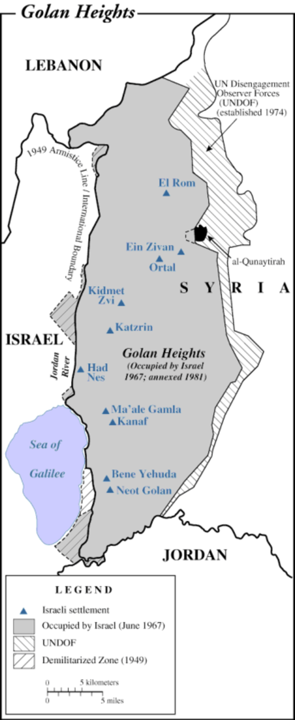
Golan Heights
- Rockets hit Israeli-occupied Golan Heights.
- Golan Heights background
- Israel took Golan Heights from Syria in 1967.
- Annexed by Israel in 1981, not recognized internationally.
- Geographical features of Golan Heights
- Rocky plateau in south-western Syria.
- Bounded by Jordan River, Sea of Galilee, Mount Hermon, Wadi Al-Ruqqād, and Yarmūk River.
- Important water source for arid region.
- Fertile land used for vineyards.
"Revolutionizing Urban Transit with TOD Plans"
- The Union Budget for 2024-25 includes plans to implement Transit Oriented Development (TOD) strategies in 14 large cities with populations over 30 Lakhs.
- TOD is a urban concept that utilizes public transit infrastructure to promote sustainable mobility and optimize land use through compact mixed-use development.
Significance of TOD
- Economic benefits of TOD include increased real estate value, higher labor productivity, and improved economic competitiveness of cities.
- Environmental advantages of TOD include reduced carbon footprint, air pollution, and promotion of urban greens.
- Social benefits of TOD include encouraging physical activity, improving public health outcomes, and reducing urban sprawl.
Three Values (3V) Framework for guiding TOD
- Node value focuses on the importance of public transit stations based on passenger traffic and connections with other transport modes.
- Place value considers the quality and attractiveness of the area, including diversity of land use and availability of essential services.
- Market potential value measures the unrealized market value based on demand and supply factors.
Steps taken for TOD in India
- The National Transit Oriented Development Policy of 2017 outlines guiding principles and supportive tools for TOD implementation.
- The Smart Cities Mission incorporates TOD as a key component.
- Efforts are being made to integrate different modes of transport to create seamless connectivity in TOD zones.
- Local TOD policies, such as the TOD Manual for Delhi, are being developed to support TOD implementation.
"India's Act East Policy: A Decade of Progress"
- The AEP was introduced by the Prime Minister during his trip to Myanmar for the East Asia Summit and the ASEAN + India Summit in November 2014.
- AEP is the evolution of the Look East Policy that was implemented in 1992.
About Act East Policy (AEP)
- AEP's main focus is on the extended neighborhood in the Indo-Pacific region, with ASEAN as its central point.
- The objective of AEP is to enhance economic cooperation, strengthen cultural ties, and build strategic relationships in the Indo-Pacific region by improving connectivity.
- AEP aims to foster closer relationships and collaboration among countries in the Indo-Pacific region through various initiatives and programs.
Achievements of Act East Policy
- AEP has positioned India as a key player in the Indo-Pacific region, supporting countries like the Philippines in disputes like the South China Sea.
- Stronger strategic partnerships have been formed with countries like Indonesia, Vietnam, Malaysia, and Japan, as well as with organizations like BIMSTEC and the IOR.
- Northeastern states of India have seen greater integration with ASEAN, reducing economic isolation through initiatives like the India-Japan Act East Forum.
Roadblocks to AEP
- Deeper Chinese integration in the ASEAN economy poses a challenge to India's objectives in the region.
- India's economic under-performance, reflected in a trade deficit of $43.57 billion, hinders the full potential of AEP.
Way Forward
- Suggestions include a review of the ASEAN FTA, promoting tourism, and partnering with countries like Singapore and Malaysia to boost initiatives like the Indian Semiconductor Mission.
Initiatives under Act East Policy
- AEP has led to projects like the India-Myanmar-Thailand trilateral highway and the Kaladan multi-modal transport project to enhance regional connectivity.
- India has played a significant role in global health by supplying Covid-19 vaccines under the Vaccine Maitri initiative.
- Defense exports, such as the supply of the BrahMos missile system to the Philippines, have strengthened India's strategic partnerships.
- Efforts to restore cultural ties include the restoration of monuments like the My Son temples in Vietnam, Buddhist Pagodas in Bagan (Myanmar), Wat Phou Temple Complex in Laos, and Preah Vihear temple in Cambodia.
"Oil tanker sinks near Manila, spill concerns rise"
- Oil spills/pollution refer to the unintentional or intentional release of oil from vessels such as tankers, offshore platforms, and pipelines.
Effects of Oil Spills on Coastal and Marine Ecosystems
- Loss of Biodiversity: Oil spills can lead to the death of thousands of sea birds and other marine animals.
- Disruption of Food Chain: Oil pollution can disrupt the food chain and lead to bioaccumulation of toxic substances in organisms.
- Impact on Photosynthesis: Oil spills can affect the ability of phytoplankton to carry out photosynthesis.
Remedies for Oil Pollution
- Standard Operating Procedures: Implementing safe handling procedures and using double-walled equipment can help prevent oil spills.
- Bioremediation: Using living organisms like Oilzapper and Oilivorous-S can help in the removal of contaminants.
- Use of Booms and Skimmers: Booms are physical barriers used to contain oil spills, while skimmers are boats deployed to remove the oil from the water.
Laws and Conventions on Oil Pollution
- International Conventions:
- MARPOL is an international agreement aimed at preventing pollution from ships.
- The International Convention on Civil Liability for Oil Pollution Damage 1992 addresses liability for oil pollution incidents.
- OPRC, established in 1990, focuses on preparedness, response, and cooperation in cases of oil pollution.
- National Laws:
- National Oil Spill Disaster Contingency Plan, 1996.
- The Merchant Shipping Act, 1958.
- The Environment (Protection) Act, 1986.

"INM Boosts Soil Fertility"
- The Union Government has informed Parliament that a long-term fertilizer experiment conducted by the Indian Council of Agricultural Research showed that Integrated Nutrient Management practices helped to preserve soil fertility.
About INM
- Soil fertility and plant nutrient maintenance involves keeping the soil and plants at an ideal level for productivity by using organic, inorganic, and biological components.
- Integrated Nutrient Management (INM) focuses on maximizing the benefits of all nutrient sources for a cropping system or crop rotation, rather than just one crop.
Significance of INM
- Enhanced soil fertility and health: INM increases soil organic matter, improving nutrient retention, soil structure, and water-holding capacity.
- Sustainable crop production: INM reduces pollution from excessive fertilizer use and synchronizes nutrient demand with supply from native and applied sources.
- Other benefits include cost-effectiveness, resource optimization, and food security.
Key components of INM
- Evaluating nutrient availability and deficiencies in plants and soils through testing procedures.
- Analyzing current soil fertility management practices to identify limitations and potential improvements.
- Engaging farmers in participatory experimentation and development of Integrated Nutrient Management (INM) technologies.
- Assessing the productivity and sustainability of farming systems through systematic evaluation.
Challenges with INM
- Complex decision-making process and inadequate technical knowledge and training are some of the challenges associated with implementing INM.
Government Initiatives to Promote INM and Organic Farming
- Paramparagat Krishi Vikas Yojana (PKVY), Mission Organic Value Chain Development in North East Region (MOVCDNER), Market Development Assistance (MDA) for organic fertilizers, and PM-PRANAM are some of the government initiatives aimed at promoting sustainable and balanced use of fertilizers and organic farming.
"CBSE Introduces SAFAL Test Cycle 2024 to Combat Exam Stress"
- It seeks to create a unique survey of educational deficiencies in order to strategize and implement necessary corrective measures promptly.
Structured Assessment For Analyzing Learning (SAFAL)
- SAFAL is a Competency-based Assessment for Grades 3, 5, and 8 that evaluates core concepts, application of knowledge, and higher-order thinking skills.
- It aims to move away from rote learning in schools and provide diagnostic information for the development of learning outcomes.
- The assessment will focus on continuous improvement rather than promotion to the next grade.
- Students will be tested on proficiency at four levels of skills and knowledge.
- No additional classes or special preparations are needed for students to take SAFAL.
Competency-based Framework under NEP, 2020
- Competency-based education emphasizes the development and demonstration of specific skills, knowledge, and abilities over traditional standardized testing.
- It aligns with promoting skill development and employability in the workforce.
- PARAKH (National Assessment Centre) was established to support competency-based assessment objectives.
About PARAKH (Performance Assessment, Review and Analysis of Knowledge for Holistic Development)
- PARAKH is an independent unit set up in NCERT in 2023.
- PARAKH has four main areas of focus:
- Capacity Development through Project Vidyasagar.
- National Achievement Survey (NAS) for ongoing monitoring and evaluation.
- Equivalence of School Boards to ensure consistency in credit system.
- Holistic Progress Cards for different stages of education: Foundational, Preparational, Middle, and Secondary.
Kerala Criticized for Appointing External Cooperation Official
- The Ministry of External Affairs expressed disapproval of the Kerala government's decision to appoint a Secretary for External Cooperation, arguing that state governments should not interfere in matters that fall outside of their constitutional authority.
Constitutional Provisions Regarding External Affairs
- Seventh Schedule and Union List: The Constitution specifies that foreign affairs fall under the Union List, meaning that matters related to foreign countries are the responsibility of the central government.
- Article 253: Parliament has the authority to make laws to implement treaties and decisions made at international conferences.
- Article 293: States are limited in their ability to borrow from foreign sources.
State's Interests in External Affairs
- Economic Interests: States seek to attract foreign investment and promote trade through initiatives like investor summits.
- Resource Sharing: States may have conflicting interests with the central government on issues like river treaties.
- Cultural and Diaspora Connections: States with large diaspora populations have a stake in maintaining connections and facilitating remittances.
- Other Interests: States like Goa may have specific concerns related to tourism, while states like Punjab and Jammu & Kashmir may focus on national security.
Way Forward to Promote and Protect State's Interests in External Affairs
- Strengthening Existing Mechanisms: Enhancing the role of the Inter-State Council for state involvement in foreign policy.
- Establishing MEA Branch Offices: Having state officials in MEA branch offices in state capitals.
- Reviving Meetings: Regular meetings between MEA and state Chief Secretaries on foreign policy matters.
- Stationing Representatives Abroad: Allowing interested states to have representatives in Indian embassies.
- Creating International Affairs Cells: Encouraging states to establish cells focused on international affairs with support from MEA.