Daily Current Affairs UPSC 18 October 2024
Welcome to our daily current affairs blog post for UPSC aspirants! In today's edition, we will be discussing the most significant events and news updates that took place on 18th October 2024. Staying updated with current affairs is crucial for UPSC preparation, as it not only helps you stay informed but also enhances your understanding of various subjects. So, let's dive into the important happenings of the day and explore their potential impact on the upcoming UPSC examinations.

Drugs Technical Advisory Board (DTAB)
- DTAB has suggested that all antibiotics be included in the definition of new drugs in the NDCT Rules, 2019.
- DTAB is a part of the CDSCO within the Ministry of Health and Family Welfare.
- DTAB is a committee established under the Drugs and Cosmetics Act, 1940.
- As the highest statutory decision-making body, DTAB makes policy decisions regarding the technical aspects of the Drugs and Cosmetics Act and Rules.
- Recommendations made by DTAB are sent to the Ministry for final approval.
Minimum Support Price (MSP)
- The government recently increased the Minimum Support Price (MSP) for wheat and five other rabi crops.
- MSP is a guaranteed price paid to farmers when the government buys or procures their crops.
- MSP includes 22 different crops categorized into 14 Kharif crops, 6 Rabi crops, and 2 commercial crops.
- Kharif crops covered by MSP include paddy, jowar, bajra, maize, ragi, arhar, Moong, Urad, groundnut, soyabean, sunflower, sesamum, niger seed, and cotton.
- Rabi crops included in MSP are wheat, barley, gram, masur (lentil), rapeseed/mustard, and safflower.
- The two commercial crops covered by MSP are jute and copra.
- Additionally, MSP for Toria and de-husked coconut is determined based on the MSPs of rapeseed/mustard and copra, respectively.
- The Commission for Agricultural Costs and Prices recommends MSP, and the Cabinet Committee on Economic Affairs chaired by the Prime Minister makes the final decision on MSP adjustments.
Line of Credit (LOC)
- India has given its first-ever rupee-denominated Line of Credit (LOC) to Mauritius for a water pipeline replacement project.
- This assistance is part of India's Indian Development and Economic Assistance Scheme (IDEAS) and is facilitated through the Exim Bank of India.
- LOCs are not grants but low-interest loans provided to developing countries, which must be repaid by the borrowing government.
- These LOCs also help boost Indian exports, as 75% of the contract value must be sourced from India.
- India has extended over 300 LOCs worth US$ 32 billion to 68 countries, covering around 600 projects in various sectors.
Bushveld Igneous Complex (BIC)
- Researchers have found living microbes in a sealed fracture of a 2-billion-year-old rock from BIC in South Africa, making it the oldest example of living microbes in ancient rock.
- BIC is a large layered igneous intrusion in South Africa that has been tilted and eroded over time, covering an area of approximately 66,000 square kilometers.
- BIC contains some of the richest ore deposits on Earth, including about 70% of the world's mined platinum.

Green and Blue water
- The Global Commission on the Economics of Water recently published a report focusing on the concepts of 'Green water' and 'Blue water'.
- Green water pertains to moisture present in soils and vegetation, playing a crucial role in the hydrologic cycle by being absorbed by roots, utilized by plants, and released back into the atmosphere through transpiration.
- Green water is essential for generating rainfall, mitigating climate change, and maintaining economic stability.
- Blue water includes surface and groundwater sources such as lakes, rivers, and reservoirs, which are replenished by precipitation.
Hyperuniformity
- Scientists have been studying the mechanism behind the unique disordered state of matter called "hyperuniformity."
- Hyperuniformity is a characteristic of certain heterogeneous materials where density fluctuations decrease to zero in the long-wavelength range.
- Unlike liquids or solids, hyperuniform materials suppress fluctuations as the system grows.
- Hyperuniformity can be found in quasicrystals, biological emulsions, soft and biological colloids.
- Potential applications of hyperuniformity include energy-efficient photonic devices, optical data transmission systems, and controlling physiological functions in cells.
Hoolock Gibbon
- The National Board for Wildlife has postponed approval for oil exploration in Assam's Hollongapar Gibbon Sanctuary.
- The sanctuary is home to the Hoolock Gibbon, the only apes found in India.
- There are two types of Hoolock Gibbons: the western hoolock gibbon and the eastern hoolock gibbon.
- The western hoolock gibbon has a wider range and can be found in all northeastern states.
- The eastern hoolock gibbon is only found in specific areas of Arunachal Pradesh and Assam.
- The western hoolock gibbon is classified as Endangered on the IUCN Red List, while the eastern hoolock gibbon is classified as Vulnerable.
Per-and polyfluoroalkyl substances (PFAS)
- Recent research indicates that exposure to PFAS can lead to kidney function impairment by disrupting gut microbiota.
- PFAS, also known as forever chemicals, are synthetic substances that linger in the environment and human bodies for a long time without breaking down easily.
- These man-made chemicals are commonly found in everyday items like nonstick cookware, water-repellent clothing, stain-resistant fabrics, carpets, cosmetics, and firefighting foams.
- Exposure to PFAS has been associated with various health problems such as cardiovascular disease and cancer.
- Currently, three sub-groups of PFAS are classified as industrial POPs under the Stockholm Convention.
Mauritania (Capital: Nouakchott)
The President of India's Visit to Mauritania
About Mauritania
Political Features:
- Form of Government: Presidential.
- Boundary: Borders Western Sahara, Algeria, Mali, Senegal, and the Atlantic Ocean.
- Former French colony that gained independence in 1960.
Geographical Features of Mauritania
- Location: Located on the Atlantic coast of Africa with much of the country being part of the Sahara desert.
- Drainage: Senegal River and its tributaries.
- Climate: Characterized by a dry, hot, and windy climate, with severe exposure to desertification.
- Northeastern trade winds and Harmattan winds influence the climate.

"SC Upholds Validity of Section 6A of Citizenship Act"
- Section 6A was added to the Citizenship Amendment Act in 1985 as part of the Assam Accord between the central government and leaders of the Assam Movement.
- It granted citizenship to those who migrated from East Pakistan to Assam between January 1, 1966, and March 24, 1971, after ten years of being detected as foreigners.
SC judgment:
- Parliament has the authority to enact Section 6A based on Article 246 and Entry 17 of List I, which pertains to Citizenship, naturalization, and aliens.
- The special citizenship law in Assam does not violate equality under Article 14 because the migrant situation in Assam was unique compared to the rest of India.
- There is no evidence that migrants in Assam have harmed the cultural rights of the Assamese, as protected under Article 29(1).
- The cutoff date of 24 March 1971 is considered reasonable because the Pakistani Army's Operation SearchLight to suppress the Bangladeshi nationalist movement began on 26 March 1971.
- Migrants who arrived after this date were seen as migrants of war rather than partitions.
About Citizenship Act, 1955
- Lists five methods for obtaining citizenship: birth, descent, registration, naturalization, and incorporation of territory.
- Does not allow for dual citizenship.
- The Citizenship Amendment Act of 2019 states that individuals from certain religious communities in Afghanistan, Bangladesh, or Pakistan who entered India before December 31, 2014, will not be considered illegal migrants.
"SCO Council of Heads of Government Meeting in Islamabad"
- The summit saw the signing of eight significant agreements focusing on issues such as SCO's budget, operations of the secretariat, and counterterrorism efforts.
Key Takeaways from Summit:
- India emphasized the importance of combating terrorism, extremism, and separatism for regional peace and development.
- India did not support China's Belt and Road Initiative due to concerns about territorial integrity and sovereignty.
- Criticism was directed at Western nations for imposing unilateral sanctions, particularly on Russia.
- The summit advanced India's digital agenda by incorporating Digital Public Infrastructure (DPI) and digital inclusion into SCO cooperation.
Significance of SCO for India:
- The Regional Anti-Terrorist Structure (RATS) provides India with access to crucial information and intelligence on terrorist and drug-trafficking activities.
- The SCO serves as a platform for India to engage with Central Asian countries and pursue its Connect Central Asia policy.
- The organization facilitates closer cooperation between India and Russia.
- The region covered by the SCO is rich in natural gas and oil reserves, contributing to India's energy security.
- The SCO helps India balance Chinese dominance in the region through initiatives like the Chabahar Port and INSTC.
Challenges of SCO:
- Disputes among member countries pose a challenge to the organization's unity.
- Competition for dominance between China and Russia can create tensions within the SCO.
- Divergent interests among member countries may hinder cooperation and decision-making.
About SCO (HQ: Beijing, China):
- The SCO is a permanent intergovernmental international organization established in 2001 in Shanghai by Kazakhstan, China, Kyrgyz Republic, Russia, Tajikistan, and Uzbekistan.
- Current members include India, Iran, Kazakhstan, China, Kyrgyzstan, Pakistan, Russia, Tajikistan, Uzbekistan, and Belarus, with Afghanistan and Mongolia holding observer status.
- The organization aims to strengthen mutual trust, friendship, and neighborly relations among member states while promoting cooperation in political, economic, and cultural spheres.

"PM Joins International Abhidhamma Divas"
- International Abhidhamma Day (IAD) observed by Ministry of Culture and International Buddhist Confederation.
- Celebration of Pali language declared as classical language by Cabinet.
About International Abhidhamma Day (IAD):
- It celebrates the day when Lord Buddha came down from the celestial realm to Sankassiya in Uttar Pradesh.
- The Asokan Elephant Pillar at Sankassiya commemorates this important occasion.
- This event coincides with the end of the first Rainy Retreat and the Pavāraņā festival, which marks the conclusion of the retreat period for bhikkhus.
About Abhidhamma:
- Abhidhamma is a collection of teachings that represent the earliest compilation of Buddhist philosophy and psychology, detailing Buddhist doctrines.
- The term Abhidhamma combines 'abhi' (higher/further) and 'dhamma' (teachings), translating to Higher Dhamma or Further Truths.
- It is the third part of the Tripitaka (Pali Canon) and is fundamental to the Theravada Buddhist tradition.
- Comprised of seven books, Abhidhamma explores human experience, including the nature of consciousness, universal mental factors, and the cultivation of mindfulness.
- Abhidhamma developed a specialized vocabulary in Pali, which forms the basis of Buddhist philosophy and psychology.
- Key terms in Abhidhamma include "citta" (consciousness), "cetasika" (mental factors), "rūpa" (materiality), and "nibbāna" (final liberation).
About Pali language:
- Pali is considered a Classical Language along with Marathi, Prakrit, Assamese, and Bengali.
- It is an ancient language used for Buddhist and Jain literature, including the Tripitaka.
- The Tripitaka consists of the Vinaya Pitaka, Sutta Pitaka, and Abhidhamma Pitaka.
- Other important works in Pali include Jataka Kathas, Atthasālinī, Sammohavinodanī, Dhammapada, and Dhammacakkapavattana Sutta.
RBI Bars Four NBFCs from Granting Loans
- The RBI has issued a directive under Section 45L(1)(b) of the Reserve Bank of India Act, 1934, due to concerns regarding the pricing policy of Non-Banking Financial Companies (NBFCs).
- The directive is based on supervisory observations related to the Weighted Average Lending Rate (WALR) and interest spread charged by NBFCs over their cost of funds.
Non-Banking Financial Company (NBFC) Overview
- NBFCs are companies registered under the Companies Act, 1956, primarily engaged in lending activities but excluding those involved in agriculture, industrial activity, trading goods (except securities), and real estate transactions.
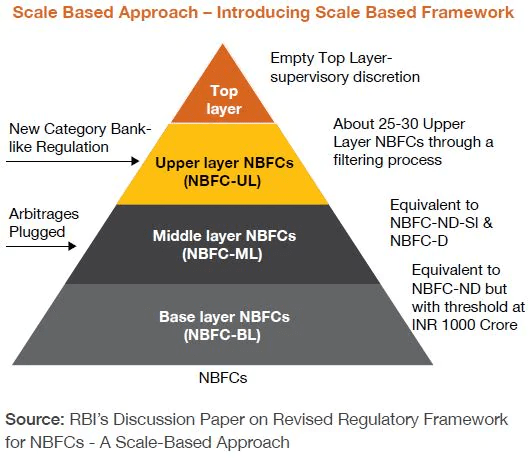
- The RBI regulates NBFCs in different categories based on their size, activities, and perceived risk levels.
- Unlike banks, NBFCs cannot accept demand deposits, are not part of the payment and settlement system, and cannot issue cheques drawn on themselves.
- Depositors of NBFCs do not have access to the deposit insurance facility provided by the Deposit Insurance and Credit Guarantee Corporation.
Issues with NBFCs
- NBFCs face challenges such as being regulated by multiple bodies (SEBI, IRDAI, etc), borrowing short-term funds for long-term lending, and dealing with Non-Performing Assets (NPAs).
"Trustworthy AI Framework for Defense Operations"
- The Chief of Defense Staff has introduced the Evaluating Trustworthy Artificial Intelligence (ETAI) Framework and Guidelines to incorporate Trustworthy AI into important defense operations.
- ETAI is a risk-based evaluation framework designed specifically for the defense industry.
- It centers around five main principles: Reliability and Robustness, Safety and Security, Transparency, Fairness, and Privacy.
- The framework also outlines a detailed set of standards for assessing trustworthy AI and provides a systematic method for developing and evaluating trustworthy AI.
How AI is revolutionizing modern warfare?
- AI is improving the abilities of drones and other autonomous systems like the Israeli UAVs Harpy and Harop.
- AI is being used in command and control systems like Sarvatra Pehchaan for real-time data processing and intrusion detection.
- Decision-support systems powered by AI can quickly analyze battlefield situations and recommend the best strategies and responses, as seen with the Indian army's use of the Storm drone.
Concerns with Use of AI:
- Unintended civilian casualties can occur due to the use of automated weapons like Killer Robots.
- There is uncertainty surrounding the legality and ethics of using such weapons, especially in cases involving human rights violations and civilian deaths.
- Additional concerns include cyber security risks, lack of reliability, and the potential for promoting unrest and conflicts.
Steps taken by India for AI adoption into defense sector
- The Defense AI Council (DAIC) was established to offer advice and suggest policy changes for the implementation of AI.
- The Defense AI Project Agency (DAIPA) has developed a plan for creating AI-powered applications.
- A roadmap for defense DPSU outlines 61 specific AI projects that are set to be developed.
- The iDEX framework aims to promote innovation in defense technology.
"2024 MPI Report: Global Poverty Insights"
- The report "Poverty Amid Conflict" is a collaboration between the United Nations Development Programme (UNDP) and the Oxford Poverty and Human Development Initiative (OPHI).
- It examines the relationship between violent conflict and multidimensional poverty across countries and over time.
Key Findings of the Report
- Countries experiencing conflict have higher levels of deprivation across all ten indicators of multidimensional poverty compared to non-conflict settings.
- Approximately 1.1 billion people, or 18% of the global population, live in acute multidimensional poverty.
- India has the largest number of people in extreme poverty, with 234 million individuals facing severe deprivation.
About Multidimensional Poverty Index (MPI)
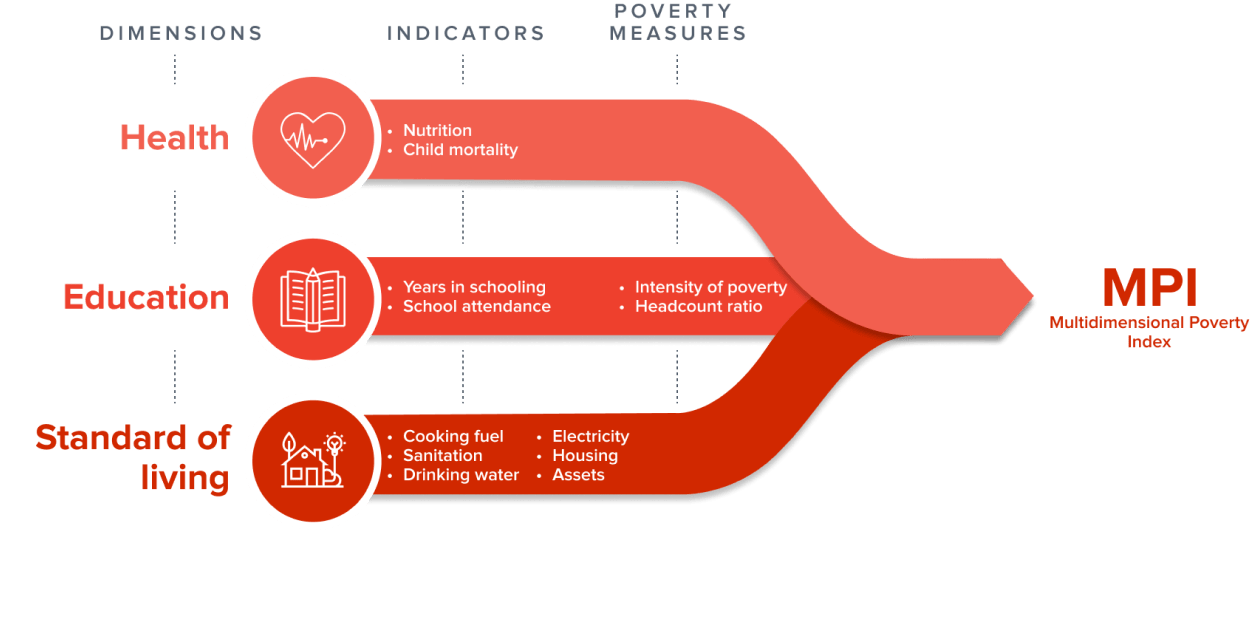
- MPI is a poverty measure that considers various deprivations in education, health, and living standards.
- Individuals are classified as 'MPI poor' if they are deprived in one-third or more of the weighted indicators.
- Launched in 2010, MPI aligns with Sustainable Development Goal 1 to end poverty in all its forms.
India's National MPI (NMPI)
- Introduced in 2021 by NITI Aayog, NMPI retains the original ten indicators of the global MPI model.
- Two additional indicators, Maternal Health and Bank Account, have been included in the Indian MPI to provide a more comprehensive assessment of poverty in the country.
Global Multidimensional Poverty Index