
Daily Current Affairs UPSC 23 August 2024
Welcome to our daily current affairs blog post for UPSC aspirants! In today's edition, we will be discussing the most significant events and news updates that took place on 23rd August 2024. Staying updated with current affairs is crucial for UPSC preparation, as it not only helps you stay informed but also enhances your understanding of various subjects. So, let's dive into the important happenings of the day and explore their potential impact on the upcoming UPSC examinations.

World Audio Visual & Entertainment Summit (WAVES)
- 25 challenges were introduced in the 'Create in India Challenge - Season 1' to showcase India's creator economy in the upcoming WAVES event in November.
- The creator economy involves creating and sharing digital content on platforms like Youtube to reach a large audience.
- WAVES is a platform for collaboration, innovation, and discussions within the Media and Entertainment industry.
- The objectives of WAVES include driving India's creator economy, positioning India as a business-friendly investment destination, and adapting to new trends.
- WAVES aims to amplify India's presence as a global leader in the M&E industry and promote cross-cultural exchanges while building a skilled workforce.
Smart Laboratory for Clean Rivers (SLCR) Project
- The Green Strategic Partnership between India and Denmark has resulted in the establishment of the SLCR in Varanasi.
- The SLCR Project aims to revitalize the Varuna River, a minor tributary of the Ganga.
- The project includes a hybrid lab model at IIT-BHU and an on-field living lab at Varuna River.
- Components of the project include a Decision Support System for analyzing water dynamics, characterization of pollutants, and a hydrogeological model for recharge sites in the Varuna Basin.
Guidelines for Seaplane Operations
- The Guidelines for Seaplane Operations in India were launched by the Union Minister for Civil Aviation.
- The 5.4 version of the UDAN was also launched by the Union Minister.
- Fresh bids will be invited for routes that were cancelled under UDAN 5.4.
- The RCS-UDAN Scheme was launched in 2016 to provide air connectivity to remote/unserved locations.
- Key provisions of the Guidelines include the extension of Viability Gap Funding for seaplane operations under RCS and the adoption of the NSOP framework for seaplanes.
Gumti River
- The Ministry of External Affairs stated that the floods in eastern districts of Bangladesh were not caused by the opening of the Dumbur dam on the Gumti river in Tripura.
- The Gumti River is a transboundary river that originates from a range connecting Longtharai and Atharamura in Tripura.
- The total length of the Gumti River from its origin to the Indo-Bangladesh border is 167.4 km.
- After flowing through the plains of Bangladesh, the Gumti River meets the Meghna river system near Daudkandi.
- The major fall along the Gumti River is Dumbur falls.
- The right bank tributaries of the Gumti River include Kanchi Gang, Pitra Gang, San Gang, Mailak Chhara, and Surma Chhara.
- The left bank tributaries of the Gumti River include Ek Chhari, Maharani Chhara, and Ganga.
Tokenization
- Tokenized cards are now allowing for CVV-free payments.
- Tokenization involves replacing card details with a unique code called a "token".
- Tokens can be used for various types of transactions, including online, mobile, and in-app.
- Tokenization can be done by the card network or issuer.
- Benefits of tokenization include increased security and reduced risk of data breaches.
Zinc-ion batteries
- The Jawaharlal Nehru Centre for Advanced Scientific Research is collaborating with Hindustan Zinc Limited to create innovative zinc materials for Zn-ion batteries.
- The development of new zinc materials is aimed at enabling affordable energy storage on a large scale.
- Zinc-ion batteries are a type of rechargeable battery that utilizes zinc ions for charging.
- These batteries offer advantages such as quick charging and discharging, high power and energy density, and the abundance of zinc as a resource.
- However, they also have drawbacks like low conductivity and safety issues.
'A1' & 'A2' milk
- FSSAI has instructed food businesses to remove labels claiming 'A1' and 'A2' types of milk due to non-compliance with the Food Safety and Standards Act, 2006.
- Casein, a protein in milk, comes in at least 13 different forms, with the primary ones being A1 beta-casein and A2 beta-casein.
- A1 beta-casein is mainly found in cow breeds from northern Europe, while A2 beta-casein is present in milk from breeds native to Channel Islands and southern France.
- Regular milk contains both A1 and A2 beta-casein, but A2 milk is unique as it only contains the A2 variant.
Antimatter
- Scientists have recently discovered the heaviest antimatter nucleus in the Relativistic Heavy Ion Collider, known as antihyper hydrogen-4.
- Antimatter particles have opposite qualities, such as electric charge, compared to their matter counterparts.
- For example, a positron is the antiparticle to an electron, with the same mass but opposite charge.
- Antimatter particles corresponding to electrons, protons, and neutrons are called positrons, antiprotons, and antineutrons.
- Matter and antimatter particles are always produced as a pair and will annihilate each other upon contact, leaving behind pure energy.
Republic of Panama (Capital: Panama City)
Panama has revealed plans for additional deportation flights for migrants heading to Ecuador, India, and China.
Political Features
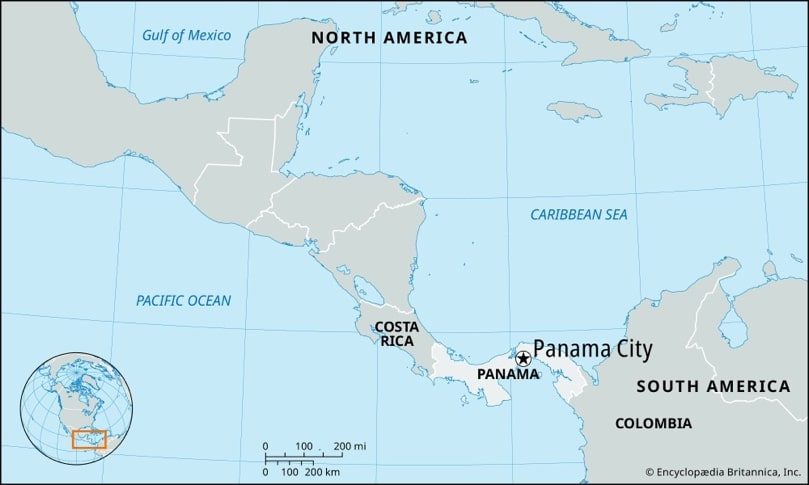
- Location: Panama is a country in Central America situated on the Isthmus of Panama, which connects North and South America.
- Territorial Boundaries: Panama shares borders with Costa Rica to the west and Colombia to the east. It also has maritime boundaries with the Caribbean Sea to the north and the Pacific Ocean to the south.
- International Relations: Panama is a member of various international organizations such as G-77 and the International Solar Alliance.
Geographical Features
- Climate: Panama has a hot and humid tropical climate with a long rainy season from May to January.
- Major Rivers: Some of the major rivers in Panama include Río Chagres and Rio Chepo.
- Major Mountain Range: The Central Mountain Range, known as Cordillera Central, is a significant geographical feature in Panama.
- Highest Peak: The highest peak in Panama is Barú Volcano.
"Delhi's New Climate Change Strategy"
Delhi's action plan, which was initially implemented in 2019, requires updating due to the increasing severity of extreme weather events such as unprecedented heat waves and record rainfall this year.
SAPCC:
- States and Union Territories (UTs) create their own SAPCC to address climate change issues through adaptation and mitigation measures.
- SAPCCs are tailored to the specific ecological, social, and economic conditions of each State.
- SAPCCs align with the National Action Plan on Climate Change (NAPCC).
- NAPCC, introduced in 2008, provides a national strategy for climate change adaptation in India.
- NAPCC consists of eight National Missions that are central to the plan.
- Funding: Funding for SAPCCs is provided under the Climate Change Action Plan scheme.
- Currently, 34 States and UTs have developed their SAPCCs to address climate change issues.
Barriers to Implementation
- Absence of strong leadership and political determination due to SAPCC's hierarchical approach and the presence of pre-existing climate change strategies.
- Insufficiently defined actions that are not specific or clear enough to support implementation.
- Resource limitations as the State relied on the assumption that funding would be provided by the central government or other sources.
Way Forward
- International climate finance has the potential to fund extra expenses for adaptation.
- Designating nodal officers in key departments to address institutional obstacles related to climate change.
- Creating thorough project reports and consistently updating plans.
Significance of State level climate strategies/Plans:
- Supporting a fair transition: For example, the Swaniti initiative in Jharkhand successfully raised INR 45 Crores to fund projects focused on renewable energy and sustainability.
- Incorporating climate initiatives into local development plans: The Carbon Neutral Meenangadi project in Kerala is a prime example of this approach.
- Protecting mangroves and marine life: The Mangrove cell in Maharashtra is dedicated to the conservation of mangroves and marine biodiversity.
"Transforming Lives: Five Years of Jal Jeevan Mission"
The Jal Jeevan Mission was initiated in 2019 with the aim of providing Functional Household Tap Connections (FHTCs) to all rural households by 2024, ensuring a service level of 55 litres per capita per day.
Key Achievements
- Tap water coverage has significantly increased from 3.23 Crore to approximately 15 Crore households.
- 8 states and 3 Union Territories have achieved 100% tap water coverage.
- Nationwide, 88.91% of schools and 85.08% of Anganwadi centres now receive tap water.
- 'Har Ghar Jal' status has been achieved by 2.28 lakh villages and 190 districts.
About Jal Jeevan Mission
- The National Rural Drinking Water Programme was restructured and incorporated into the Jal Jeevan Mission.
- The Ministry of Jal Shakti is the nodal ministry for this mission.
- It is a Centrally Sponsored Scheme.
- Women empowerment is a key aspect of the mission, with a mandate that half of the members of Village Water & Sanitation Committee/ Pani Samiti must be women.
- Approximately 24.59 lakh women have been trained to test water samples using Field Testing Kits (FTK) to ensure water quality.
Components Of Jal Jeevan Mission
Tap Water Supply to Rural Households by 2024:
- The goal is to provide tap water connection to 191.3 million rural households in the country by 2024.
Community Engagement in Bottom-Up Planning:
- This approach involves engaging the community in planning, implementation, and operation & maintenance of water supply systems.
Women Empowerment in Water Management:
- Women are involved in all aspects of water management, including planning, decision-making, implementation, monitoring, and operation & maintenance.
Focus on Future Generation:
- Tap water supply will be provided to schools, tribal hostels, and day-care centers to ensure access for future generations.
Skill Development and Employment Generation:
- Local people are trained to build and maintain water supply structures, leading to skill development and employment opportunities.
Greywater Management for Sustainability:
- Waste water is reused and recycled for source sustainability, promoting environmental conservation.
Promotion of Source Sustainability:
- Groundwater recharge and water conservation practices are promoted to ensure long-term source sustainability.
Ensuring Water Quality for Public Health:
- Safe drinking water is provided to reduce water-borne ailments and improve public health.
"India and Poland Forge Strategic Partnership"
During the official visit of the Prime Minister of India to Poland, it was decided to elevate the diplomatic relations between the two countries to mark 70 years of their partnership.
Key Highlights of the Visit
- A five-year Action Plan (2024-2028) for the Implementation of Strategic Partnership was agreed upon by both nations.
- A social security agreement was reached to protect the interests of cross-border workers.
- India will initiate the Jam Saheb of Nawanagar Youth Exchange Program with Poland.
- Maharaja Jam Saheb Digvijaysinhji established a camp in Jamnagar during World War II to shelter Polish children displaced from the USSR.
India - Poland Relations
- Political Relations: Diplomatic ties were established in 1954, leading to the opening of the Indian Embassy in Warsaw in 1957.
- Economic & Commercial Relations: Poland is India's largest trading and investment partner in Central & Eastern Europe, with bilateral trade worth US$6 billion in 2023.
- Sectoral Collaboration: Collaboration in sectors such as mining (Coal India Limited's trainees receiving training in Polish mines) and pharmaceuticals.
- Cultural and Educational Relations: Strong tradition of Indology studies in Poland, as well as connections through Yoga and the Maharaja Jam Saheb Digvijaysinhji.
Five-Year Action Plan for Strategic Partnership
- Trade and Investment: Regular meetings of the Joint Commission for Economic Cooperation at least twice every five years.
- India-EU Cooperation: Collaboration in early conclusion of India-EU trade and investment negotiations, operationalization of India-EU Trade and Technology Council, etc.
- Terrorism: Cooperation in designating individuals affiliated with groups listed by the UNSC 1267 sanctions committee.
- Other Areas of Cooperation: Collaboration in cyber security, circular economy, waste-water management, etc.
Health Ministry bans 156 FDC Drugs
- FDCs were banned due to concerns about irrationality and potential risks to human health, with safer alternatives available.
- In 2016, 344 combination drugs and in 2023, 14 FDCs were also banned.
About Fixed Dose Combinations (FDCs)
- FDCs are combinations of two or more Active Pharmaceutical Ingredients (APIs) in fixed ratios, also known as 'cocktail drugs'.
- APIs are the biologically active components of a drug product that produce the intended effects.
Benefits of Fixed Dose Combinations (FDCs)
- Targeting multiple disease pathways can lead to improved response rates and rapid actions.
- Minimizing pill burden can improve adherence and outcomes, especially for chronic illnesses like TB and diabetes.
- FDCs have a pharmacokinetic advantage, which involves the study of drug absorption, distribution, metabolism, and excretion by the body.
Concerns with Fixed Dose Combinations (FDCs)
- Physiological or chemical reactions from opposing or antagonistic combinations can lead to enhanced toxicity or reduced efficacy.
- Decreased shelf life may occur due to chemical incompatibility between the two drugs.
- Sale of unapproved or banned FDCs containing antibiotics can contribute to growing antibiotic resistance.
Regulations Governing Fixed Dose Combinations (FDCs) in India
- Appendix VI of Schedule Y to Drugs & Cosmetics Rules 1945 specifies the requirements for approval of various categories of FDCs.
- The Drug and Cosmetic (Amendment) Act, 2008, section 26A gives power to the Central Government to prohibit the manufacture, etc., of drugs and cosmetics in the public interest.
"Anakapalli Chemical Disaster"
- The recent disaster in a Pharmaceutical company highlights India's vulnerability to chemical disasters due to the presence of numerous Major Accident Hazard (MAH) units and hazardous factories.
- MAH units are sources of danger that have the potential to cause major incidents.
Examples of Chemical Disasters in India
- Ammonia Gas Leak at Chennai in 2024 was caused by a damaged gas pipeline due to cyclone Michaung.
- The Vizag Gas Leak in 2020 involved a styrene gas leak at LG Polymers in Visakhapatnam.
- The Bhopal Gas Tragedy in 1984 was caused by a leak of methyl isocyanate gas from a Union Carbide plant.
Initiatives for Chemical Accident Prevention
Indian Initiatives
- NDMA guidelines provide directions to ministries and state authorities for the preparation of detailed disaster management plans.
- The Explosives Act of 1884 sets safety standards for handling, transportation, and storage of explosives to prevent accidents.
- Other steps include the Public Liability Insurance Act of 1991, the Factories Act of 1948, and the Occupational Safety, Health, and Working Conditions Code of 2019.
Global Initiatives
- UNEP has a flexible framework for addressing Chemical Accident Prevention and Preparedness.
- The ILO code of practice on Prevention of major industrial accidents from 1991 and the ILO’s Prevention of Major Industrial Accidents Convention from 1993 (No. 174) are also important global initiatives.
CCI Objects to Reliance-Disney Merger
- The merger could potentially harm competition in the cricket broadcasting market, leading to dominance by the merged entity.
- According to the Competition (Amendment) Act 2023, the CCI can issue a statement of objections if a merger is believed to have a negative impact on competition.
Other recent CCI steps to increase competition
- Google was fined Rs. 1337.76 crore for anti-competitive practices related to Android mobile devices.
- Amazon and Flipkart were found to have violated antitrust laws by favoring sellers connected to their platforms.
Why is lack of competition bad for consumers?
- Inefficiencies may arise as a monopoly company may not prioritize product quality and create barriers for new competitors.
- Lack of competition can stifle innovation as there is no pressure to improve products to attract consumers.
- Monopolies can lead to higher prices as the company has more control over pricing without competition.
Competition Commission of India Overview
- Established in 2009 under the Competition Act, 2002, the CCI is an independent statutory body.
- The aim of the CCI is to enforce fair competition and protect consumer interests.
- As a Quasi-judicial body, the CCI works to ensure competition in the market.