
Daily Current Affairs UPSC 09 July 2024
Welcome to our daily current affairs blog post for UPSC aspirants! In today's edition, we will be discussing the most significant events and news updates that took place on 9th July 2024. Staying updated with current affairs is crucial for UPSC preparation, as it not only helps you stay informed but also enhances your understanding of various subjects. So, let's dive into the important happenings of the day and explore their potential impact on the upcoming UPSC examinations.

Production Linked Incentive PLI Scheme for White Goods (PLIWG)
- Government is accepting applications for the PLIWG Scheme for White Goods (ACs and LED Lights).
- White Goods include large electrical appliances like refrigerators, washing machines, and ACs.
- Brown goods refer to consumer electronics like televisions, DVD players, stereos, and computers.
- PLIWG Scheme details:
- Nodal Ministry: Ministry of Commerce & Industry.
- Type: Central Sector Scheme.
- Background: Launched in 2021 as part of 'Atmanirbhar Bharat'.
- Financial incentives: 4% to 6% incentive on incremental sales over the base year 2019-20.
- Tenure: FY 2021-22 to FY 2028-29.
World's oldest cave painting
- The world's oldest-known cave painting was discovered in Leang Karampuang cave in Sulawesi, Indonesia, dating back at least 51,200 years.
- The previous oldest known painting was found in Sulawesi's Leang Tedongnge cave, dating to at least 45,500 years ago.
- Some believe that the painting in Spain's Maltravieso cave, attributed to Neanderthals, is the oldest and dates back to around 64,000 years ago.
- The age of the Karampuang cave painting was determined using uranium-based dating technology.
- The painting features a standing pig and three smaller human-like figures in dark red pigment, demonstrating the mental capacity of ancient people.
Zombie startups
- The closure of Koo has sparked discussions about Zombie startups, which are companies that have received funding but are not making enough money.
- Zombie startups are essentially stuck in a cycle of using resources without becoming profitable.
- These startups may eventually fail if they do not find a way to become successful.
- Factors like not having products that fit the market, high customer acquisition costs, and a lack of funding can contribute to a startup becoming a Zombie.
Earth's inner core
- Study confirms Earth's inner core has slowed down significantly since 2010.
- Impact of Slowing down of Inner core:
- Core spinning slowly causes mantle to speed up.
- Earth moves faster and day length shortens.
- Can affect Earth's magnetic field.
- Earth's Inner Core (Composed of Iron & Nickel):
- Core divided into outer (liquid state) and inner core (solid state).
- Spin of inner core influenced by magnetic field in outer core and gravitational effects in mantle.
Kallakkadal
- Weather agencies issue alert for 'Kallakkadal' phenomenon in coastal areas of Kerala and Tamil Nadu.
- Kallakkadal is coastal flooding caused by swell waves in pre-monsoon or post-monsoon season.
- Swell waves are generated by distant weather storms like hurricanes and can travel thousands of miles across oceans and seas.
- Swell waves can propagate in directions different from the wind's direction.
Regenerative Braking
- Regenerative braking is a common feature in electric vehicles that is popular among developers of next-generation cars.
- Braking in regenerative braking slows down a vehicle by converting kinetic energy into electrical energy.
- This electrical energy is then used to recharge the battery of the electric vehicle, increasing its mileage slightly.
- 'The benefits of regenerative braking include better efficiency and reduced maintenance costs, as wear and tear on brake systems is minimized.
Udayagiri and Khandagiri Caves
- The President of India recently visited Udayagiri Caves in Bhubaneswar.
- Udayagiri and Khandagiri Caves are built on the Kumari mountain range and are the earliest examples of rock-cut cave tradition in Odisha.
- Built around 2nd century BC by King Kharavela of the Meghavahana dynasty for Jain monks.
- Udayagiri caves are famous for the Hathigumpha inscription, carved out in Brahmi script highlighting military campaigns undertaken by Kharavela.
- There are other sets of Vaishnavite caves built during Gupta period in Udayagiri near Vidisha in Madhya Pradesh.
RIMPAC 2024
- Participation of Indian Navy's P-8I aircraft in RIMPAC 2024 in Hawaii.
- RIMPAC is a biennial multinational naval exercise.
- Aim of RIMPAC 2024 is to strengthen relationships and enhance operational preparedness in the Indo-Pacific region.
- Focus on reinforcing stability and security in the area through joint exercises and cooperation.
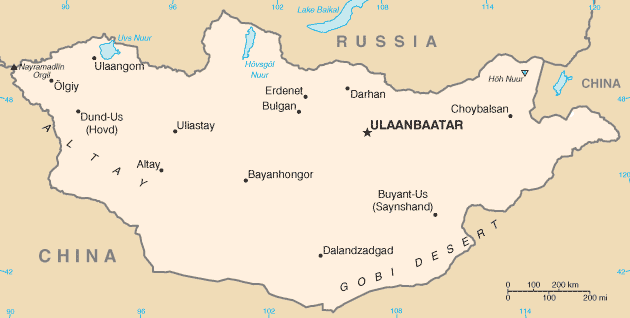
Mongolia (Capital: Ulaanbaatar)
- Import of coking coal from Mongolia by India on a trial basis.
Political Boundaries:
- Mongolia is a landlocked country in north-central Asia.
- Land boundaries with Russia to the north and China to the south.
Geographical features:
- Landform is mainly a plateau.
- Major mountain chains include Altai, Khangai, and Khentii.
- Longest river is the Orkhon River, with the Orkhon Valley being a UNESCO World Heritage Site.
- Largest freshwater lake is Lake Khuvsgul, often compared to Lake Baikal of Russia.
Major commodities in Mongolia:
- Coal
- Gold
- Copper
- Lithium
- Fluorspar
Tragedy in Kyiv: Russian Missiles Strike Children's Cancer Hospital
- Controversial events spark discussions about the morality of war, prompting the question of whether any war can be considered justified.
- The Tolstoyan perspective asserts that war is always wrong and should be considered a crime in any situation.
- On the other hand, the 'Just War' theory suggests that there are specific circumstances in which war can be deemed acceptable, as outlined in a separate section.
Key Stakeholders in War
- Countries: Fulfilling war objectives like resolving territorial disputes.
- Citizens: Desire for end of war and national interest fulfillment.
- Soldiers: Defending country and interests
- Industries and Financial Institutions: Disruptions in supply chains, loss of investments.
- International community: Providing humanitarian aid, diplomatic support, engaging in peacekeeping efforts.
Ethical Issues in War
- Loss of human life, including civilians, women, and children.
- Degradation of Moral Equality through dehumanization of the enemy, treatment of Prisoners of War.
- War Crimes and Atrocities, such as genocide and summary execution.
- Fear of arms race and use of weapons of mass destruction.
Just War Theory
- Vedic literature and Mahabharat emphasize the concept of a just war.
- Western philosophers like Aristotle, Cicero, and Augustine also discuss just war philosophy.
- Jus ad bellum focuses on moral justifications for going to war, including a just cause, right authority, war as a last resort, etc.
- Jus in bello governs moral principles to follow during war, such as treatment of prisoners, protection of civilians, and avoiding disproportionate use of force.
- Jus post bellum addresses justice after war, including issues like reconciliation and rebuilding.
"Call for New Mineral Policy: SBI Report"
- India has a vast array of metallic and non-metallic minerals, with the production of 95 different minerals currently taking place in the country. However, the growth in mineral production has remained stagnant over the past five years.
Need for New Mineral Policy:
- The compound annual growth rate (CAGR) of major minerals in India has been low or declining over the past five years.
- The mining sector has high employment potential, with a 10% increase in mineral production capable of generating 50,000 - 70,000 daily jobs.
- India is heavily reliant on imports for critical minerals, which are essential for economic and national security.
- Other challenges include bureaucratic and regulatory hurdles, as well as infrastructure deficiencies.
Recommendations of Report:
- A comprehensive policy covering the entire value chain is needed, including advanced geoscience techniques and sustainable extraction methods.
- International collaboration with other countries should be pursued.
- Processing capacity should be enhanced, and the private sector should be involved.
- Initiatives such as Production Linked Incentives (PLI) and promoting a circular economy through recycling should be introduced.
Steps Taken to promote mining sector:
- Khanij Bidesh India Ltd. (KABIL) has been mandated to identify and acquire critical and strategic minerals overseas.
- The Mines & Minerals (Development and Regulation) Act of 1957 has been amended in 2015 and 2020.
- Programs like Pradhan Mantri Khanij Kshtera Kalyan Yojana (PMKKKY) and District Mineral Foundation (DMF) have been implemented.
"Revitalizing Conservation Efforts: IUCN Report"
- IUCN released a report titled 'Planet on the move: Reimagining conservation at the intersection of migration, environmental change, and conflict'.
- The report emphasizes the need to rethink conservation efforts in the face of migration, environmental change, and conflict.
Need for New Conservation Approach
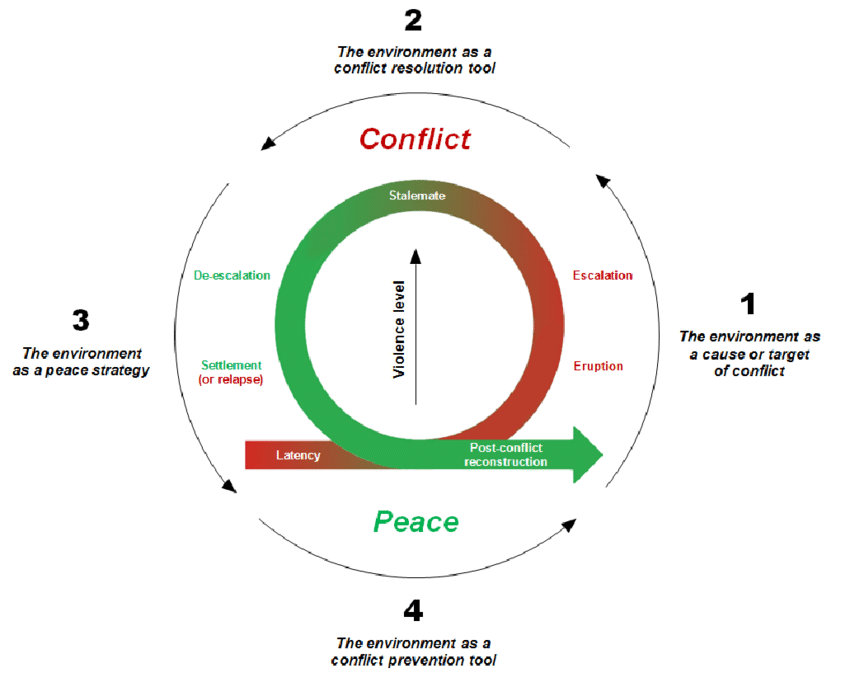
- Nexus among migration, environmental change, and conflict: Environmental changes lead to migration, which can result in conflict over natural resources, further harming the environment.
- Conservation efforts must address this nexus now and in the future.
- Siloed policies for migration: Current migration policies often separate human and wildlife migration, despite sharing the same space.
- Different conventions define human refugees, displaced persons, and migratory species separately.
Recommendations for New Conservation Approaches
- Address migration, humanitarian, and development needs while protecting biodiversity and nature.
- Establish international legal mechanisms to protect 'environmental migrants' and resolve conflicts in transit and destination areas.
- Create greater synergies between laws to protect both human and other species migrations.
"Advocating for Quantum Governance"
- The University of Oxford has warned against having overly high hopes for quantum technologies.
- Quantum technologies, such as quantum computing and sensors, have great potential but also pose risks of misuse, particularly in digital security.
- There is a need for Quantum Governance to educate people about quantum technologies and to maximize their benefits for society.
About Quantum Governance
- The WEF was an early advocate for discussing governance in the field of quantum computing.
- The 'Quantum Governance' framework is built on principles such as transparency, inclusiveness, accessibility, non-maleficence, equitability, accountability, and the common good.
- This framework aims to ensure that the development and use of quantum computing technology is done in a responsible and ethical manner, taking into account the needs and interests of all stakeholders.
Significance:
- Speed up the advancement of ethical quantum computing by establishing trust in the technology.
- Incorporate ethical considerations into the design and development stages of quantum computing.
- Utilize ethical principles from other technologies such as AI, nanotechnology, and nuclear technology to inform the ethical framework of quantum computing.
Challenges:
- Researchers prefer open quantum frameworks, but national policies prioritize strong intellectual property protections for quantum technologies. This means that there is a disconnect between the preferences of researchers and the priorities of governments when it comes to quantum technology.
- The profit-driven approach of the private sector may impede responsible and open development of quantum technologies. This suggests that the focus on financial gain could potentially hinder the ethical and transparent advancement of quantum technology.
- There is a lack of evidence on the effectiveness of responsible innovation policies in governing quantum technologies. This highlights the need for further research and evaluation to understand how policies can effectively promote responsible development in the quantum field.
About Quantum Technologies
- Quantum Technology is rooted in the principles of Quantum mechanics, which were created in the early 20th century to understand the behavior of atoms and elementary particles.
- Quantum Technology has various applications such as secure communication, disaster management, computing, simulation, chemistry, healthcare, and cryptography.
Initiatives by India:
- India has launched the National Mission on Quantum Technologies and Applications in 2023.
- The country has established 21 Quantum hubs and 4 Quantum research parks across India to promote research and development in Quantum Technology.
"Arctic Wildfire Crisis: Third Incident in Five Years"
- Wildfires have historically occurred in the Arctic's boreal forest and tundra ecosystems.
- In recent years, the frequency and size of wildfires in these regions have been on the rise.
Reasons for such Arctic wildfires
- The Arctic is experiencing rapid warming at a rate almost four times faster than the global average, leading to significant changes in the region's climate.
- The warming of the Arctic has resulted in an increase in lightning strikes, as warm, moist air needed for thunderstorms and lightning is more prevalent over ice-free land.
- The polar jet stream, which circulates air between mid- and northern latitudes, has slowed down due to warming in the Arctic.
- The stagnation of the jet stream may lead to unseasonably prolonged warm weather in certain regions, impacting local climates and ecosystems.
Concerns
- Wildfires and Reduced Albedo: Wildfires in the Arctic can lead to reduced albedo, as smoke from the fires and melting ice sheets decrease the fraction of light reflected by the surface.
- Greenhouse Gas Emissions: Burning boreal forests and tundra releases large amounts of greenhouse gases from carbon-rich soils, contributing to Arctic warming.
- Carbon Emissions from Wildfires: In June 2024, wildfire carbon emissions in the Arctic were the third highest in two decades according to Copernicus data.
- Permafrost Thawing: Permafrost, which is ground that remains frozen for at least two years straight, is thawing in the Arctic. This thawing releases carbon stored in the permafrost, contributing to Arctic warming.
- Carbon in Arctic Permafrost: The Arctic permafrost holds approximately 1,700 billion metric tons of carbon, which can be released into the atmosphere as the permafrost thaws, further exacerbating Arctic warming.
"Union Cabinet Approves BBNJ Agreement Signing"
- This is a major advancement in the protection and responsible use of marine biodiversity in areas that are not under the jurisdiction of any one country.
BBNJ Agreement
- The agreement under UNCLOS focuses on conserving marine biological diversity in areas beyond national jurisdiction, also known as the High Seas Treaty.
- The High Seas are global common oceans that are open to all for lawful purposes such as navigation, laying submarine cables, etc.
- The agreement was adopted in 2023 by the Intergovernmental Conference on Marine Biodiversity of Areas Beyond National Jurisdiction.
- For the agreement to become international law, it must be signed and ratified by at least 60 countries.
- This agreement is the third implementing agreement to UNCLOS, with the other two being the 1994 Agreement related to UNCLOS implementation and the 1995 U.N. Fish Stocks Agreement.
- The Ministry of Earth Sciences is responsible for implementing the agreement in India.
Agreement addresses four main issues
- Marine genetic resources should be shared fairly and equitably to ensure benefits for all parties involved.
- Area-based management tools, like marine protected areas, can help protect marine resources and biodiversity.
- Conducting environmental impact assessments can help minimize negative effects on marine ecosystems.
- Capacity-building and technology transfer in the marine sector can help improve sustainable management practices and conservation efforts.
About UNCLOS
- UNCLOS is an international convention adopted in 1982 and came into force in 1994.
- It establishes a comprehensive regime of law and order in the world's oceans and seas, governing the use of marine resources by countries.
- UNCLOS divides marine areas into zones such as the Territorial Sea, Contiguous Zone, Exclusive Economic Zone (EEZ), and High Seas, with the BBNJ Agreement focusing on conservation efforts in the High Seas.