
Daily Current Affairs UPSC 08 and 09 September 2024
Welcome to our daily current affairs blog post for UPSC aspirants! In today's edition, we will be discussing the most significant events and news updates that took place on 8th and 9th September 2024. Staying updated with current affairs is crucial for UPSC preparation, as it not only helps you stay informed but also enhances your understanding of various subjects. So, let's dive into the important happenings of the day and explore their potential impact on the upcoming UPSC examinations.

Swachh Vayu Survekshan Awards, 2024
- Surat, Jabalpur, and Agra received awards in Category 1, while Firozabad, Amravati, and Jhansi were awarded in Category 2, and Raebareli, Nalgonda, and Nalagarh were recognized in Category 3.
- The Swachh Vayu Survekshan Awards, an initiative of the Environment Ministry, assess cities based on their implementation of activities outlined in city action plans and air quality in 130 National Clean Air Program cities.
- Criteria for evaluation include solid waste management, road dust control, and industrial emissions.
- The awards are given annually on the International Day of Clean Air for Blue Skies (September 7th) to the top three cities in each category based on population size: Category 1 (10 Lakhs+), Category 2 (3 - 10 Lakhs), and Category 3 (under 3 Lakhs).
BepiColombo
- BepiColombo recently completed a flyby of Mercury and is set to begin orbiting the planet in 2026.
- Launched in 2018, BepiColombo is a collaborative mission between Europe and Japan, with two spacecraft traveling together to study Mercury.
- The European Space Agency's Mercury Planetary Orbiter will focus on studying the planet's surface and interior, while the Japan Aerospace Exploration Agency's Mercury Magnetospheric Orbiter will study its magnetic field.
- Prior to BepiColombo, only two other spacecraft, NASA's Mariner 10 and MESSENGER, had visited Mercury.
Silicon Carbide
- The first silicon carbide manufacturing facility in India will be established in Odisha.
- Silicon carbide, also known as carborundum, is a hard crystalline compound made of silicon and carbon.
- It has excellent thermomechanical properties such as high thermal conductivity, resistance to wear and oxidation.
- Silicon carbide is used in various applications including semiconductor devices, mechanical seals, heat exchangers, and ballistic armor.
Water Spinach
- Water spinach is now being grown by farmers thanks to technology from the Indian Institute of Vegetable Research.
- Water spinach is a semi-aquatic perennial plant that is believed to have been first domesticated in Southeast Asia.
- Water spinach is rich in folic acid, beta carotene, calcium, vitamin E and C, and is beneficial for preventing neural tube defects and anemia.
- Water spinach has the potential to purify aquatic habitats.
Sahariya Tribe
- Over 100 cases of malnourished children have been identified in the Sahariya tribe in Baran district, Rajasthan.
- The Sahariya tribe is classified as a Particularly Vulnerable Tribal Group (PVTG) and is mainly found in Madhya Pradesh, Uttar Pradesh, and Rajasthan.
- PVTGs are tribal communities with a declining or stagnant population, limited use of modern technology, economic challenges, and low literacy rates.
- Sahariyas typically live in separate settlements within villages known as Saharana.
- Their economic activities include agriculture (mainly rainfed) and gathering minor forest products.
Helium
- Two NASA astronauts are currently stranded on the International Space Station because of a malfunctioning propulsion system.
- Helium leaks have been a problem in past missions, such as ISRO's Chandrayaan 2.
- Helium is a noble gas found in Group 18 of the periodic table.
- It is the second lightest element, following hydrogen, and is colorless, odorless, and tasteless.
- Helium has the lowest boiling and freezing points of any known substance.
- In rockets, helium is used to pressurize fuel tanks and in cooling systems to ensure a steady flow of fuel.
- Helium is vulnerable to leaks due to its small atomic size, which allows it to escape through tiny gaps or seals.
Certificate of Deposit
- The issuance of Bank's Certificates of Deposit increased nearly threefold in FY24 compared to FY22.
- Certificates of Deposit (CDs) are unsecured money market instruments issued by banks as a promissory note against deposited funds for a maturity period of up to one year.
- CDs are issued by Scheduled Commercial Banks, Regional Rural Banks, Small Finance Banks, and All-India Financial Institutions.
- CDs must be issued in minimum denominations of ₹5 lakh and in multiples of ₹5 lakh thereafter.
- The maturity period for CDs ranges from a minimum of 7 days to a maximum of 1 year.
Nilgiri Mountain Railways
- The redevelopment of Nilgiri Mountain Railway stations under the Amrit Bharat Station Scheme is putting its historical and architectural significance at risk.
- The Nilgiri Mountain Railway, proposed in 1854 and completed in 1908, is a 46-km long metre-gauge single-track railway in Tamil Nadu that features late 19th-century technology with unique rack and pinion traction for steep gradients.
- In 2005, UNESCO designated the Nilgiri Mountain Railway as a World Heritage Site, extending its recognition as part of the Mountain Railways in India heritage site, which also includes the Darjeeling Himalayan Railway and Kalka Shimla Railway.
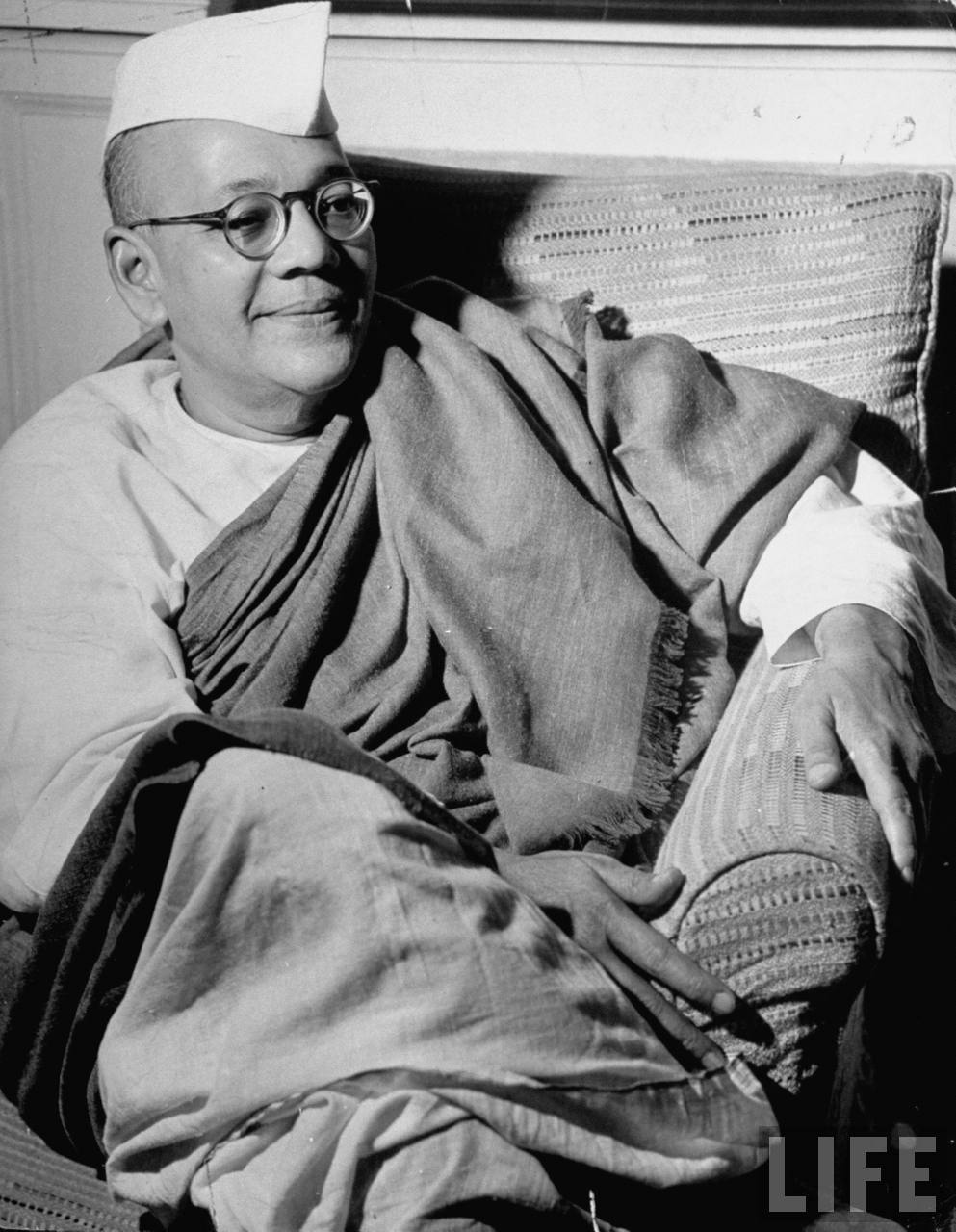
Sarat Chandra Bose (1889 - 1950)
Remembering Sarat Chandra Bose on his 135th Birth Anniversary
- Sarat Chandra Bose was born in Cuttack, Odisha, and was a prominent member of the Bengal Legislative Council and the Indian National Congress.
- He served as an Alderman in the Calcutta Corporation multiple times.
Sarat Chandra Bose's Contributions
- He left his professional practice to join the Civil Disobedience Movement in 1930 and was arrested in 1932 for his involvement.
- He was associated with socialist parties like the Forward Bloc, founded by his brother Netaji Subhas Chandra Bose.
- Sarat Chandra Bose strongly opposed the partition of Bengal and Punjab on religious lines and resigned from the Congress Working Committee in 1947.
- He also published newspapers such as The Socialist Republican, Mahajati, and The Nation.
Beliefs: Strong belief in one's convictions, love for one's country, etc.
"WMO's Annual Air Quality and Climate Bulletin"
The Climate Bulletin provides updates on the condition of air quality and its relationship to climate change.
Key findings
- Global PM2.5 concentrations: Europe and China have lower PM2.5 pollution levels, while North America and India have seen an increase due to human activities.
- Definition of PM2.5: Particulate Matter smaller than 2.5 micrometers in diameter.
- Global PM hotspots: Agricultural areas in Central Africa, Pakistan, India, China, and South-East Asia are identified as hotspots for PM pollution.
- Impact of PM on crops: PM reduces crop yields by 15% by blocking sunlight reaching leaf surfaces.
- Aerobiology Advancements: New technologies allow for real-time monitoring of bioaerosols.
Aerobiology Overview
- Aerobiology studies the movement and effects of airborne biological particles on human, animal, and plant health.
- Bioaerosols include bacteria, fungal spores, pollen grains, viruses, and more.
- Bioaerosols reflect changes in biodiversity, plant flowering patterns, and distribution, all of which are sensitive to climate changes.
- Need for new technologies: Improved understanding of bioaerosols can enhance forecasting and climate change impact assessments.
- New observational techniques: High-resolution image analysis, holography, multi-band scatterometry, fluorescence spectrometry, and nanotechnology for DNA sequencing are being used.
Bioaerosols Observation Paradigm

"India's Military Diplomacy Soars with Joint Exercises"
India has been increasing its military diplomacy efforts in recent months by conducting consecutive exercises with countries from around the globe across all three branches of the military.
What is Military Diplomacy?
- Defense Diplomacy, also known as Defense Diplomacy, involves achieving foreign policy goals through the peaceful use of defense resources and capabilities.
- India's military diplomacy includes participating in UN peacekeeping missions, offering humanitarian aid, and engaging in joint military exercises.
What are the significances of Military Diplomacy?
- Fostering trust and confidence: Engaging in consistent communication and military interactions can decrease suspicion and the potential for conflicts.
- Enhancing alliances and partnerships: Establishing defense cooperation agreements, sharing technology, and conducting joint military exercises can lead to increased cooperation within regional security frameworks, such as the QUAD Security Dialogue.
- Improving defense capabilities and modernization: By exchanging technology, sharing expertise, and providing training, countries can enhance their military capabilities, as seen in the joint development of BrahMos missiles by India and Russia.
- Other benefits: Strategic balancing in sensitive regions, as well as boosting soft power through humanitarian assistance, can also contribute to overall security and stability.
- India faces difficulties in its military diplomacy, such as maintaining relationships with powerful countries like the US and Russia, being seen as a dominant force in South Asia, and lacking in domestic manufacturing capabilities.
- Despite these challenges, India actively participates in military exercises, builds capacity, and engages in peacekeeping operations to show its dedication to enhancing security cooperation and influencing the security landscape in the Indo-Pacific region and beyond.
Recent/ scheduled Military Exercises
- Yudh Abhyas: India and US will start their bilateral Army exercise at Mahajan field firing ranges in Rajasthan on September 9, 2024.
- Tarang Shakti: This is a multilateral Air Exercise involving countries such as Australia, Greece, Sri Lanka, the UAE, Japan, Singapore, and the US.
- Malabar Naval Exercise: This exercise is set to take place off the Visakhapatnam coast in October and will involve India, Australia, Japan, and the US.
- Indra: This is a bilateral exercise between the Indian and Russian armies.
- Disaster Relief Frameworks
"Guidelines for R&R Funding in NDRF and SDRF"
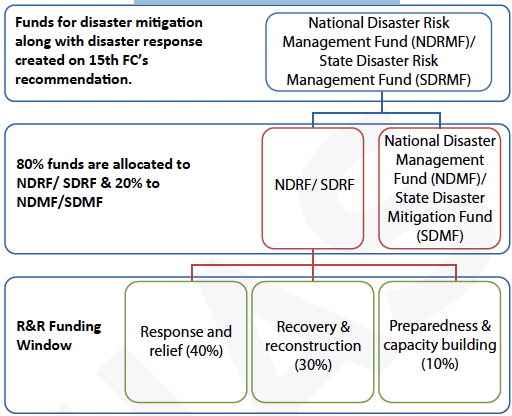
In 2022, the Ministry of Home Affairs (MHA) issued guidelines for the establishment and management of the National Disaster Response Fund (NDRF) and State Disaster Response Fund (SDRF).
About R&R Funding Window
- The R&R Funding Window was created to address funding gaps for states affected by natural disasters and to reallocate resources within existing disaster relief frameworks to better support recovery efforts.
- The window was established based on recommendations from the 15th Finance Commission.
- Funds from the NDRF & SDRF will be distributed for response and relief, recovery & reconstruction, and preparedness & capacity building.
- The NDRF R&R window provides additional funds to states where the required expenditure exceeds the state's coping capacity.
- The State Disaster Management Authority (SDMA) is the nodal agency for implementing the R&R Funding Window.
- Calamities covered under the window include cyclones, droughts, earthquakes, fires, floods, tsunamis, hailstorms, landslides, avalanches, cloud bursts, pest attacks, and frost & cold waves.
- Activities supported under R&R funding include housing, education, infrastructure, and more.
Need for R&R Funding
- The absence of an R&R funding window to support states affected by disasters can hinder development, deepen poverty, and contribute to backwardness.
- Without proper recovery efforts, states may struggle to develop, leading to regional imbalances in terms of progress and growth.
Disaster Relief Frameworks
China's limited debt relief for Africa
- During the 9th Forum on China-Africa Cooperation (FOCAC) meeting, China did not agree to provide debt relief to African countries, but instead promised $50.7 billion in credit lines and investments over three years.
- This decision showcases China's deb-trap diplomacy and highlights the contrast between India's and China's approaches to engaging with Africa.
Difference between Indian and Chinese Model of engagement with Africa
| China | India | |
|---|---|---|
| Bilateral engagement | Emphasizing the extraction of natural resources, certain projects were deemed as unnecessary or extravagant. | Emphasizing the importance of mutual growth and partnership as equals, following the Kampala Principles outlined by the Indian Prime Minister in 2018. For example, India's achievement in making the African Union a member of the G20, showcasing a collaborative approach to development. |
| Financial assistance | Accused of engaging in 'debt trap diplomacy', for example, receiving $143 billion in investments from 2000 to 2017. | India offers discounted loans, financial aid, and training initiatives such as tele-education and telemedicine programs. |
| Capacity building and Skill development | Allegations of hiring predominantly Chinese employees and participating in unfair practices, such as offering low wages to local workers. | Indian companies are recruiting African professionals and investing in the development of local skills, such as through programs like Indian Technical and Economic Cooperation which has been in place since 1964. |
India’s interest in Africa
- India has become a major investor in Africa, ranking among the top five countries in terms of investment.
- Africa possesses approximately 30% of the world's mineral reserves, making it a crucial source of mineral security.
- Africa's participation in international forums is important for India's goal of promoting rule-based global governance.
"Protecting India's EV Sector from Chinese Dominance: GTRI's Recommendation"
- The report emphasizes the need for India to allow market forces to drive growth in the Electric Vehicle sector and establish its own path in the global EV market.
Background on Global EV Market
- China dominated the global EV market in 2023, exporting a significant number of EVs valued at billions of dollars.
- Other countries like the USA, EU, Canada, and some western nations have started imposing tariffs and restrictions on EV imports from China.
- In response, China is moving its production units to countries like ASEAN nations and India, but still heavily relies on Chinese imports for parts.
Unique Challenges Faced by India in the EV Sector
- India's reliance on coal for electricity generation diminishes the environmental benefits of EVs.
- The high carbon footprint of EV production, especially in battery manufacturing, poses environmental challenges.
- India's dependence on China for batteries and components, with the risk of China dumping excess EVs in the Indian market.
Key Recommendations from the GTRI Report
- Invest in research and development for advanced battery technologies such as solid-state batteries and hydrogen fuel cells.
- Develop battery recycling infrastructure and promote clean energy sources for EV charging stations.
- Conduct comprehensive assessments of the environmental impact of EVs to prioritize long-term sustainability over short-term gains.
"Teal Carbon Study at Keoladeo National Park"
- Teal carbon can help mitigate climate change if anthropogenic pollution in wetlands is controlled
- Study shows specialized biochar can reduce methane emissions
Teal Carbon Overview
- Teal carbon is carbon stored in non-tidal freshwater wetlands, including vegetation, microbial biomass, and organic matter
- Teal carbon is classified based on function and location, not physical properties
- Black and brown carbon from incomplete combustion contribute to global warming
- Teal carbon helps increase groundwater levels, mitigate floods, and reduce heat islands for sustainable urban adaptation
Keoladeo National Park (Bharatpur, Rajasthan)
- Declared a national park in 1982 and UNESCO World Heritage Site in 1985
- Home to over 370 species of birds and animals, including pythons and Siberian cranes
- Placed on the Montreux Record (Ramsar Convention) in 1990 due to water shortage and unbalanced grazing regime
Types of Carbon
- Purple - Carbon can be captured from the air or industrial emissions.
- Blue - Carbon can be stored in ocean plants and sediments.
- Teal - Carbon can be stored in freshwater and wetland environments.
- Ocean - Carbon can be stored in terrestrial plants.
- Black - Carbon is released when fossil fuels are burned.
- Grey - Industrial emissions also release carbon into the atmosphere.
- Brown - Incomplete combustion of organic matter can release carbon.
- Red - Biological particles on snow and ice can release carbon and reduce albedo.