
Daily Current Affairs UPSC 22 August 2024
Welcome to our daily current affairs blog post for UPSC aspirants! In today's edition, we will be discussing the most significant events and news updates that took place on 22nd August 2024. Staying updated with current affairs is crucial for UPSC preparation, as it not only helps you stay informed but also enhances your understanding of various subjects. So, let's dive into the important happenings of the day and explore their potential impact on the upcoming UPSC examinations.

Waterspout
- A waterspout was sighted near the coast of Sicily in Italy.
- A waterspout is a rotating column of cloud-filled wind that forms over a body of water.
- Despite its name, a waterspout is not filled with water from the ocean or lake, but instead descends from a cumulus cloud.
- The water inside a waterspout is formed by condensation in the cloud.
- There are two types of waterspouts: tornadic waterspouts, which are the most powerful and destructive, and fair-weather waterspouts, which are rarely dangerous.
- Waterspouts form under conditions of high humidity and relatively warm water temperatures compared to the overlying air.
- Waterspouts are most commonly found in tropical and subtropical waters.
EU Nature Restoration Law
- The EU Nature Restoration Law is the first continent-wide legislation aimed at restoring degraded ecosystems.
- The goal of the law is to restore 20% of degraded ecosystems by 2030 and all by 2050.
- Member States are required to prepare National Restoration Plans by 1 September 2026.
- The law prioritizes the conservation of Natura 2000 network areas, which are protected areas in the EU.
- The law includes legally binding targets such as restoring 30% of various ecosystems by 2030, restoring 25,000 km of rivers to free-flowing status, and planting three billion additional trees by 2030.
Legislators with Criminal Cases against Women
- A report by the Association for Democratic Reforms (ADR) focused on sitting MPs/MLAs with cases related to crimes against women in 2024.
- The report found that 151 MPs/MLAs have such charges, with a significant number belonging to the ruling party at the center.
- Among the findings, 16 sitting MPs and MLAs were identified as having cases related to rape.
- ADR's recommendations include urging political parties to avoid giving tickets to such candidates and expediting court cases against MPs and MLAs.
International Criminal Court (ICC)
- Ukraine's parliament has approved joining the International Criminal Court (ICC).
- The ICC is a separate legal entity that can prosecute individuals for genocide, crimes against humanity, war crimes, and aggression.
- The ICC operates independently from the United Nations but is governed by the Rome Statute negotiated within the UN.
- The UN Security Council has the authority to refer specific cases to the ICC Prosecutor.
- The International Court of Justice is the main judicial body of the UN.
- There are 124 member countries of the ICC, with notable exceptions including India, China, Russia, and the US.
Hayflick limit
- Leonard Hayflick recently passed away, known for introducing the concept of the 'Hayflick limit' which changed the understanding of aging.
- The Hayflick limit refers to the number of times a cell population can divide before reaching a cell cycle arrest.
- This limit is determined by the length of chromosomal telomeres, which shorten with each cell division.
- Telomeres are repetitive DNA sequences at the end of a chromosome.
- The Hayflick limit for humans is estimated to be around 125 years, beyond which lifestyle changes or genetic modifications cannot extend lifespan.
Findings of Chandrayaan-3
- The APXS instrument on the Pragyan Rover of Chandrayaan-3 supported the Lunar Magma Ocean (LMO) Hypothesis.
- The LMO hypothesis suggests that the Moon was initially a molten ocean of magma when it formed.
- As the magma cooled, heavier minerals like Olivine and Pyroxene sank to form the inner layers, while lighter minerals like Calcium and sodium formed the outer layer.
- Chandrayaan-3, scheduled for 2023, is a mission following Chandrayaan-2 that aims to demonstrate safe landing and roving capabilities on the lunar surface.
Tera Hertz (THz) waves
- TRAI has suggested creating a Tera Hertz Experimental Authorisation to support the development of new technologies and services in the Tera Hertz band.
- Tera Hertz (THz) radiation falls within the frequency range of 0.1–10 THz, positioned between microwave and infrared waves.
- THz technology has various applications including space-based communication, short-range wireless communication, security measures such as explosive detection, and biomedical imaging for body surface diagnoses.
Global Finance Central Banker Report Cards 2024
- The RBI Governor has received an "A+" rating for the second consecutive year in the Global Finance Central Banker Report Cards 2024.
- The Central Banker Report Cards have been published by Global Finance since 1994 and grade central bank governors from almost 100 countries.
- Ratings are given on a scale from A to F based on performance in areas such as inflation control, economic growth, currency stability, and interest rate management.
- The report honors bank leaders who have shown exceptional strategies that have outperformed their peers through originality, creativity, and determination.
Kamchatka Peninsula
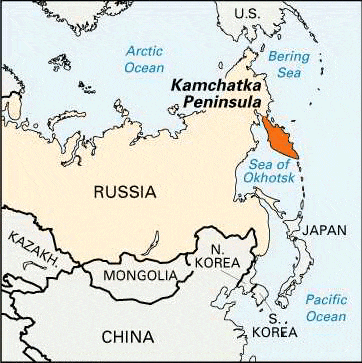
A strong earthquake in the Far East of Russia caused the Shiveluch volcano in the Kamchatka Peninsula to erupt.
About Kamchatka Peninsula
Political Features:
- Located in the Far Eastern Federal District of the Russian Federation.
- The Kuril Archipelago stretches from the southern tip of Russia's Kamchatka Peninsula to the northeastern coast of Japan's Hokkaido Island.
- The Kuril Island is a disputed territory between Russia and Japan.
Geographical Features:
- Positioned between the Sea of Okhotsk on the west and the Pacific Ocean and Bering Sea on the east.
- Mountain ranges include Sredinny and Vostochny.
- The Kamchatka River flows through the region.
Climate:
- Predominantly Tundra climate.
Tribes:
- Inhabited by the Koryak, Chukchi, and Kamchadal tribes.
"KAPP 4 Unit 4 Achieves Full Capacity"
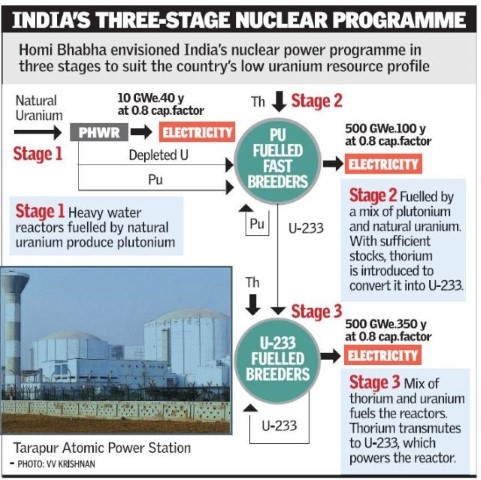
- KAPP-4 in Gujarat is a PHWR that utilizes natural uranium and heavy water as fuel and moderator, respectively.
- In 2023, KAPP-4 achieved its first criticality, marking the start of sustained fission reactions.
- The 700MWe PHWR unit helps to address excess thermal margins, with plans for 14 more units to start operations by 2031-32.
- 'Thermal margin' is the difference between the operating temperature of the reactor and its maximum operating temperature.
Enhanced safety features incorporated in 700MWe unit
- Thin-walled pressure tubes can reduce the impact of a pressure boundary rupture.
- The Passive Decay Heat Removal System can eliminate decay heat from the reactor core automatically.
- The technology used is similar to that of Generation III+ plants to prevent accidents like Fukushima in 2011.
- The containment system includes a steel-lined structure to prevent leaks and a spray system to lower pressure in case of a coolant loss accident.
"Minister Warns of e-Commerce's Long-Term Economic Impact"
- The report 'Net Impact of E-Commerce on Employment and Consumer Welfare in India' highlights the positive effects of e-commerce on the Indian economy.
- E-commerce refers to the buying and selling of goods or services, including digital products, over digital or electronic networks.
Adverse Effects of E-commerce
- Predatory pricing by e-commerce platforms can lead to the elimination of competitors and monopolization of the market.
- Reduced competition may result in consumers losing the cost-effectiveness benefits of e-commerce.
- Fewer local shops due to online shopping may increase travel costs or limit shopping choices for consumers.
- Loss of employment in the traditional retail sector due to decreased competition.
- Privacy concerns related to the abuse of consumer data and privacy.
- Breach of regulations, such as direct sales to consumers by e-commerce platforms despite restrictions on B2C transactions.
Regulations of E-commerce in India
- Consumer Protection (E-Commerce) Rules, 2020
- Consumer Protection Act 2019
Positive Impact of E-commerce in India
- E-commerce accounts for 7.8% of total retail sales in 2022 and is projected to grow at a CAGR of 27% between 2018 and 2030.
- E-commerce does not negatively impact traditional retail and leads to consumer welfare gains through convenience and cost-effectiveness.
- E-commerce has increased employment opportunities, especially for women.
"Innovative 4D-Printed Blood Vessels for Medical Grafts"
About 4D Printing
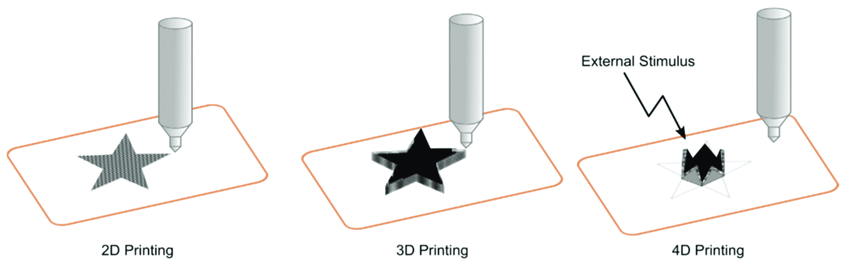
- 4D printing is an advancement of 3D printing that incorporates the element of time.
- 3D printing, also known as Additive Manufacturing, builds a 3D object by adding material layer by layer based on a digital model.
- Unlike subtractive manufacturing, which removes material from a solid block, 3D printing adds material to create objects.
- Objects created through 4D printing have the ability to alter their shape or function in reaction to external factors like heat, light, or moisture.
Applications of 4D Printing
- Medical applications include drug delivery, tissue fabrication, and organ regeneration.
- Soft robotics benefit from the flexibility and adaptability of 4D printing.
- Aerospace industries can use 4D printing for low-cost, durable parts that can adapt to extreme conditions.
- Other applications include sensors, flexible electronics, active origami art, and self-evolving structures.
Advantages of 4D Printing
- Dynamic functionality allows for adaptive structures beyond traditional 3D printing capabilities.
- Material efficiency reduces wastage in the fabrication process.
- Complex designs can be efficiently fabricated using stereo lithography 4D techniques.
Challenges in 4D Printing
- Limited availability of technologies, with only a few research institutes working on 4D printing.
- Material limitations, such as degradation issues with continuous deformation.
- Continued material innovation and broader adoption are essential for unlocking the full potential of 4D printing.
"Finance Minister Reviews Regional Rural Banks"
Some key recommendations were to concentrate on enhancing business performance, enhancing digital technology services, and exploring the growth opportunities within MSME clusters.
About RRBs
- Established under the RRB Act, 1987 based on Narasimham Working Group recommendation
- Aim to provide banking and credit facilities for agriculture and rural sectors
- Currently, there are 43 RRBs in India
- Jointly owned by Government of India, State Governments, and Sponsoring Commercial Banks
- Scheduled Commercial Banks regulated by RBI and supervised by NABARD
- Primarily for rural areas but can also have branches in urban areas
Issues with RRBs
- RRBs face challenges with coordinating branch expansion, leading to uneven distribution.
- Deposit mobilization is hindered by the exclusion of wealthier rural populations.
- High attrition rates in RRBs are caused by more appealing job opportunities in urban areas.
- Commercial banks offer more attractive loans to weaker sections due to lower interest rates.
Way Forward for RRBs
- Structural consolidation to improve efficiency
- Recapitalization for capital augmentation
- Periodic review and capacity building of human resources
Significance of RRBs
- Providing financial services to marginalized groups through Priority Sector Lending (PSL)
- Promoting growth in rural and agricultural sectors
- Creating jobs for individuals
- Encouraging savings among the population
- Extending government services like MGNREGA wages to more people
- Offering digital banking options for convenience
- Working towards achieving socioeconomic equality and fairness.
"ICAR's Breakthrough: Miniature Plant Genome Editing Tool"
- 'ISDra2TnpB' is a new tool for genome editing in plants that is seen as an advancement over Cas9 and Cas12 of CRISPR.
- CRISPR enables accurate genome editing but faces limitations due to the large size of Cas9 and Cas12 proteins, which contain 1,000-1,350 amino acids.
- The size of these proteins makes it difficult to deliver them effectively into cells, particularly through viral vectors.
- TnpB proteins, which are evolutionary predecessors of Cas12 nucleases, are smaller with only around 350-500 amino acids.
About Genome editing tool ISDra2TnpB
- Comes from a type of bacteria known as Deinococcus radiodurans, which is able to withstand harsh environments.
- Belongs to a group of transposons or mobile genes that can relocate within the genome by using RNA to target specific DNA sequences.
Significance
- TnpB has the ability to target specific areas in the genome that Cas9 is unable to reach.
- It enables the development of fusion proteins, expanding the possibilities for genome engineering.
- A fusion protein, also known as a chimeric protein, is formed by combining multiple genes that initially encoded different proteins.
- It was successful in both monocots (such as rice) and dicots (like Arabidopsis), which are two types of flowering plants.
"India seeks US help in extraditing 26/11 plotter"
About Extradition
- The Supreme Court of India defines extradition as the transfer of individuals from one state to another to face accusations or convictions that are recognized by the courts of the receiving state.
- Extradition requests can be made for individuals who are under investigation, on trial, or have been convicted of a crime.
Extradition framework in India
- The Extradition Act of 1962, which was significantly amended in 1993, brought together the laws regarding the extradition of criminal fugitives from India to other countries. It is overseen by the Ministry of External Affairs.
- The final decision on extradition from India is made by the government, and this decision can be challenged in a higher court.
- Currently, India has extradition treaties with 48 countries, including Bangladesh, and agreements with 12 other countries.
Global Framework for Extradition
- The United Nations created a model treaty on extradition in 1990.
- In 2004, the UN developed a model law on extradition.
- The United Nations Convention against Transnational Organized Crime, established in 2000, contains rules on extradition for crimes associated with organized crime.
Major principles of extradition
- Extradition is only allowed for offenses specifically listed in the bilateral treaty.
- The principle of dual criminality means that the offense must be illegal in both the requesting and requested countries.
- The rule of speciality states that the extradited person can only be prosecuted for the offense they were extradited for.
- The individual must receive a fair trial.