
Daily Current Affairs UPSC 19 June 2024
Welcome to our daily current affairs blog post for UPSC aspirants! In today's edition, we will be discussing the most significant events and news updates that took place on 19th June 2024. Staying updated with current affairs is crucial for UPSC preparation, as it not only helps you stay informed but also enhances your understanding of various subjects. So, let's dive into the important happenings of the day and explore their potential impact on the upcoming UPSC examinations.

Speaker Pro tem of Lok Sabha
- A pro-tem Speaker will be selected for the 18th Lok Sabha to swear in new Members of Parliament.
- The Speaker Pro tem takes on the duties of the Speaker when the office becomes vacant before the first meeting of the Lok Sabha.
- The President appoints a Member of the House to act as Speaker pro tem.
- The President administers the oath to the Speaker pro tem.
- Typically, the most senior Members in terms of years of membership are chosen for this role.
Container Port Performance Index (CPPI)
- Nine Indian ports are ranked among the top 100 global ports in CPPI in 2023.
- CPPI (2023) is created by the World Bank and S&P Global Market Intelligence.
- The Index evaluates performance based on vessel time in port.
- It assists in identifying areas for improvement in terminals or ports for the benefit of all stakeholders.
- The top container port in CPPI 2023 is Yangshan Port in China.
Kafala System
- The recent fire in Kuwait that resulted in the deaths of 49 people has brought attention to the kafala system.
- The kafala system, also known as the Sponsorship System, was established in the 1950s to govern the relationship between employers and migrant workers in various countries in West Asia.
- The main goal of the kafala system was to provide temporary labor that could be quickly brought into the country during times of economic growth.
- Under the kafala system, migrant workers are not allowed to enter the country, change jobs, or leave the country without obtaining written permission from their sponsor.
National Financial Reporting Authority (NFRA)
- NFRA is looking to increase the number of audit firms it inspects annually.
- NFRA, headquartered in New Delhi, was established in 2018 by the Government of India under Section 132 (1) of the Companies Act, 2013.
- The objective of NFRA is to enhance the quality of corporate financial reporting in India
- NFRA is composed of a chairperson appointed by the Central Government and up to 15 other members, both part-time and full-time.
- NFRA's functions include recommending accounting and auditing policies, monitoring compliance with standards, and overseeing accounts audits by the Comptroller and Auditor-General of India.
Gene Therapy
- A tech millionaire recently underwent gene therapy to edit his DNA.
- Genes are functional units of inheritance made up of sequences of DNA.
- Genes are arranged on chromosomes in the nucleus of cells.
- Gene therapy is a technique that modifies a person's genes to treat diseases like cancer and genetic disorders.
- Human gene therapy aims to modify gene expression or alter biological properties of cells for therapeutic use.
Light Combat Helicopter (LCH)
- The Ministry of Defence has asked Hindustan Aeronautics Limited (HAL) to provide a proposal for the purchase of 156 LCH.
- The LCH is the first indigenous Multi-Role Combat Helicopter created by HAL.
- It can launch air-to-ground and air-to-air missiles.
- The helicopter has modern stealth features, strong armor protection, and effective night attack capabilities.
- It can operate in high altitude areas and conduct precision strikes in places like the Siachen glacier.
- The LCH uses radar-absorbing materials to reduce radar detection and has a crash-resistant structure and landing gear.
Sickle Cell Disease (SCD)
- World Sickle Cell Day 2024 will be celebrated on June 19th.
- The theme for 2024 is "Hope Through Progress: Advancing Care Globally".
- Sickle Cell Disease (SCD) is a group of inherited blood disorders caused by a genetic mutation.
- Abnormal haemoglobin causes red blood cells to become crescent-shaped.
- Sickle-shaped cells can block blood flow, leading to anaemia, pain, infections, and other complications.
- SCD is more common in tribal populations in India, but also occurs in non-tribal populations.
- India has launched the National Sickle Cell Elimination Mission to eliminate SCD by 2047.
Angel tax
- CII recommended eliminating the 'Angel Tax'.
- Angel Tax was implemented in 2012 under the Income-tax Act, 1961.
- It is imposed on capital raised through share issuance by unlisted companies if the share price exceeds the fair market value.
- The tax aims to prevent money laundering and simplify tax compliance for businesses.
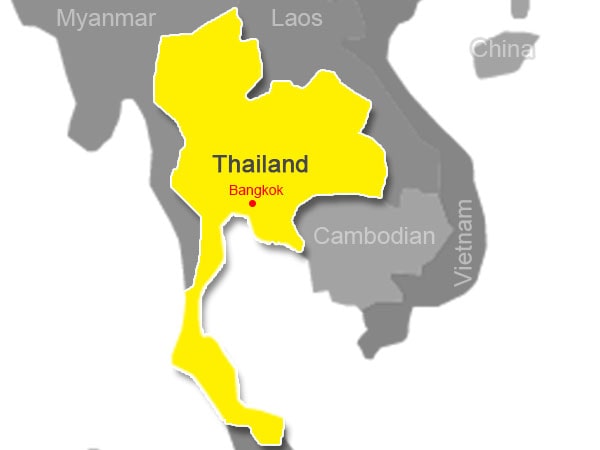
Thailand (Capital: Bangkok)
- Thailand's Senate Approves Same-Sex Marriage Bill.
Political Features:
- Thailand is located in the center of mainland Southeast Asia.
- It shares land borders with Myanmar, Cambodia, Laos, and Malaysia.
- The country is surrounded by the Andaman Sea and the Gulf of Thailand.
Geographical Features:
- The highest mountain in Thailand is Doi Inthanon.
- Major rivers in the country include the Mekong and Chao Phraya.
- Thailand has a tropical monsoon climate.
- Natural resources in Thailand include tin, rubber, natural gas, tungsten, tantalum, and timber.
Initiative on Critical and Emerging Technology (iCET) Initiative
- iCET launched by Indian National Security Council Secretariat and U.S. National Security Council in 2023.
- Framework for cooperation on CET in various areas including space, semiconductors, telecommunications, clean energy, biotechnology, etc.
Key Highlights
Innovation Funding
- Unlock over combined $90 million in government funding over next five years for U.S.-India Global Challenges Institute.
- Foster research partnerships in areas of semiconductor technology, sustainable agriculture, etc.
Space Technology Cooperation
- Launch NASA-ISRO Synthetic Aperture Radar satellite to map Earth's surface twice every 12 days for combating climate change.
- Explore opportunities to participate in Lunar Gateway Programme (LGP) to build a space station around moon as part of collaborative Artemis programme.
Telecommunications Partnerships
- Deploy cost-effective Open Radio Access Network technology.
- Strengthen cooperation in 6G technologies.
Biotechnology Initiatives
- Develop joint Strategic Framework for optimizing global biopharmaceutical supply chain.
- Launch "Bio-X" initiative to promote cooperation in biotechnology and enhance competitiveness of biotechnology industries.
Clean Energy Collaboration
- Enhance Mineral security partnership through co-invest in lithium resource project in South America and rare earths deposit in Africa.
Significance of ICET
- ICET is crucial for India's position as a reliable supply chain partner and contributor in the global technology value chain.
- It focuses on disruptive domains that are key to the next Industrial Revolution and future warfare.
- ICET opens up new markets for India's deep technology players.
PM Honors 30,000 Krishi Sakhis with Certificates
- Krishi Sakhis are farmers and trained para extension professionals in agriculture at the grassroots level.
- Certificates were granted under the Krishi Sakhi Convergence Program (KSCP).
About KSCP:
- Initiative under MoU of Ministry of Agriculture and Farmers’ Welfare and Ministry of Rural Development.
- Aims to enhance skills of rural women, aligns with objectives of "Lakhpati Didi" Program.
- Lakhpati Didi program aims for economic empowerment and financial independence among rural women.
Women Workforce in Agriculture Sector:
- Agriculture employs about 80% of rural women.
- Percentage of female operational holdings has increased.
- Women responsible for producing majority of country's food, contribute to GDP per capita.
- Women's leadership in agriculture can tackle gender inequality.
- Challenges include limited access to credit and markets, lack of land inheritance, lack of information.
Government Schemes for women farmers:
- Mahila Kisan Sashaktikaran Pariyojana empowers women in agriculture.
- Namo Drone Didi provides training on drones for agriculture purposes.
- Pradhan Mantri Kisan Samman Nidhi provides financial assistance to landholding farmer families, including women farmers.
New Rules, 2024 for Offshore Mineral Resources
- Introduced by central government under the Offshore Areas Mineral (Development and Regulation) Act, 2002.
- Aimed at regulating and developing mineral resources in India's maritime zones.
About Rules
- Rules apply to all minerals except mineral oils and hydrocarbons.
- Excludes minerals specified in Part B of the First Schedule to the Mines and Minerals (Development and Regulation) Act, 1957.
- Defines stages of exploration, feasibility studies, economic viability assessments, and classification of mineral resources and reserves.
Offshore Mining
- Deep seabed mining involves extracting mineral deposits from depths greater than 200 meters below the ocean's surface.
- Significance of Offshore Mining for India
- India's offshore mineral reserves include gold, diamond, copper, nickel, cobalt, manganese, and rare earth elements
- Offshore mining in India's Exclusive Economic Zone (EEZ) will reduce dependence on imports and increase availability of essential minerals.
- Challenges include lack of private participation, requirement of high skilled labor, and high capital investment.
Types of Resources Mined from the Deep Sea
- Polymetallic nodules: Small lumps of minerals found on the seabed with high concentrations of metals like manganese and iron.
- Seafloor massive sulphides: Deposits of metal sulphides formed around hydrothermal vents containing valuable minerals such as copper, gold, silver, and zinc.
- Cobalt-rich ferromanganese crusts: Crust-like deposits that form on seamounts and other underwater mountains.
India's Milestone: Unveiling the First Joint Doctrine for Cyberspace Operations
- During the Chiefs of Staff Committee meeting, the Joint Doctrine was released with a focus on understanding military aspects of cyberspace operations.
- Cyberspace has become a critical domain in modern warfare alongside traditional domains like Land, Sea, and Air.
- The importance of preventing hostile actions in cyberspace, which can impact a nation's economy, cohesion, political decision-making, and defense capabilities, underscores the necessity of the Joint Doctrine.
Significance of Joint Doctrine
- The Joint Doctrine provides conceptual guidance to commanders of armed forces, staff, and practitioners in planning and conducting Cyberspace Operations.
- It promotes Jointness and Integration of the three services (Army, Navy, and Air Force).
- The doctrine is integrated with national security strategies to develop goals, methods, and resources to achieve benefits and influence events in all areas of operation and through all forms of power.
Cyberspace warfare
- Cyberspace warfare is defined as cyber-attacks by state or non-state actors that pose a serious threat to a nation's security or are conducted in response to perceived threats.
- Cyber-attacks can disable official websites and networks, disrupt or disable essential services, steal or alter classified data, and cripple financial systems.
- The cyber warfare ecosystem includes Cyber terrorism, Cyber Fraud, Cyber Spying, and Cyber stalking.
Chief of Defence Staff (CDS)
- The Chief of Defence Staff (CDS) is the head of the Department of Military Affairs within the Ministry of Defence and serves as its Secretary.
- The CDS is the Permanent Chairman of the Chiefs of Staff Committee, a member of the Defence Acquisition Council chaired by the Ministry of Defence, and the Defence Planning Committee chaired by the National Security Advisor.
- The CDS acts as the Principal Military Adviser to the Ministry of Defence on all tri-services matters of military and as the Military Adviser to the Nuclear Command Authority.
- The CDS does not exercise any military command, including over the three Service Chiefs.
New Post Office Act, 2023 in Effect
- The Indian Post Office Act, 2023 repeals the previous legislation from 1898.
Provisions of the Post Office Act, 2023
- The Act appoints a Director General of Postal Services (DGPS) to lead India Post.
- The DGPS has the authority to create regulations on various matters, including service charges and postage stamps.
- The Act allows the government to intercept postal articles for reasons such as national security or public safety.
- The Post Office is exempt from liability except as prescribed by the Act.
- There are no penalties outlined in the Act.
Importance of the Act
- The Act establishes a clear framework for providing citizen-centric services, banking services, and government scheme benefits.
- It aims to improve the ease of doing business and quality of life for citizens.
Postal System During British Era
- The East India Company established the first post office in 1727.
- Lord Dalhousie recognized Indian Post Offices as a significant national organization.
- The current location of the General Post Office in Kolkata was originally Fort William.
Special Lok Adalat Organized by Supreme Court for Dispute Settlement
- Lok Adalats are a type of Alternative Dispute Redressal Mechanism (ADRM).
About Lok Adalat (People’s Court)
- They have statutory status under the Legal Services Authorities Act, 1987.
- The Act was amended in 2002 to establish permanent Lok Adalats for public utility services.
- Lok Adalats are guided by principles of natural justice and are not bound by the Code of Civil Procedure (CPC) or Indian Evidence Act.
- They have the same powers as a civil court under CPC.
- Decisions made by Lok Adalats are final and binding with no appeal process
- Cases referred to Lok Adalats include those pending before any court or disputes likely to be filed in court.
- Types of cases handled include matrimonial disputes, property disputes, motor accident claims, and land acquisition.
- The first Lok Adalat was held in 1982 in Junagarh, Gujarat.
Significance of Lok Adalats
- Provide quick settlement of conflicts.
- Economical as there are no court fees involved.
- Help reduce the burden of pending cases on the judiciary.
Other ADRMs in India
- Arbitration (quasi-judicial proceeding with binding decisions).
- Mediation (voluntary and consensual decision-making).
- Conciliation (assists parties in reaching a mutually agreed settlement, non-binding).