
Daily Current Affairs UPSC 10 October 2024
Welcome to our daily current affairs blog post for UPSC aspirants! In today's edition, we will be discussing the most significant events and news updates that took place on 10th October 2024. Staying updated with current affairs is crucial for UPSC preparation, as it not only helps you stay informed but also enhances your understanding of various subjects. So, let's dive into the important happenings of the day and explore their potential impact on the upcoming UPSC examinations.

Anaconda strategy
- Taiwan's navy has accused China of using an 'anaconda strategy' to pressure the island.
- The 'anaconda strategy' was originally proposed by Union General Winfield Scott during the American Civil War.
- The strategy aims to economically and militarily suffocate the enemy, similar to how an anaconda snake coils around its prey.
- China's version of the 'anaconda strategy' against Taiwan includes military tactics, psychological warfare, and cyber attacks.
- The goal is to make Taiwan surrender without needing to launch a full-scale invasion.
Comprehensive Annual Modular Survey (CAMS)
- The Ministry of Statistics & Programme Implementation has released the annual CAMS Report for July 2022-June 2023, which was conducted as part of the 79th round of the National Sample Survey.
- According to the report, 97.8% of households have toilet facilities and 95.7% have access to improved sources of drinking water.
- Only 63.4% of households use clean fuel for cooking, as per the findings of the report.
- In terms of education, around 96.9% of persons aged 15-24 years are able to read and write simple statements and perform simple arithmetic calculations.
- The report also highlights that the average out-of-pocket medical expenditure per household on hospitalization during the last 365 days is Rs 4,129/- in rural areas and Rs 5,290/- in urban areas.
National Commission for Backward Classes (NCBC)
- NCBC advised the Union Government to add certain castes from Maharashtra to the Central List of OBCs.
- Article 342 A allows the President to identify socially and educationally backward classes for States and UTs.
- NCBC is a constitutional body established under Article 338B of the Constitution through the 102nd Constitutional Amendment Act, 2018.
- NCBC consists of a Chairperson, Vice-Chairperson, and three other Members.
- NCBC's functions include investigating and monitoring constitutional safeguards for socially and educationally backward classes, as well as looking into complaints about the deprivation of their rights and safeguards.
Universal Postal Union (UPU)
- The Department of Posts in India has issued special postage stamps to celebrate the 150th anniversary of the Universal Postal Union.
- India Post, the largest postal network in the world, is also recognizing its 170th year of existence.
- The Universal Postal Union, originally known as the General Postal Union, was established on October 9, 1874 through the Treaty of Bern.
- It is the second oldest international organization after the International Telecommunication Union, which was formed in 1865.
- World Post Day is celebrated on the anniversary of the establishment of the UPU, with its headquarters located in Bern, Switzerland.
- The UPU has 192 member countries, with India being one of its oldest and most active members.
- The UPU is a specialized agency of the United Nations.
UPI 123 and UPI Lite
- The RBI has increased transaction limits for UPI123Pay and UPI Lite to promote wider adoption of Unified Payments Interface.
- UPI123Pay, launched in March 2022, is designed for feature-phone users and is available in 12 languages.
- Technology options for UPI123Pay include IVR number, app functionality, missed-call, and proximity sound-based payments.
- The RBI has raised the per-transaction limit for UPI123Pay from ₹5000 to ₹10,000.
- UPI Lite allows users to make low-value transactions without entering a UPI PIN.
- The RBI has increased the per-transaction limit for UPI Lite to ₹1,000 from ₹500 and the overall wallet limit to ₹5,000 from ₹2,000.
Climate Risk Information System
- The Reserve Bank of India is planning to establish the Reserve Bank – Climate Risk Information System (RB-CRIS).
- RB-CRIS will consist of two components: a web-based directory of various data sources and a data portal with standardized datasets accessible only to regulated entities.
- The goal of RB-CRIS is to fill the gaps in climate-related data by addressing issues such as fragmented sources, differing formats, frequencies, and units.
- Regulated entities will be able to use RB-CRIS to conduct climate risk assessments to ensure the stability of their balance sheets and the financial system.
Living Planet Report
- The latest edition of the WWF's 'Living Planet' report revealed that wildlife populations have decreased by 73% over the past 50 years.
- The report highlighted that freshwater populations have experienced the most significant declines, followed by terrestrial and marine populations.
- The main reasons for this decline include habitat loss, degradation, climate change, and invasive species.
- The report also mentioned that if global consumption patterns were to mirror those of India by 2050, less than one Earth would be needed.
- The APCNF in Andhra Pradesh was praised as a positive example of nature-positive food production with significant socio-economic benefits.
- India's millet mission was also commended in the report.
Slag
- A new type of sedimentary rock made from coastal slag deposits in the U.K. was documented by researchers.
- Slag is a composite material made up of metal oxides and silicon dioxide, produced as a by-product of steelmaking in the iron and steel industries.
- It is chemically stable and can neutralize acidity, making it a key component of artificial ground.
- The process of lithification hardens slag and other industrial wastes into sedimentary rocks, forming artificial ground.
- Sedimentary rocks containing slag are more common in the U.K. due to past industrial activities.
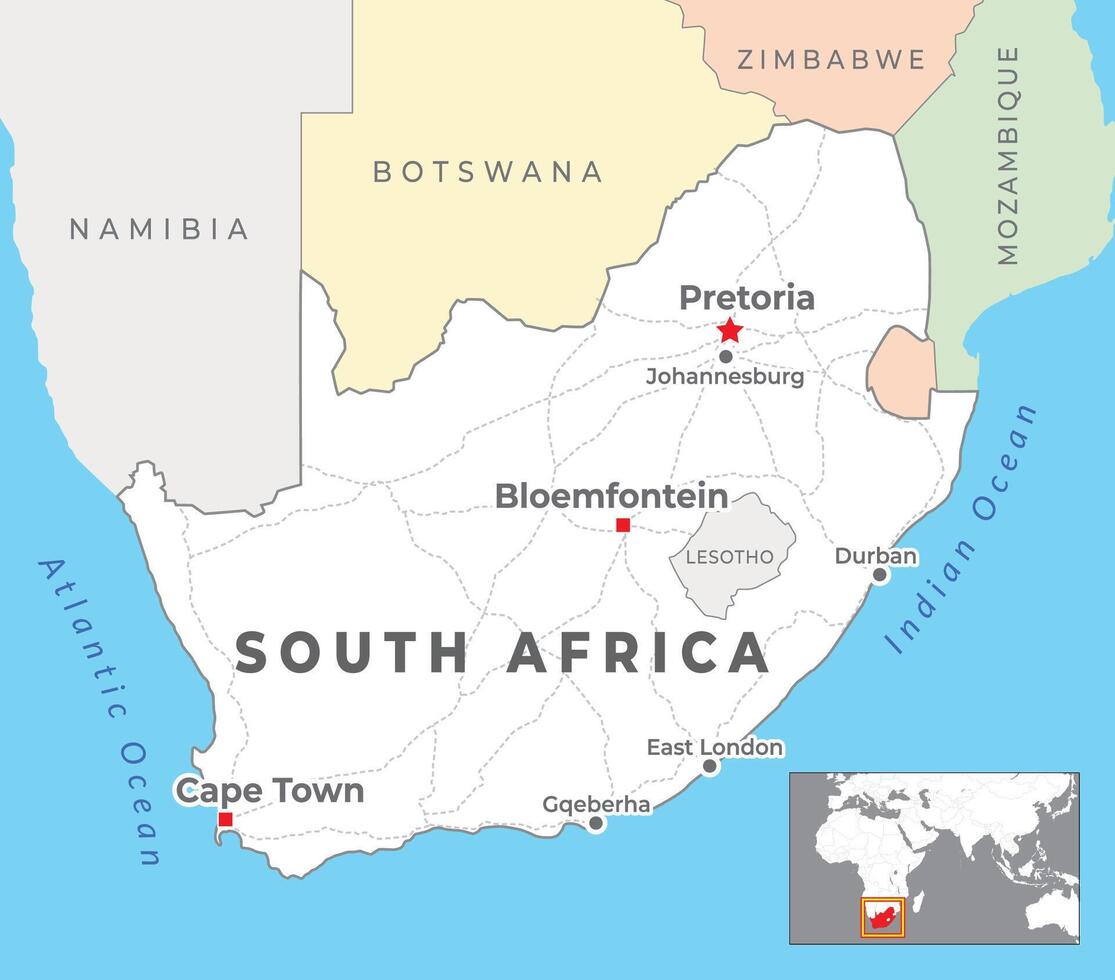
South Africa (Capital: Pretoria (executive), Cape Town (legislative), and Bloemfontein (judicial).
INS Talwar recently arrived in South Africa to take part in IBSAMAR VIII, a joint multinational maritime exercise involving the Indian, Brazilian, and South African Navy.
Political Features of South Africa:
- Located as the southernmost country in Africa.
- Borders Namibia, Botswana, Zimbabwe to the north, Mozambique to the northeast, Eswatini to the east, and Lesotho (an enclave in the east).
- Maritime boundaries include the Indian Ocean and Atlantic Ocean.
Geographical Features of South Africa:
- Mountain ranges such as Drakensberg.
- Major rivers like Limpopo and Orange.
- Plateaus covered with rolling grasslands known as highveld, and tree-dotted plains called bushveld.
- Plateau lands are surrounded by a mountainous region known as the Great Escarpment.
"2024 Nobel Prize: Protein Research Breakthrough"
David Baker was awarded the Nobel Prize for his work in computational protein design, while Demis Hassabis and John M. Jumper were recognized for their achievements in protein structure prediction.
Prediction of Protein Structures
- Demis Hassabis and John Jumper used Artificial Intelligence (AI) to predict the complex structures of proteins, solving a long-standing problem in the field.
- Their AI model, AlphaFold2, has successfully predicted the structures of millions of proteins from their amino acid sequences.
Computational Protein Design
- David Baker has taken protein design to the next level by creating entirely new proteins with unique shapes and functions.
- His program, Rosetta, can suggest amino acid sequences to produce desired protein structures, opening up possibilities in pharmaceuticals, vaccines, nanomaterials, sensors, and environmental applications.
About Proteins
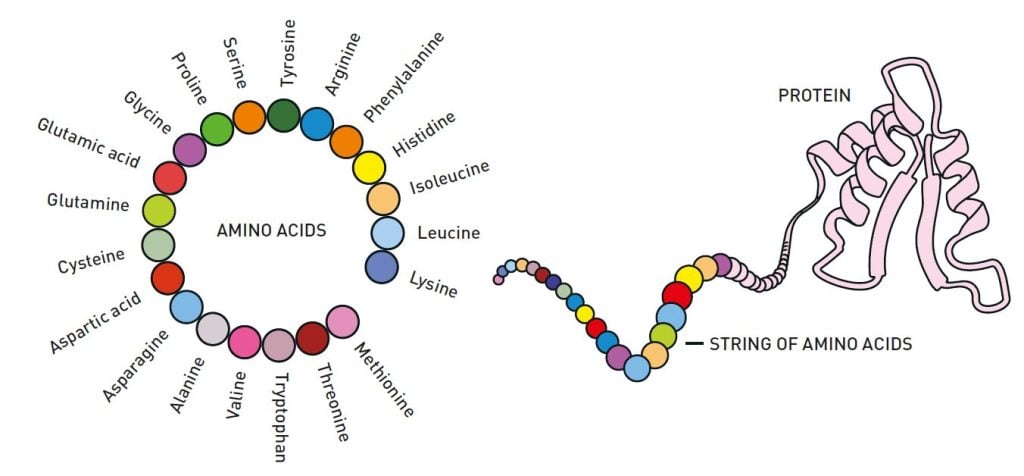
- Proteins are essential molecules that drive chemical reactions in living organisms.
- They are made up of amino acid chains determined by DNA sequences and play crucial roles in the structure, function, and regulation of tissues and organs.
- Proteins also serve as hormones, antibodies, and building blocks for various tissues in the body.
"India's 5th Lunar Mission Approved by National Space Panel"
LUPEX will pave the way for India's lunar sample return mission and the first Indian to land on the moon by 2040.
About LUPEX Mission
Purpose: - The mission will study the amount and characteristics of water present on the Moon, as well as explore the far side of the moon.
- The term "dark side of the moon" actually refers to the far side of the moon, which is never visible from Earth because of tidal locking between the Moon and Earth.
- ISRO is leading the lunar rover in an international collaboration project, while JAXA is overseeing the lander.
- The rover will also carry observation instruments from NASA and the ESA.
Landing Location: - The chosen landing site for the mission will be the south pole of the moon due to its high-water potential.
- Landing on the south pole is difficult because there are limited flat, well-lit, and communication-friendly areas.
- India became the first country to successfully land on the south pole of the moon with the Vikram Lander on Chandrayaan 3, making it the fourth country to achieve a moon landing after the US, Russia, and China.
"Fortified Rice Supply Extended Until 2028"
- Free Fortified Rice will be distributed through Pradhan Mantri Garib Kalyan Anna Yojana (PMGKAY) and other government welfare programs.
- Rice fortification includes adding Fortified Rice Kernels with essential micronutrients like Iron, Folic Acid, and Vitamin B12 to regular rice following FSSAI standards.
- Fortification is the process of enhancing staple foods like rice, wheat, oil, milk, and salt with important vitamins and minerals to boost their nutritional value and address malnutrition issues.
About Fortified Rice Initiative
Initiative Launch and Completion
- The initiative was launched in 2022 and successfully completed in March 2024 through a three-phase rollout.
Rationale for Fortification
- Fortification is a cost-effective method to combat malnutrition, including Anaemia and micronutrient deficiencies.
- Rice was chosen as the ideal vehicle for fortification due to its status as a staple food for 65% of India's population.
Schemes Covered
- The initiative covered schemes such as the Targeted Public Distribution System (TPDS), Integrated Child Development Services (ICDS), PM POSHAN (formerly the Mid-Day Meal scheme), and other welfare programs across all states and Union Territories.
Funding Source
- The initiative was funded as a Central Sector Initiative with 100% funding by the Centre as part of the food subsidy component of PMGKAY.
- Under PMGKAY, free foodgrain is provided for 5 years to 81.35 crore beneficiaries of the National Food Security Act 2013.
About Anaemia
- Anaemia is a health condition characterized by lower than normal levels of red blood cells or haemoglobin.
- According to the National Family Health Survey 5 (2019-21), a significant percentage of women, adolescent girls, and children in India are anaemic.
- The Anaemia Mukt Bharat strategy aims to decrease anaemia prevalence in vulnerable age groups through targeted interventions.
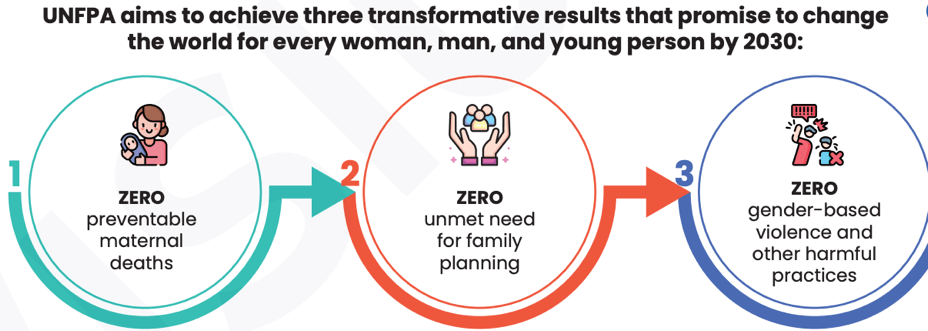
UNFPA Acknowledges India's Maternal Health Progress
- The acknowledgment was given during a ceremony commemorating a significant 50-year collaboration between UNFPA and the Government of India.
- UNFPA is a UN agency focused on sexual and reproductive health and is a part of the UN General Assembly.
India’s Initiatives for advancing Maternal Health and Family Planning
- Surakshit Matritva Aashwasan Yojana (SUMAN) ensures that women and newborns receive quality healthcare services at no cost and with zero tolerance for denial of services at public health facilities.
- Pradhan Mantri Surakshit Matritva Abhiyan (PMSMA) aims to provide free, comprehensive antenatal care to all pregnant women.
- The Midwifery Services Initiative plans to train 90,000 midwives to provide the majority of sexual, reproductive, maternal, newborn, and adolescent health care services.
India’s Advancements in Maternal health and Family Planning
- India has made significant progress in reducing Maternal Mortality Rate (MMR) by 70% between 2000 and 2020, bringing it down to 97 per 1,00,000 live births. This puts India on track to achieve the Sustainable Development Goal target of MMR below 70 by 2030.
- The Total Fertility Rate in India was 2.0 in 2020, which is below the Replacement level Fertility of 2.1.
- The percentage of women delivering in a health facility increased to 89% in 2019-2021, up from 79% in 2015-2016.
- Infant Mortality Rate (IMR) in India has decreased from 39 in 2014 to 28 in 2020.
"Forests in Crisis: 2024 Assessment Report"
- The report is centered on monitoring the main objectives for forests, which include stopping deforestation and degradation, as well as rehabilitating 30% of damaged forest land by 2030.
- These targets have been set by global agreements like the New York Declaration on Forests (2014), the Glassgow Leaders’ Declaration (2021), and the Kunming-Montreal Global Biodiversity Framework (2022).
Global Forest Goals and Progress
- Deforestation should be completely stopped by 2030, as the amount of land deforested in 2023 exceeded the targeted amount.
- Deforestation is the fourth-highest emitter of CO2 equivalent after China, the US, and India, with 3.8 billion metric tons emitted in 2023.
- Tree cover loss in forested Key Biodiversity Areas (KBAs) needs to be eliminated, as over 1.4 million hectares of forests were lost in these areas in 2023.
- Forest fires need to be controlled, as nearly one-third of the area lost to fires since 2001 was burned from 2019-23.
- By 2030, 30% of degraded and deforested landscapes should be restored, as only around 18% of the Bonn Challenge's 2020 target of 150 million hectares was restored from 2000-19.
Drivers of Deforestation
- Agricultural commodities have been the cause of 57% of global deforestation in the last 20 years.
- The shift of agriculture into primary forests has led to the loss of 15.9 million hectares of these forests from 2015 to 2023.
- Mining activities in tropical moist forest ecosystems saw a doubling in volumes from 2000 to 2019.
Recommendations
- It is important to protect all forests, but the main focus should be on preserving primary and intact ecosystems.
- There is a need for extensive efforts to restore 30% of degraded ecosystems and to track progress transparently.
- Governments should recognize that changes in fire patterns are caused by humans and should implement strategies to adapt to this.
- Key Biodiversity Areas (KBAs) and other high integrity forests should be given priority in global and national conservation efforts.
"National Maritime Heritage Complex Approved at Lothal, Gujarat"
The NMHC is currently being created as part of the Sagarmala Programme by the Ministry of Ports, Shipping & Waterway.
About NMHC
- Goal: To highlight India's diverse maritime history and establish the largest maritime heritage complex globally
- Importance of Lothal: Situated between Bhogavo and Sabarmati rivers near Gulf of Khambat, Lothal is a significant city of the Indus-Valley Civilization with the oldest man-made dry-dock dating back to 2400 BC
- Discovery at Lothal: The presence of a dry-dock at Lothal provides insights into the understanding of tides, winds, and other maritime factors during that era
- Key projects: The National Maritime Heritage Complex (NMHC) will feature a top-notch Lighthouse Museum, state pavilions, a maritime-themed eco-resort, and more.
India’s Maritime Heritage
- Indus Valley Civilization had trade links with Mesopotamia through maritime routes during the Early Days (3000-2000 BC).
- The Rig Veda contains the earliest references to maritime activities during the Vedic Age (2000-500 BC).
- The Magadh kingdom's navy during the Age of the Nandas and Mauryas (500-200 BC) is considered the world's first recorded instance of a navy.
- The Satavahana Dynasty (200 BC-220 AD) were the first native Indian rulers to issue coins with inscriptions of ships.
- The Gupta Dynasty (320-500 AD) opened several ports in the east and west, reviving maritime trade with European and African countries.
- Under Shivaji, the Maratha navy grew into a formidable force with over 500 ships.
- The Southern Dynasties such as the Cholas, Cheras, Pandyas, and the Vijaynagar empire also had maritime resources.