
Daily Current Affairs UPSC 06 and 07 October 2024
Welcome to our daily current affairs blog post for UPSC aspirants! In today's edition, we will be discussing the most significant events and news updates that took place on 6th and 7th October 2024. Staying updated with current affairs is crucial for UPSC preparation, as it not only helps you stay informed but also enhances your understanding of various subjects. So, let's dive into the important happenings of the day and explore their potential impact on the upcoming UPSC examinations.

Very Short Range Air Defence System
- DRDO has completed successful flight-tests of the advanced miniaturised VSHORADS at Pokhran Range, Rajasthan.
- The tests demonstrated the weapon system's ability to consistently hit and destroy targets.
- The MANPAD is a portable air defense system that was created by Research Centre Imarat (RCI) in partnership with DRDO laboratories and Development cum Production Partners (DcPPs).
- Its purpose is to eliminate low altitude aerial threats within short distances.
- The system uses a dual thrust solid motor and an advanced uncooled imaging infrared seeker.
Biodiversity Credits
- A group of NGOs has expressed worries about the promotion of biodiversity credits.
- Biodiversity credits are a financial tool that enables businesses to fund activities like forest conservation or restoration.
- The main goal of biodiversity credits is to have a positive effect on nature and biodiversity.
- Unlike biodiversity offset, biodiversity credits are not just used to offset negative impacts on nature by companies.
- Those looking to conserve or restore land create a supply of credits, which are then bought by private companies to fulfill their commitments to biodiversity or nature.
Dry Ports
- Telangana is looking to expand dry port facilities to enhance exports.
- Dry ports, also known as inland ports, connect to sea ports through rail or road.
- Types of dry ports include Inland Container Depots (ICDs), Container Freight Stations (CFSs), and Air Freight Stations (AFSs).
- Benefits of dry ports include offering a more efficient and cost-effective gateway for landlocked regions, reducing congestion at coastal ports, and improving overall efficiency in international trade.
Black Carbon
- A recent study found that black carbon emissions from kerosene lamps account for 10% of total residential emissions in India.
- Black carbon, also known as soot, is a component of fine particulate air pollution (PM2.5) that is formed by incomplete combustion of wood and fossil fuels.
- Black carbon has a warming impact that is up to 1500 times stronger than CO2 per unit of mass and is considered a Short-Lived Climate Pollutant with an average atmospheric lifetime of 4-12 days.
- The Climate and Clean Air Coalition (CCAC), established in 2012 within UNEP, is a voluntary partnership aimed at reducing powerful SLCPs such as Methane, Black Carbon, hydrofluorocarbons (HFCs), and tropospheric ozone.
Danainae Sub-family of Butterflies
- A recent study found that there was a significant migration of butterflies from the Danainae sub-family in Tamil Nadu, between Anamalai Tiger Reserve and Nilgiris, due to favorable rainfall.
- The Danainae sub-family of butterflies, which includes species like Blue Tiger, Dark Blue Tiger, Doublebranded Crow, and Common Crow, are often referred to as 'tigers and crows'.
- These butterflies have a unique migration pattern, moving from the Eastern Ghats and plains towards the nearest hill ranges of the Western Ghats before the northeast monsoon, and then moving from the Western Ghats towards the Eastern Ghats and plains before the southwest monsoon.
Motor Neuron Disease
- Scientists have created DNA molecules with "invisibility cloak" sequences to target diseased cells in motor neuron diseases.
- Motor Neuron Diseases are a group of neurodegenerative conditions where motor nerves in the spine and brain deteriorate over time.
- Motor nerves are responsible for controlling skeletal muscle activities like walking, breathing, speaking, and swallowing.
- There are different types of Motor Neuron Diseases including Amyotrophic Lateral Sclerosis, Progressive bulbar palsy, and Spinal muscular atrophy.
- Amyotrophic Lateral Sclerosis leads to rapid muscle control loss and eventual paralysis, as seen in Stephen Hawking.
- Progressive bulbar palsy affects muscles involved in speech and swallowing.
- Spinal muscular atrophy impacts the trunk, legs, and arms.
Extinction of Birds
- University of Birmingham research shows that approximately 610 bird species, mostly on islands, have become extinct in the last 130,000 years, coinciding with the global spread of Homo sapiens.
- The Dodo, native to Mauritius, was first encountered by Dutch sailors in the 16th century and was finely adapted to its isolated ecosystem.
- Aepyornis maximus, also known as elephant birds, was a flightless bird from Madagascar and possibly the largest bird to have ever existed, standing about 3 meters tall.
- Other extinct birds mentioned include the Kauai songbird from Hawaii, Moa birds from New Zealand, and North America's migratory passenger pigeon.
Unified Genomic Chip
- The Prime Minister introduced the 'Unified Genomic Chip' and a new indigenous sex-sorted technology.
- The indigenous sex-sorted technology will make sex-sorted semen more accessible to farmers at a lower cost, allowing for the production of only female calves.
- The 'Gau Chip' and 'Mahish Chip' were developed by the Department of Animal Husbandry and Dairying with the aim of helping farmers identify high-quality cattle early and improving dairy farming efficiency in India.
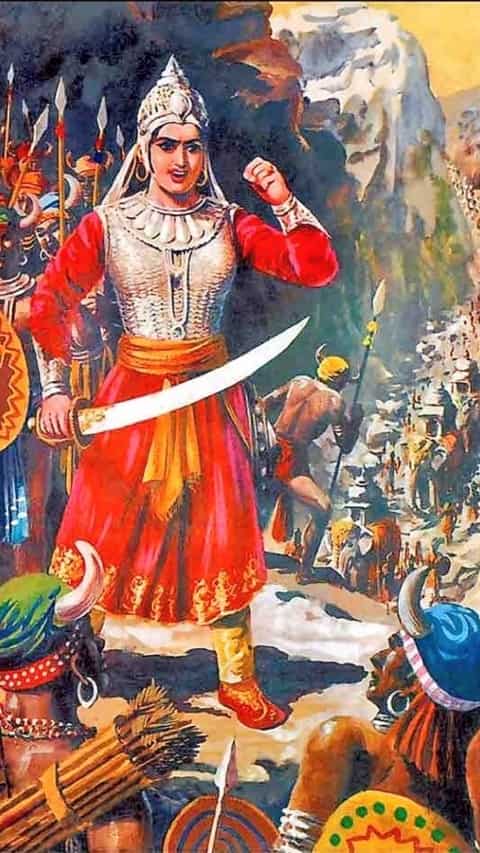
Rani Durgavati (1524 - 1564)
Rani Durgavati: A Tribute on her 500th Birth Anniversary
- Rani Durgavati's Background
- Born in Kalinjar in Banda district (UP)
- Descendant of Chandela dynasty of Mahoba
- Contemporary to Mughal emperor Akbar
- Rani Durgavati's Contributions
- Took over the Gond kingdom after her husband's death
- Successfully defended against an attack by Baz Bahadur, ruler of Malwa
- Supported learning and allowed the establishment of a seat of Pushtimarg Cult at Garha
- Constructed important reservoirs in the kingdom
- Fought bravely against Mughal Subedar Abdul Mazid Khan until her death
- Her encounters with the Mughals were documented by Persian writers
- Values of Rani Durgavati
- Courage of conviction
- Fortitude
- Dedication to her kingdom and people
"New National Sports Policy (NSP) 2024 Unveiled"
The NSP 2024 will expand on past programs like the NSP 2001, Khelo India Scheme, and Target Olympic Podium Scheme (TOPS).
Key features
Need for a New NSP
- The current NSP was created over 20 years ago and needs to be updated to address current and future challenges in the sports field.
Vision of the New NSP
- The vision is to use sports as a tool for nation building and holistic development, aligning with the principles of 'Viksit Bharat'.
5 Pillars of the New NSP
- Excellence on the Global Stage: Focus on improving infrastructure and talent identification.
- Sports for Economic Development: Using sports to boost industries like tourism and manufacturing.
- Sports for Social Development: Promoting indigenous games and promoting inclusivity, health, and education through sports.
- Sports – A People’s Movement: Involving communities, establishing a National Fitness Ranking & Indexing system, and updating the Physical Education Framework.
- Harmonize NSP 2024 with NEP, 2020: Integrating sports with education to align with the National Education Policy of 2020.
- India, being one of the most youthful countries globally with a significant portion of its population falling within the 15-29 age group, has a great opportunity to use sports as a tool for advancing national growth.

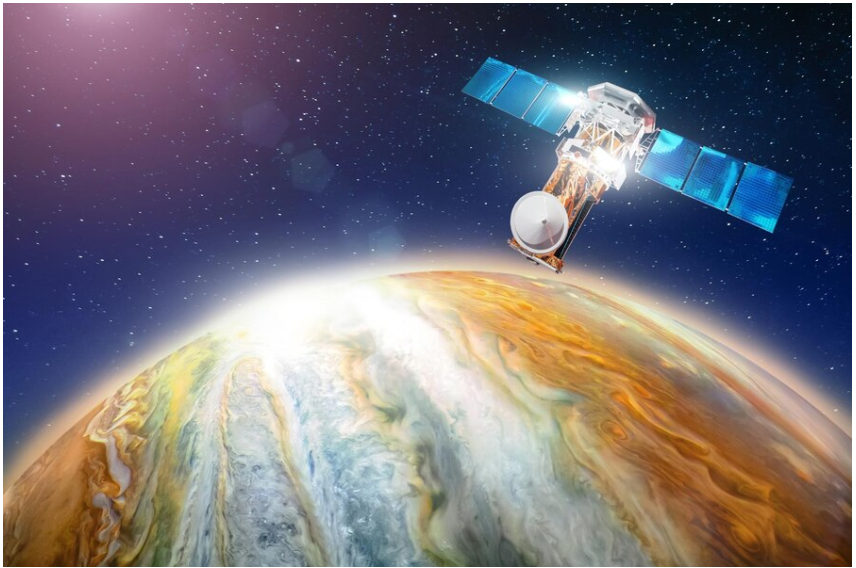
"ISRO Sets Date for Venus Orbiter Launch"
The Union Cabinet recently gave approval for India's first mission to Venus, known as the Venus Orbiter Mission (VOM).
About VOM
- Target Date and Duration:
- The planned launch date for the mission is March 2028, with an estimated travel time of 112 days to reach Venus.
- Launch Vehicle:
- The mission will be launched using the Launch Vehicle Mark-3 (LVM-3).
- Objectives of VOM:
- The objectives of the Venus Orbiter Mission (VOM) include examining dust in the Venusian atmosphere and its airglow, mapping the surface topography of Venus, studying the solar X-ray spectrum, and investigating sub-surface characteristics.
- VOM will also demonstrate technologies such as testing aerobraking and thermal management techniques in the harsh Venusian environment.
- Payloads:
- A total of 19 payloads have been recommended to be onboard VOM, with 16 being Indian payloads, 2 being Indian and international collaborative payloads, and 1 being an international payload.
Key Scientific Payloads/Experiments for VOM
- Venus Thermal Camera: This payload will help in understanding atmospheric dynamics and Venusian clouds.
- Narrow band oxygen Airglow detection in Venusian Atmosphere (NAVA): This experiment aims to measure airglow emissions in the Venusian atmosphere.
- Venus Advanced Radar for Topside Ionosphere and Subsurface Sounding (VARTISS): This payload will study the structure of the ionosphere, active volcanic hotspots, and detect buried features on Venus.
- Venus Orbit Dust Experiment (VODEX): This experiment will study Interplanetary Dust Particles (IDPs) at Venus.
- Other Payloads: Additional payloads include Venus Ionospheric and Solar Wind Particle AnalySer (VISWAS), Radio Anatomy of Venus Ionosphere (RAVI), and VIRAL (Venus InfraRed Atmospheric gases Linker) developed by Russia.
Other Important Venusian Missions
- Pioneer Venus (1978) by NASA and Vega (1985) by USSR increased knowledge about Venus's atmosphere.
- Venus Express (2005) by European Space Agency and Akatsuki (2015) by Japan focused on studying atmospheric dynamics, climate evolution, and surface features of Venus.
- Future missions such as NASA's DAVINCI (2029) and VERITAS (2031) along with ESA's EnVision Venus Orbiter (2031) will continue to explore and research Venus.
BARC at IAEA's Atoms4Food Forum
Atoms4Food Initiative Overview
- Atoms4Food was launched by the IAEA and FAO at the 2023 World Food Forum in Rome, Italy.
- The purpose of Atoms4Food is to provide countries with tailored solutions using nuclear techniques and advanced technologies to enhance agricultural and livestock productivity, reduce food losses, and improve food security to combat hunger.
Nuclear Technologies for Agriculture
- Irradiation technique: Extends shelf life of foods by reducing or eliminating microorganisms and insects.
- Fallout radionuclide (FRN) technique: Analyzes soil radionuclide concentrations to measure erosion patterns.
- Cosmic-ray neutron sensor (CRNS) technology: Measures soil moisture by detecting cosmic ray neutrons reflected from soil.
- Radioimmunoassay (RIA) technology: Detects hormone levels in animals for precise timing of artificial insemination.
- Sterile insect technique (SIT): Controls pests by releasing sterilized insects to mate with wild populations.
- Other technologies include Nitrogen-15 for measuring nitrogen fixation in roots and isotopic tracing techniques for crop nutrition and water management.
India's Efforts in Leveraging Nuclear Technologies for Food Security
- India has provisions for multiproduct food irradiation units under the Pradhan Mantri Kisan SAMPADA Yojana (PMKSY).
- BARC has developed 42 high-yielding seed varieties through Gamma irradiation.
- BARC has established major irradiation facilities in Vashi and Nashik, Maharashtra.
"Balancing Workers' and Manufacturers' Interests During Strikes: GTRI's Perspective"
- GTRI's recent Flagship Report cautioned that the Samsung Strike in Tamil Nadu could result in a situation similar to Nokia's collapse ten years ago, emphasizing the importance of protecting worker's rights while maintaining industrial stability.
- Nokia, once a successful mobile phone manufacturer in India, faced challenges such as tax disputes with the Tamil Nadu government and mounting union pressures, ultimately leading to the closure of its plant in 2013.
- The ongoing strikes by Samsung workers are driven by demands for immediate approval of a proposal to form a union, wage increases, and a standard 8-hour working day, among other issues.
Impact of these Strikes on Indian Economy
- The manufacturing ecosystem in India could suffer and lose dominance to China if strikes continue, as seen with Nokia's closure in 2013.
- Strikes can cause instability, leading to losses for companies, disruptions in the supply chain, and a lack of investment from investors and multinational corporations.
- Labor force may experience wage losses and job insecurities during strike periods.
- The Indian government is currently reviewing its Free Trade Agreements with South Korea and ASEAN countries, and any escalation of strikes could have a negative impact on these negotiations.
Measures to be taken towards resolution
- Creating clear laws and standard operating procedures is important to safeguard the interests of workers and manufacturers.
- State governments should facilitate discussions among all industry stakeholders on issues like wage standards, safety measures, and worker welfare.
- Samsung should address worker concerns by setting up a formal committee for worker representation.
- Implementing a fast-track dispute resolution system can help prevent labor disputes from turning into large-scale strikes.
"CareEdge's First Sovereign Ratings Report: 39 Economies Analyzed"
CareEdge was the first credit rating agency from India to venture into global scale ratings, including sovereign ratings.
Key Highlights
- Germany, Netherlands, Singapore, and Sweden were given AAA ratings.
- India received a BBB+ rating due to its strong post-pandemic recovery and emphasis on infrastructure investment.
- India's government debt-to-GDP ratio is expected to decrease from 80% to 78% by FY30.
About Sovereign Credit Rating (SCR)
- Credit ratings are evaluations of how likely an entity is to fulfill its financial obligations, indicating the credit risk or creditworthiness of a borrower.
- SEBI oversees domestic credit rating agencies such as CRISIL, ICRA, and CARE.
- Sovereign credit ratings assess a country's ability and willingness to repay debt, enabling access to global capital markets at favorable rates and attracting foreign investment.
- The three main US-based rating agencies, S&P, Moody's, and Fitch, currently dominate sovereign credit ratings.
Issues prevailing in SCR rating by US-based rating agencies
- Many countries, such as India, have raised concerns about the grading done by international credit rating agencies due to reasons such as:
- Lack of clarity on the methodologies used by these agencies.
- Failure to accurately reflect the economic fundamentals of a country.
- Perceived bias against developing economies.
- India, despite being the 5th largest economy globally and having a clean default record, has been given a lower rating by global credit rating agencies.
"World Bank Group Releases Infrastructure Development Benchmarking Report"
- A study was conducted on the regulatory environments for PPPs in 140 countries, finding a strong connection between regulatory changes and investments in PPP infrastructure.
- PPP involves the private sector delivering public services with government funding and oversight.
Key Highlights of the report
- Only 19 economies have implemented specific provisions for budgeting, reporting, and accounting in their Public Fiscal Management System (PFMS).
- Out of the surveyed economies, only 18 publicly disclose Public-Private Partnership (PPP) liabilities.
- A strong PFMS can help address potential financial sustainability issues that may arise from a troubled or terminated PPP project.
- Monitoring and Evaluation: Only 37% of economies require payments to be tied to performance.
- Around 90% of surveyed economies have regulations in place for renegotiating PPP contracts, with only 19% explicitly addressing changes in risk allocation.
Challenges to PPP in India
- Financial issues include aggressive bidding, underpricing projects, lack of creative destruction, and cost overruns due to project delays.
- Capacity and procedural challenges involve insufficient management capacity in the public sector and delays in obtaining necessary clearances like Environmental Impact Assessments.
- Regulatory and institutional gaps include the lack of a comprehensive National PPP policy, limited information on private sector service providers, and unreliable data availability.
Existing PPP Regulatory Framework in India
- The Private Investment Unit within the Department of Economic Affairs in the Union Ministry of Finance handles policy matters related to Public-Private Partnerships (PPPs).
- The PPP Vertical within NITI Aayog is responsible for making policy recommendations to standardize PPP documents and is also involved in promoting the recycling and monetization of core infrastructure assets to encourage innovation and growth.
Kelkar Committee (2015) Recommendations on PPP
- Create independent regulators for different sectors involved in public-private partnerships to ensure consistent performance.
- Discourage the submission of unsolicited proposals through a Swiss Challenge process to address issues of information imbalance and lack of transparency.
- Set up a National Facilitation Committee to expedite the resolution of issues and obtain timely approvals for projects.