
Daily Current Affairs UPSC 12 July 2024
Welcome to our daily current affairs blog post for UPSC aspirants! In today's edition, we will be discussing the most significant events and news updates that took place on 12th July 2024. Staying updated with current affairs is crucial for UPSC preparation, as it not only helps you stay informed but also enhances your understanding of various subjects. So, let's dive into the important happenings of the day and explore their potential impact on the upcoming UPSC examinations.

e-Office
- The government has decided to implement e-Office in all attached, subordinate offices, and autonomous bodies.
- e-Office is a mission mode project under the National e-Governance Program and is developed by the National Informatics Centre (NIC).
- It is a digital workplace solution built on open architecture, making it a standard reusable product amenable for replication across governments.
- Key components of e-Office include eFile (File Management System), KMS (Knowledge Management System), WAW (Work from Anywhere) portal, and SPARROW (Smart Performance Appraisal Report Recording Online Window).
Exercise Pitch Black
- Indian Air Force (IAF) contingent arrives in Australia for Exercise Pitch Black 2024.
- Exercise Pitch Black 2024 is a biennial, multi-national exercise hosted by the Royal Australian Air Force (RAAF).
- 20 countries participate in the exercise.
- IAF has participated in the 2018 and 2022 editions of the exercise.
- The exercise aims to enhance the ability to deploy over large distances and support integrated operations in the Indo-Pacific region.
Scheduled Caste Sub Plan (SCSP) and Tribal Sub Plan (TSP)
- The National Commission for Scheduled Castes has requested a report from the Karnataka government regarding the alleged diversion of funds from SCSP and TSP.
- TSP has been in place since 1974 to ensure sufficient plan resources for the development of Scheduled Tribes.
- SCSP, previously known as the Special Component Plan for Scheduled Castes, has been in place since 1979-80 to ensure a proportional flow of plan resources for the development of Scheduled Castes.
- The budgets allocated for SCSP and TSP are non-divertible and non-lapsable, with the clear objective of reducing the gap in socio-economic development between SCs and STs.
IFSC
- RBI has allowed remittances to International Financial Services Centres (IFSCs) under the Liberalised Remittance Scheme (LRS).
- IFSCs are specialized financial hubs that cater to international financial services.
- GIFT City in Gujarat is India's first IFSC established under the Special Economic Zone Act, 2005.
- GIFT City, operational since 2015, aims to serve as India's main hub for international financial services.
- IFSCA is a statutory authority established under the IFSCA Act, 2019 to regulate and develop financial products, services, and institutions in IFSCs.
Time Crystal
- Scientists have created a time crystal using large atoms, which are particles that repeat their motion periodically in time.
- Time crystals were first proposed by Frank Wilczek in 2012 as a quantum system where particles organize into a repeating pattern of motion.
- The researchers used laser light and Rydberg atoms to demonstrate spontaneous oscillations, marking a significant advancement in time crystal creation.
- This breakthrough opens up new possibilities for applications in sensors, wireless communication, and quantum technology.
Quantum Cryptography
- Researchers at Raman Research Institute have developed a new method for generating random numbers that are essential for stronger encryption in quantum communications.
- The institute conducted a photonic experiment to show the violation of Leggett Garg Inequalities, which compare quantum mechanics predictions with classical physics.
- Quantum Cryptography is a form of encryption that utilizes quantum mechanics properties to secure and transmit data.
This method uses individual photons to transmit data over optic fiber, making it more secure than traditional encryption methods.
Sarus Crane
- The summer census in Uttar Pradesh has shown an increase in the Sarus crane population.
- The Sarus crane is the tallest flying bird in the world and has been declared as the State Bird of Uttar Pradesh.
- Sarus cranes are social creatures that are often found in pairs or small groups and are known to mate for life with a single partner.
- They are distributed across the Indian sub-continent, Southeast Asia, and Northern Australia, primarily in marshes, floodplains, wetlands, fallow and cultivated lands, and paddy fields.
- The conservation status of the Sarus crane is listed as Vulnerable by the IUCN and Schedule IV by the WPA.
- The main threats to the Sarus crane population include habitat loss and degradation, conversion of land for agriculture, and ingestion of pesticides.
Siang River
- Residents in Upper Siang district are demonstrating against the construction of the Upper Siang Hydropower Project in Arunachal Pradesh.
- The Upper Siang Hydropower Project is being constructed by NHPC on the Siang River.
- The Siang River originates from the Angsi Glacier in the Kailash Ranges near Mansarovar Lake in Tibet.
- The major tributaries of the Siang River are the Lohit and Dibang rivers.
- The Siang River flows into the plains of Assam south of Pasighat town, where it merges with the Dihang and Lohit rivers to form the Brahmaputra River.
Chromium Contamination of Groundwater
- Kolkata bench of National Green Tribunal has instructed Central Ground Water Board to investigate the dangerous levels of Chromium contamination in groundwater in Sukinda Valley, Odisha.
- Chromium contamination is a serious issue as it is highly water soluble and can spread easily from the source.
- Chromium exists in two valence states: Trivalent Chromium (Cr(III)) which is biologically important and Hexavalent Chromium (Cr(VI)) which is considered toxic due to its high carcinogenicity.
- The maximum permissible contamination of Cr(VI) in drinking water is 50 μg/L according to Indian standard IS 10500.
Fund for responding to Loss and Damage
- The Board for Loss and Damage Fund has been renamed as the "Fund to respond to Loss and Damage" (FrLD) by the decision of the board.
- The Philippines has been chosen as the host country for the Board of the FrLD.
- FrLD was established during the 27th session of the UNFCCC Conference of the Parties (COP) in Sharm el-Sheikh (Egypt) in 2022.
- The purpose of the FrLD is to assist developing countries in compensating for losses and damages caused by natural disasters resulting from climate change.
- Loss and damage, in this context, refers to the adverse effects that occur due to unavoidable risks of climate change such as rising sea levels, prolonged heatwaves, desertification, and ocean acidification.
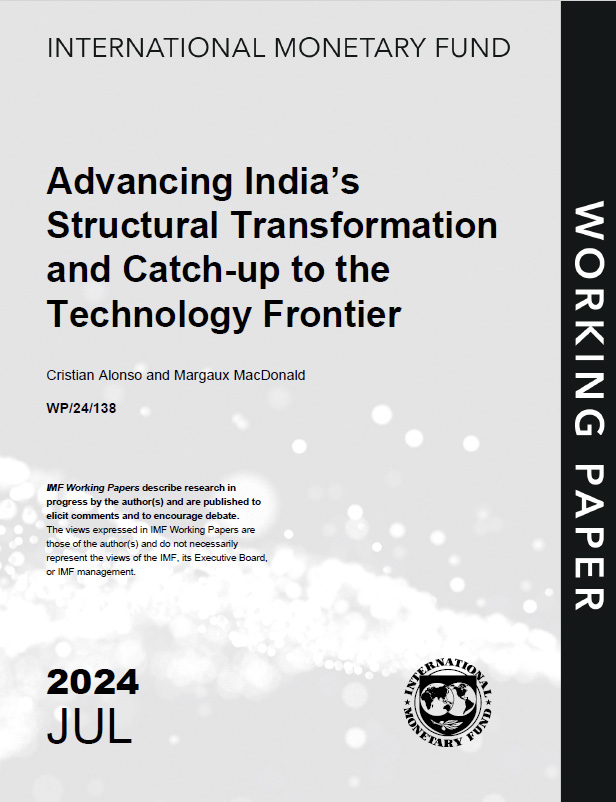
"IMF Study: India's Structural Transformation"
- The IMF published a Working Paper called 'Advancing India's Structural Transformation and Catching up to the Technology Frontier' that evaluates India's economic growth and proposes structural changes to boost growth in the country.
Key Highlights of the IMF Working Paper
- Sectoral Imbalances: The role of agriculture in India's economy has decreased significantly over the years, but it still employs a large portion of the population due to strict labor market regulations.
- Uneven Tech-Adoption: Services have been more successful in adopting technology compared to manufacturing, with certain industries like computer programming and IT services leading the way.
- Future Estimates: India will need to create millions of jobs by 2050 to accommodate its growing population, and shifting employment from agriculture to other sectors could boost GDP growth.
Key Recommendations from the IMF Working Paper
- Advance Labor Market Reforms: The central government should collaborate with states to make labor markets more flexible while still protecting workers.
- Foster Trade Integration: Removing import and export restrictions can encourage healthy competition among Indian producers and improve resource allocation.
- Strengthen Social Safety Net: Enhancing social safety nets can support the migration of workers from rural to urban areas and aid in the structural transformation of the economy.
"Exploring India's Scientific Drilling in Maharashtra"
- BGRL, a specialized institute under the Ministry of Earth Sciences, is responsible for India's Scientific Deep Drilling (SDD) programme.
- SDD involves strategically drilling boreholes to study and analyze deeper parts of the Earth's crust.
About Scientific Drilling at Koyna
- Objective: Drill the Earth's crust to a depth of 7 km for scientific observations.
- Reason for choosing Koyna: Recurrent earthquakes since the impounding of Koyna Dam and its location near India's west coast.
- Techniques used: Hybrid of mud rotary drilling and percussion drilling (air hammering).
- Rotary drilling involves using a steel rod to cut rocks and drilling mud to cool tools and remove debris.
- Air hammering uses compressed air to deepen the borehole and flush out cuttings.
Challenges of Scientific Drilling at Koyna
- Labor and capital-intensive with meticulous planning and drilling skills required.
- Increasing load on the hook as the borehole gets deeper.
- Challenges due to the hot, dark, high-pressure nature of the Earth's interior hindering continuous operations.
Significance of Scientific Drilling at Koyna
- Opportunity to study earthquakes and expand understanding of the planet's history, fault zones, rock types, energy sources, and life forms.
- Insight into Deccan volcanism, Mass Extinction events, and geothermal potential of the West Coast Belt.
- Development of a model for Reservoir Triggered Seismicity mechanism.
"Global Population Forecast 2024"
- The World Population Prospects Report, released by the United Nations Department of Economic and Social Affairs (UN-DESA), offers insights into population trends in countries worldwide.
Key Findings of the World Population Prospects Report
Global:
- Population peak projected to reach 10.3 billion in mid-2080s.
- Fertility rate has decreased to 2.25 live births per woman.
- Life expectancy at birth has increased to 73.3 years.
- 4.7 million babies born to mothers under age 18 in 2024.
India:
- Expected to peak in early 2060s and remain the world's largest throughout the century.
Main Drivers of Population Increase
Population Momentum:
- Growth in number of women of reproductive age even with declining birth rates.
Other Drivers:
- Higher fertility rates in some countries/regions.
- Increase in life expectancy.
UN-DESA Overview
Genesis:
- Rooted in the United Nations Charter.
Headquarters:
- Located in New York, US.
Functions:
- Works with governments and stakeholders to help countries achieve economic, social, and environmental goals.
- Development pillar of the UN Secretariat.
Important Reports:
- Publishes reports such as World Economic Situation and Prospects, Financing for Sustainable Development, etc.
"Banned Chemicals Seized by Security Agencies"
- Indian security agencies seized a consignment of Ortho-Chloro Benzylidene Malononitrile at a port in Tamil Nadu.
- The consignment was seized under the Customs Act, 1962 and the Weapons of Mass Destruction and Delivery Systems (Prohibition of Unlawful Activities) Act, 2005.
- The chemical is listed in India's export control list SCOMET, which requires an export authorization for export.
About SCOMET List:
- SCOMET is the National Export Control List for dual-use items, munitions, and nuclear-related items.
- Dual-use items can have both civilian and military applications and are named as SCOMET under the Foreign Trade Policy, 2023.
- Export of dual-use items is either prohibited or permitted under a license.
- SCOMET List is aligned with control lists of multilateral export control regimes and conventions.
Multilateral Export Control Regimes:
- Wassenaar Arrangement, established in 1996, focuses on regulating the transfer of conventional arms and dual-use goods and technologies.
- The Nuclear Suppliers Group (NSG), founded in 1974, oversees the transfer of civilian nuclear material and nuclear-related equipment and technology.
- The Missile Technology Control Regime (MTCR), formed in 1987, aims to restrict the proliferation of ballistic missiles and other unmanned delivery systems.
- The Australia Group, established in 1985, is dedicated to controlling the spread of Chemical and Biological weapons.
- India is a member of all the control regimes mentioned above, except for the Nuclear Suppliers Group.
"Vizhinjam Seaport Welcomes First Container Vessel"
- The Vizhinjam Seaport in Thiruvananthapuram is India's first Deepwater Container Transshipment Port, being developed by the Kerala government.
- The port is being developed in a landlord model with a Public Private Partnership component on a DBFOT basis, with Adani Vizhinjam Port Pvt Ltd handling cargo operations.
Transshipment Hubs
- Transshipment hubs like Vizhinjam serve as intermediate ports for cargo transfer between originating and destination ports.
- Currently, a significant amount of India's transshipment cargo is handled at ports outside the country, such as Colombo, Singapore, and Klang.
Significance of India as a Transshipment Hub
- Developing transshipment hubs in India can prevent revenue losses for major ports and increase port activity.
- It can also lead to savings in foreign exchange reserves, attract foreign direct investment, develop logistics infrastructure, and generate employment.
- Additionally, it can promote growth in related businesses like ship repair, warehousing, and bunkering.
Other Initiatives for Transshipment Hub Development in India
- Cochin Port Authority has developed an International Container Transshipment Terminal in Cochin.
- The development of an International Container Transshipment Port in Galathea Bay in Great Nicobar Island of Andaman & Nicobar Islands is also being planned.
"PM's Visit to Austria: Celebrating 75 Years of Diplomatic Ties"
- Indian Prime Minister's visit to Austria marked the first trip by an Indian Prime Minister to the country in 41 years, with the last visit being in 1983.
- Both countries highlighted the importance of a future-oriented bilateral sustainable economic and technology partnership during the visit.
- The partnership between India and Austria will focus on new initiatives and joint projects, as well as business-to-business engagement in areas such as green and digital technologies, infrastructure, renewable energy, water management, life sciences, smart cities, mobility, and transportation.
India-Austria Relations
- Historical Relations: Diplomatic relations between India and Austria were established in 1949, with Prime Minister Nehru supporting Austria's emergence as a neutral and independent country in 1955.
- Political and Security Cooperation: Both countries reaffirmed their commitment to a free and open Indo-Pacific region and the peaceful resolution of the Ukraine conflict.
- Economic Relations:
- The total bilateral trade between India and Austria in 2023 was valued at 2.93 USD billion, with Indian exports to Austria amounting to USD 1.52 billion.
- The India-Austria Startup Bridge was launched in 2024 to promote innovation and entrepreneurship between the two countries.
- Multilateral Cooperation:
- Austria showed interest in the India-Middle East-Europe Corridor (IMEC), while India reiterated its support for Austria's UNSC candidature for the term 2027-28.
- Austria, in turn, expressed its support for India's candidature for 2028-29. India also invited Austria to join the International Solar Alliance.