Rhodamine-B Ban in Tamil Nadu
- Cotton candy banned in Tamil Nadu due to toxic dye.
- Rhodamine-B prohibited by FSSAI in food industry.
- Rhodamine-B used in textile, paper, leather, and paint industry.
- Immediate effects include stomach fullness, itching, and breathing problems.
- Health effects include stomach issues, breathing problems, liver dysfunction, cancer, neurotoxicity, and kidney failure.
Jnanpith Award 2023
- 58th Jnanpith Award given to Jagadguru Swami Rambhadracharya ji for Sanskrit and Shri Gulzar for Urdu.
- Jagadguru Swami Rambhadracharya ji and Shri Gulzar awarded.
- Award given annually by Bharatiya Jnanpith since 1965.
- Bharatiya Jnanpith established in 1944, premier literary organization in India.
- Highest literary award in India.
- Conferred for literature in Indian languages and English.
- Presented by Presidents, Prime Ministers, and international celebrities.
Aarogya-Doctors on Wheels
- Launched for the Udhampur district of J&K.
- AI-driven Tele Clinic providing healthcare facilities in far-flung areas.
- Patients can narrate their illness in native language and AI doctor responds in the same language.
- Overcomes problems of ‘Accessibility, Availability, and Affordability'.
Paruveta Utsavam
- Efforts to get UNESCO to declare Paruveta Utsavam as intangible cultural heritage.
- Annual mock hunting festival starts on Makarasankranthi at Sri Narasimha Swamy temple in Ahobilam, Andhra Pradesh.
- Festival lasts for about 40 to 45 days.
- Ahobilam is center of worship for Narasimha, the lion-headed avatar of Lord Vishnu.
- One of 108 Divya Desams.
Water discovered on Asteroids
- Asteroids Iris and Massalia found to have water molecules.
- Discovered through unique wavelength emission.
- Discovery made through SOFIA's observations.
- SOFIA was NASA's airborne astronomical observatory.
Significance of Water on Asteroids:
- Asteroids are small, rocky objects orbiting the Sun.
- Water on asteroids can help understand water delivery to Earth.
- Water on asteroids could aid in search for extraterrestrial life.
YUva VIgyani KAryakram (YUVIKA)
- ISRO's program for school children called YUVIKA.
- Objectives: impart basic knowledge on Space Science, Technology, and Applications, encourage STEM research and careers.
- Includes classroom training, experiments, model rocketry, interactions with ISRO scientists, field visits.
Economic cooperation between India and Taiwan
- India and Taiwan signed a migration and mobility agreement for employment of Indian workers in Taiwan.
- Bilateral trade relations between India and Taiwan growing deeper.
- Taiwanese enterprises have invested around $4 billion in India in sectors like footwear, machinery, automobile components, ICT products.
Agricultural and Processed Food Products Export Development Authority (APEDA)
- APEDA has contributed significantly to India's agricultural exports, reaching USD 26.7 billion in 2022-23.
- Established under the APEDA Act, 1985, responsible for export promotion of scheduled products.
- Accredits certification bodies for National Programme for Organic Production.
Vasudev Balwant Phadke (1845 – 1883)
- Home Minister paid tribute to freedom fighter Vasudev Balwant Phadke on his death anniversary.
Key Contributions:
- Regarded as the "Father of the Armed Struggle for India’s Freedom".
- Inspiration for Bankimchandra’s Anandamath.
- Fomented disaffection against the British during the great famine.
- Formed a band to attack British strongholds.
- Established Aikyavardhini Sabha and first school of national education in Pune.
Values: Patriotism, Leadership, Courage.

ISRO successfully launched the Ministry of Earth Sciences (MoES) funded INSAT-3DS weather forecasting satellite:
GSLV-F14 Launch Details:
- GSLV-F14 successfully placed INSAT-3DS into intended orbit.
- Launched from Satish Dhawan Space Centre in Sriharikota.
INSAT-3DS Satellite:
- Follow-on mission of Third Generation Meteorological Satellite.
- Aids operational INSAT-3D and INSAT-3DR satellites.
- Objectives of INSAT-3DS include monitoring Earth's surface, carrying out oceanic observations, providing meteorological data, and offering search and rescue services.
- Onboard payloads of INSAT-3DS include Imager Payload, Sounder Payload, Data Relay Transponder, and SA&SR transponder.
- Indian industries played a significant role in the making of INSAT-3DS.
GSLV-F14 Overview:
- 16th flight of India's GSLV and 10th with Indigenous Cryogenic stage.
- Three-stage launch vehicle with a liftoff mass of 420 tonnes.
- First stage: solid propellant motor.
- Second stage: earth-storable propellants.
- Third stage: cryogenic stage.
- Capable of launching spacecraft for various missions including communications, navigation, and earth resource surveys.
Geosynchronous Transfer Orbit (GTO):
- Special orbit used to transition from one orbit to another.
- Spacecraft launched into elliptical orbit with apoapsis altitude of around 37,000 km.
Geostationary orbit (GEO):
- Satellites in GEO circle Earth above the equator at the same rate as Earth's rotation.
- Satellites appear stationary over a fixed position.
Public Accounts Committee (PAC) financial limits for ‘New Service (NS)’ and ‘New Instruments of Service (NIS)’ report
- The report approved a proposal by the Ministry of Finance to raise financial limits for NS and NIS, which had not been revised since 2006.
- The financial limits are applied when expenditure provisions are increased through appropriation of funds from savings within the same sections of Grants/Appropriation.
- Expenditure beyond the financial limits can be done through supplementary proposals from inistries/departments, requiring parliamentary approval.
Key highlights:
- NS refers to expenditure from a new policy decision not previously brought to Parliament's attention, while NIS refers to a large expenditure from expanding an existing policy.
- Object Heads for NS/NIS include machinery & equipment, ICT equipment, building & structure, infrastructure assets, arms & ammunition, and land, as well as investments, loans, advances, and subsidies.
- The reporting limit has been increased from above Rs 50 crore to Rs 100 crore or 20% of the original appropriation, whichever is higher.
Rationale for revision:
- Economic growth and expansion in GDP growth (6-7% YoY) are expected to increase the budget size.
- Delays in project execution due to low financial limits for NS/NIS expenditure have led to a rise in supplementary proposals.
- Standardizing Object Heads for NS/NIS would enable effective scrutiny by the CAG.
Fourteenth Meeting of Conference of Parties (COP14) to Convention on the Conservation of Migratory Species of Wild Animals (CMS)
COP14 in Samarkand, Uzbekistan.
| Agenda Items | Key Outcomes |
|---|---|
| Migratory Species |
|
| Species Specific Mandates |
|
| Migratory Birds |
|
| Scientific Reports |
|
| New Global Initiative |
|
- New measures to safeguard migratory species.
- India recognized for contribution to conservation of migratory birds in CAF.
Convention on the Conservation of Migratory Species of Wild Animals (CMS):
- Also known as Bonn Convention.
- Global convention for conservation of migratory species.
Appendices:
- Appendix I: Lists threatened migratory species.
- Appendix II: Lists species benefiting from international cooperation.
- India is a party to CMS.
Centre Raises Authorised Capital of FCI from Rs 10,000 crore to Rs 21,000
- Authorised capital is the maximum amount of share capital a company is allowed to issue as per its Memorandum of Association.
- Also known as Nominal or Registered capital.
Benefits of Enhanced Authorised Capital for FCI:
- Allows FCI to modernize storage facilities, improve transportation networks, and adopt advanced technologies.
- Lessens interest burden and positively affects Centre's subsidy.
About FCI:
- Public sector undertaking under Ministry of Consumer Affairs, Food and Public Distribution established under Food Corporation Act of 1964.
Mandates of FCI:
- Procurement of foodgrains at minimum support price to protect farmers' interests.
- Distribution of food grains for public distribution system.
- Maintain operational and buffer stocks for National Food Security.
- Centre provides equity for working capital and capital assets creation.
- FCI uses Cash Credit, short-term loans, Ways & Means to meet fund requirements.
Key initiatives to enhance the effectiveness of FCI:
- Purchasing lab equipment and developing software platform for Quality Checking labs.
- Studies on "Shelf-Life" and "Pest Management for Fortified Rice" for efficient food security management.
- E-office implementation to reduce paper usage in FCI
India’s Department of Atomic Energy (DAE) begins construction phase for contributions to Proton Improvement Plan (PIP-II) project
- PIP-II is the first particle accelerator in the U.S. to have significant contributions from international partners
- Institutions from India, France, Italy, Poland, and the UK are part of the collaboration.
- India will contribute $140 million worth of components for the accelerator.
Function and Components of Particle Accelerators:
- Particle accelerators propel charged particles at high speeds, close to the speed of light.
- Accelerators have four main components: a source for producing particles, a device to speed them up, metallic tubes in a vacuum for free movement, and electromagnets to steer the particles.
Notable Large Particle Accelerators:
- Large Hadron Collider (LHC) at CERN in Geneva: Known for discovering the Higgs Boson and previously unknown hadrons.
- Stanford Linear Accelerator Centre (SLAC) in the USA: Longest linear particle accelerator in the world, discovered quark and tau leptons.
- European Synchrotron Radiation Facility (ESRF) in Grenoble, France: Home to the most intense hard x-ray source in the world.
Significance of Particle Accelerators:
- Fundamental research: Allows for the collision of sub-nuclear particles near the speed of light to search for new particles and forces and understand the origins of the universe.
- Health: Used for sterilizing medical equipment and synthesizing radiopharmaceuticals for cancer diagnosis and therapy.
- Environment: Helps detect trace chemical elements in air, water, or soil.
- Industry: Used to improve the durability of materials.
Committee on Estimates (CoE) submitted report on action taken by the government on recommendations contained in its 26th report
Recommendations for Electric Vehicle Policy Evaluation by CoE:
- EVs use electric motors instead of Internal Combustion Engines.
- They produce fewer emissions and are more energy-efficient.
Steps taken to promote EVs in India:
- FAME India scheme for faster adoption of EVs.
- PLI Scheme for Automobile and Auto Component.
- Reduction in GST on EVs.
- Amendment to building bylaws for charging stations.
Recommendations from the 26th Report:
- Establish a strong National Policy framework for EVs.
- Extend FAME-II scheme.
- Rollout a nationwide public charging network.
- Promote alternative technologies like flex fuel and Hydrogen ICE.
- Develop a strategy for disposal and reuse of EV batteries.
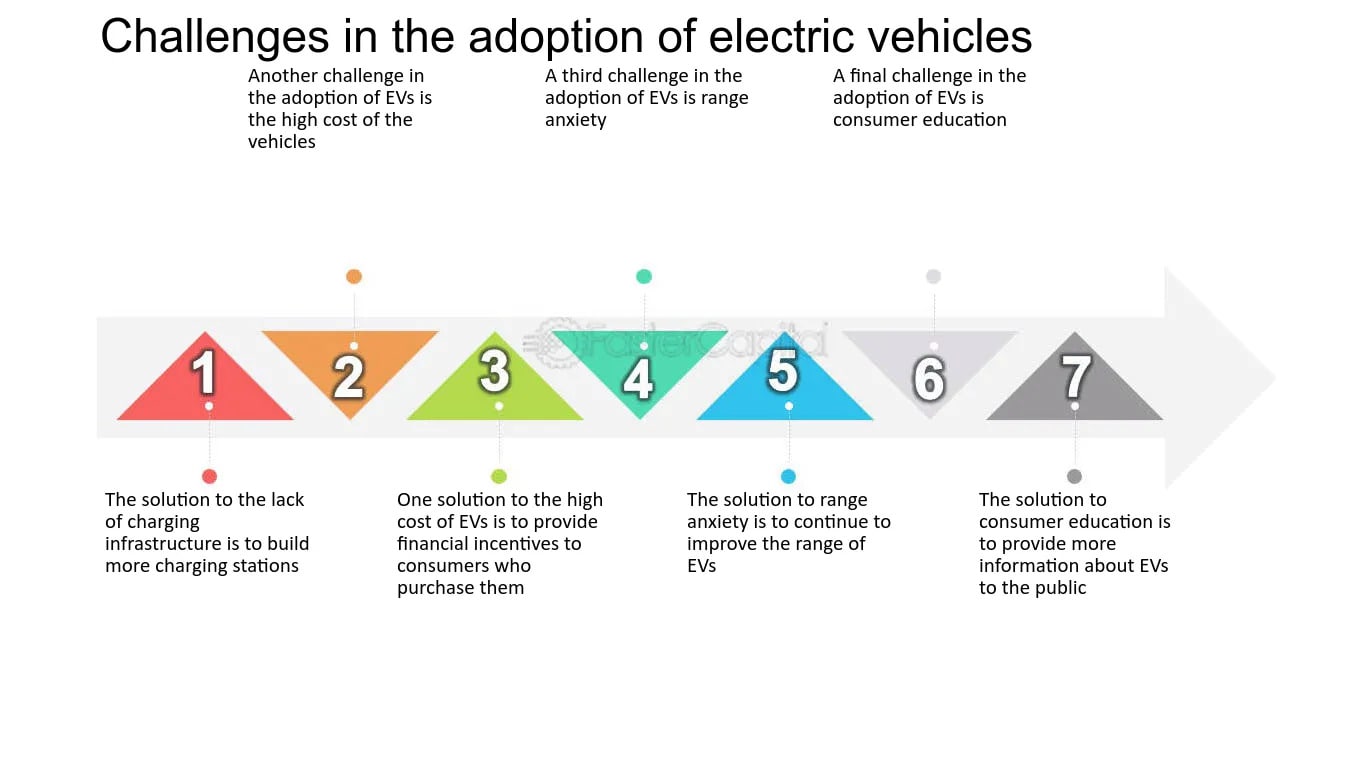
Challenges to Faster Adoption of EVs: