Daily Current Affairs UPSC 06 September 2024
Welcome to our daily current affairs blog post for UPSC aspirants! In today's edition, we will be discussing the most significant events and news updates that took place on 6th September 2024. Staying updated with current affairs is crucial for UPSC preparation, as it not only helps you stay informed but also enhances your understanding of various subjects. So, let's dive into the important happenings of the day and explore their potential impact on the upcoming UPSC examinations.

VisioNxt
- The Union Textile Minister introduced India's first fashion forecasting initiative called "VisioNxt."
- The launch also included the release of the India-specific Fashion Trend Book 'Paridhi 24x25.'
- VisioNxt is a bilingual web portal created by the National Institute of Fashion Technology (NIFT) with support from the Textiles Ministry in 2018.
- The initiative combines Artificial Intelligence and Emotional Intelligence to identify, map, and analyze fashion trends specific to India's diverse culture and traditions.
- In addition to reducing reliance on global forecasting agencies, VisioNxt aims to support local weavers, designers, and other homegrown talent in the fashion industry.
First International Solar Festival (ISF)
- The Prime Minister virtually addressed the first International Solar Alliance (ISA) held in New Delhi.
- India has global initiatives on solar energy, including the ISA.
- The ISA is guided by the 'Towards 1000' strategy to mobilize $1,000 billion in investments in solar energy solutions by 2030.
- The ISA was conceptualized by India and France at the CoP21 in Paris in 2015.
- Currently, the ISA has 100 members, with all UN members eligible to join.
- The One Sun One World One Grid (OSOWOG) was proposed by the Indian PM in the 1st ISA Assembly in 2018 to connect different regional grids through a common grid for transferring renewable energy power, especially solar.
Enemy property
- An enemy property in Uttar Pradesh that belonged to ancestors of Pakistan's former President Pervez Musharraf has been ordered to be sold.
- The Enemy Property Act of 1968 defines an 'enemy' as a country that has committed external aggression against India, such as Pakistan and China.
- Enemy property refers to property that belonged to or was managed on behalf of an enemy.
- The 2017 amendment to the act expanded the definition of enemy to include legal heirs or successors of enemies, regardless of their citizenship.
- The Custodian of Enemy Property of India, under the Ministry of Home Affairs, is empowered by the 1968 Act to preserve, manage, control, and sell enemy properties.
Eastern Economic Forum (EEF)
- EEF 2024 will take place in Vladivostok, Russia, as it does every year.
- The EEF was founded in 2015 with the goal of promoting economic growth in Russia's Far East and fostering international partnerships in the Asia-Pacific region.
- The Far East region of Russia is located on the easternmost part of the country and shares borders with the Pacific and Arctic Oceans, as well as five other countries including China, Japan, Mongolia, the United States, and North Korea.
Startup Accelerators of MeitY for Product Innovation, Development and Growth (SAMRIDH)
- The second cohort of SAMRIDH has been launched to choose 125 startups for funding, support, and mentorship.
- SAMRIDH is a program by MeitY aimed at accelerating startups under the National Policy on Software Products - 2019.
- The program supports existing and upcoming Accelerators in selecting and accelerating potential IT-based startups for growth.
- SAMRIDH aims to assist 300 software product startups over a span of 4 years.
- The program is implemented by MeitY Start-up Hub (MSH) and Digital India Corporation (DIC).
Saturn’s Rings
- In 2025, Saturn's rings will appear to vanish due to an optical illusion caused by the planet's tilt.
- Saturn's rings are approximately 30 feet thick and primarily made up of chunks of water ice, varying in size from tiny grains to large mountains.
- The rings are named alphabetically based on the order of their discovery, with the main rings being A, B, and C.
- Other planets with rings include Jupiter and Uranus.
National Exit Test (NExT)
- NExT for AYUSH will be implemented starting from the 2021-2022 batch.
- NExT is a test that is conducted to grant licenses to practice as a medical practitioner in the Indian system of medicine and to enroll in the State or National Register as a registered medical practitioner.
- The test is conducted by the Commissions under the National Commission for Indian System of Medicine (NCISM) Act 2020 and the National Commission for Homoeopathy (NCH) Act, 2020.
Konyak Tribe
- The Konyak Union, representing the Konyak community, has requested the Nagaland government to correct the inaccurate boundary line on Google Maps.
- The Konyak Tribe is of Mongoloid descent and practiced Animism before converting to Christianity.
- The Konyak language is part of the Northern Naga sub branch of the Sal subfamily of Sino-Tibetan languages.
- The Konyak people are infamous for being headhunters in North East India.
- The Konyak community follows a patriarchal social structure.
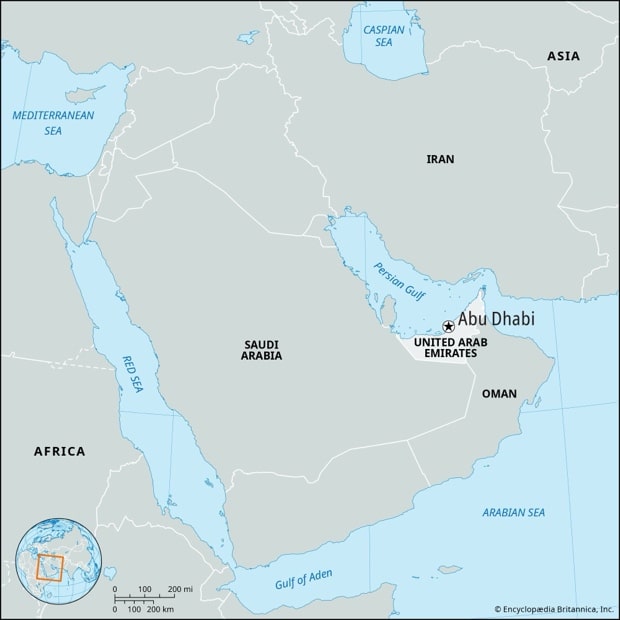
United Arab Emirates (Capital: Abu Dhabi)
The first nuclear power plant in the Arab world has been successfully completed by the United Arab Emirates.
Political Features:
- The United Arab Emirates is a federation of seven emirates located along the eastern coast of the Arabian Peninsula.
- It shares borders with Saudi Arabia to the west and south, and Oman to the east and northeast.
- The country has maritime borders along the Gulf of Oman and the Persian Gulf.
Geographical Features:
- The majority of the UAE is covered by desert and lacks perennial streams.
- The Strait of Hormuz, located between the Omani Musandam Peninsula and Iran, connects the Persian Gulf to the Gulf of Oman.
- The Tropic of Cancer passes through the UAE, specifically the Abu Dhabi emirate.
- The highest point in the UAE is Jebel Jais mountain.
"Galathea Bay Designated as Major Port"
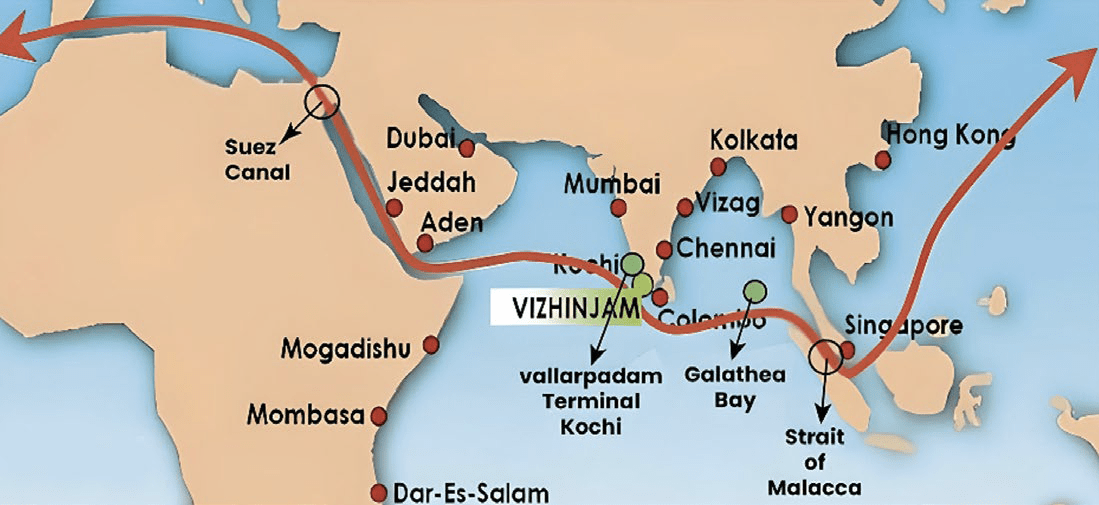
- The Central Government has designated Galathea Bay as an International Container Transshipment Port (ICTP) under the Indian Ports Act, 1908.
- ICTP will serve as a hub for transferring cargo between vessels for further transportation to its final destination.
Significance of ICTP at Galathea Bay
Economic Benefits:
- ICTP at Galathea Bay will boost EXIM trade as it is located on an International shipping route.
- Currently, a significant portion of India's transshipped cargo is handled at ports outside the country, leading to forex savings and increased economic activity at Indian ports.
Strategic Importance:
- The transshipment port at Galathea Bay will be strategically located near choke points like the Malacca Strait and the East-West shipping route connecting Europe, Africa, and Asia.
Ports in India
- India has 12 major ports and 200 non-major ports, with major ports regulated under the Major Ports Authority Act, 2021 by the Ministry of Ports, Shipping and Waterways.
- Non-major ports and their concessionaires are regulated by State Maritime Boards under the respective State Governments.
Location of Galathea Bay
"PM hails SBM as public health game changer"
- PM discussed a recent study published in Nature magazine that found a significant decrease in infant and child mortality rates in India after the Swachh Bharat Mission (SBM).
- The study used a quasi-experimental design to examine the relationship between SBM and infant and under-five mortality rates in India.
- The research suggests that implementing effective sanitation programs can have positive impacts on public health in low and middle-income countries.
How is Water, Sanitation and Hygiene (WASH) related to key Health And Social Outcomes?
- Maternal and Newborn Health
- Districts with over 30% toilets constructed under SBM have lower IMR and U5MR.
- Higher SBM coverage leads to increased utilization of health and nutrition programs like ANC and institutional deliveries.
- Diseases
- WHO reported 300,000 fewer diarrheal deaths in 2019 due to improved sanitation.
- 58% higher cases of wasting among children in non-Open Defecation Free areas.
- Student Enrolment
- Poor WASH facilities hinder student attendance and enrolment, especially for girls.
- Violence Against Women
- Access to sanitation facilities leads to 93% of women feeling safer at home according to UNICEF.
Why has SBM been successful in improving health and social parameters?
- SBM's success is attributed to its innovative strategy of integrating toilet construction with community involvement and significant investments in Information, Education, and Communication (IEC) to promote behavioral change.
- Capacity building and training initiatives have been implemented for government officials, frontline workers, volunteers, and communities.
- Waste management systems, including segregation, collection, transportation, disposal, treatment plants, and recycling centers, have been established for efficient waste management.
- Mobile and web applications have been introduced to enhance citizen engagement and monitoring efforts.
- Progress is evaluated through the National Annual Rural Sanitation Survey (NARSS).
"Landmark AI Treaty Signed by Global Powers"
- The goal is to address potential risks posed by AI to human rights, democracy, and the rule of law.
- The Framework Convention on Artificial Intelligence, Human Rights, Democracy, and Rule of Law was developed by the Council of Europe.
- It differs from the EU AI Act and focuses on ensuring that AI activities align with human rights, democracy, and the rule of law.
Key Provisions of the Treaty
- Risk-based approach: Systems that pose risks incompatible with human rights are prohibited.
- Coverage: Applies to both public and private sectors globally.
- Global diversity in legal systems: Parties can regulate the private sector directly through the convention or through alternative measures.
- Exemption: National security, defense, and R&D activities are not subject to the treaty.
Impact of AI on Human Rights, Democracy, and Rule of Law
- Human Lives: AI's ability to predict behavior, create biases, and invade privacy through biometric tools.
- Democracy: Biometric surveillance can impact open debates and political discourse, essential for democracy.
- Rule of Law: AI affordability for elites, developer control, and citizen monitoring can affect equality before the law.
India-Singapore MoUs
Outcomes of the Recent Visit of the Indian PM to Singapore
- 4 MoUs signed in digital technologies, semiconductors, health cooperation, and skill development
- Elevating bilateral relations to a Comprehensive Strategic Partnership
- MoU on Semiconductor focuses on cooperation in semiconductor cluster development, talent cultivation, and advanced manufacturing
- Singapore's semiconductor industry accounts for a significant portion of global production
Significance of International Cooperation in Semiconductor
- Modern Technological Landscape and Global Collaboration: The foundation of the modern technological landscape, including AI and quantum computing, requires global collaboration to drive innovation and research.
- Importance of the Indo-Pacific Region: The Indo-Pacific region is critical as many key players such as the USA, Taiwan, and South Korea are located there, making it crucial for India's strategic interests.
- Complex and Specialized Supply Chain: The semiconductor industry has a complex and specialized supply chain, with different countries holding dominance in various segments such as chip design in the USA and manufacturing in Taiwan.
- Reducing Dependence on China: Diverse collaboration in the semiconductor industry can help reduce future dependence on China, which currently lags behind other major players in the domain, creating a more resilient supply chain.
- Economic Growth and Semiconductor Manufacturing: Leading in semiconductor manufacturing can boost economic growth, and initiatives like the Indian Semiconductor Mission with an investment of USD 363 million can attract significant investments in the sector.
India- Singapore Relations
- Bilateral relations were upgraded to a Strategic Partnership in 2015.
- India's 6th largest trade partner by 2023-24, accounting for 3.2% of India's total trade.
- The Comprehensive Economic Cooperation Agreement signed in 2005 led to a notable increase in trade.
- India received the highest amount of Foreign Direct Investment (FDI) in 2023-24, totaling US$11.774 billion.
"Defence Minister Leads Joint Commanders' Conference in Lucknow"
- The Minister emphasized the importance of developing a shared military vision to improve coordination and cooperation among the three Services through the establishment of Integrated Theatre Commands (ITCs).
- He also highlighted the need for advancements in space and electronic warfare, specifically emphasizing the utilization of AI technology.
Integrated Theatre Commands (ITCs) in Indian Military
- ITCs involve the integration of the Indian Army, Navy, and Air Force to operate jointly in specific adversary-based theatres with defined military goals during a limited conflict or war.
- Proposed by the Kargil review committee and D B Shekatkar committee.
- Involves raising China-centric northern theatre command in Lucknow, Pakistan-centric western theatre command in Jaipur, and maritime theatre command in Thiruvananthapuram.
- Currently, armed forces have 17 single-service commands.
Significance of ITCs
- Allows air, navy, and land forces to operate synergistically under one operational command.
- Separates operational functions from administrative functions.
- Helps adapt to future warfare and conduct effect-based operations.
Challenges in Implementing ITCs
- Lack of a national security doctrine towards jointness of services.
- Absence of a common command structure.
Initiatives towards Theaterisation
- Appointment of Chief of Defence Staff (CDS) and creation of Department of Military Affairs under Ministry of Defence.
- Enactment of Inter-Services Organisations (Command, Control & Discipline) Act, 2023.
- Establishment of two integrated tri-service commands: Andaman and Nicobar Command, and the Strategic Command Force controlling nuclear weapons.
"2034: 500 mnTonnes Steel Production Goal"
- The Union Minister of Commerce and Industry emphasized the importance of achieving economies of scale through decarbonisation.
- Industry leaders were encouraged to focus on innovation for low emission, high productivity, and high quality products.
- The use of artificial intelligence (AI) was recommended to optimize production processes, reduce waste, and enhance efficiency throughout the value chain.
- The integration of indigenous machinery for domestic production was highlighted as a key strategy for industry growth.
Steel Sector in India Overview
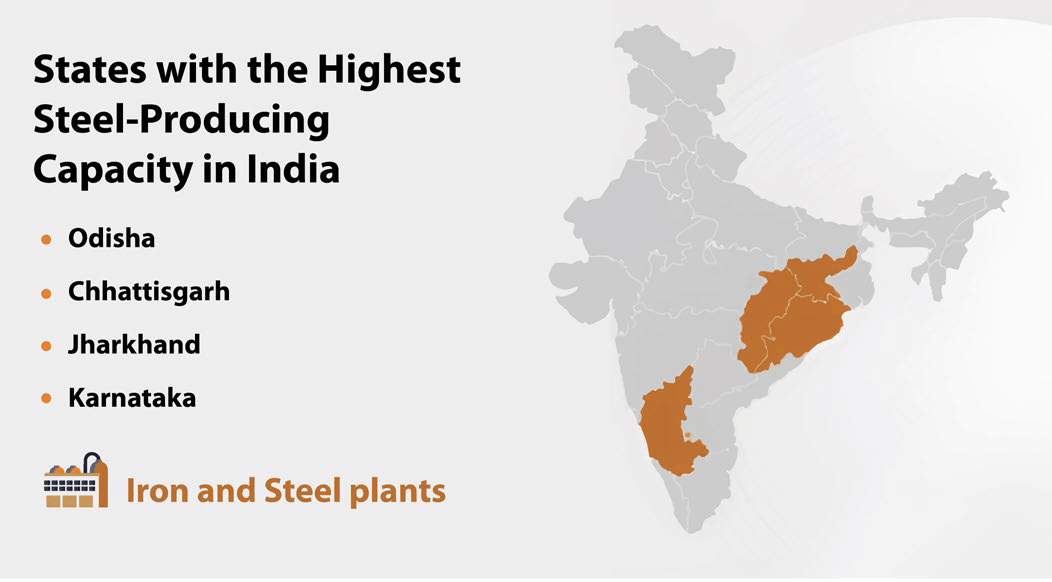
- The country is the second largest producer of crude steel.
- In the fiscal year 2023, it produced 125.32 MT of crude steel and 121.29 MT of finished steel.
- The growth in production is fueled by factors such as the availability of domestic raw materials like iron ore, cost-effective labor, and increased infrastructure construction in sectors like automobiles and railways.
- The country accounts for approximately 12% of India's carbon dioxide emissions, with the steel industry being the largest carbon-emitting manufacturing sector in the world.
Initiatives to Promote Decarbonisation in Steel Sector
- The National Steel Policy of 2017, the Steel Scrap Recycling Policy of 2019, and the Perform, Achieve and Trade (PAT) scheme are all initiatives aimed at promoting sustainability in the steel industry.
- Task forces established by the Ministry of Steel are working on developing a green steel roadmap to reduce the environmental impact of steel production.
- The Production-linked Incentive (PLI) scheme for specialty steel aims to incentivize the production of high-quality steel products.
- While green hydrogen offers a clean method of steel production, its high cost may affect the competitiveness of the industry. The National Green Hydrogen Mission provides support to help the steel sector transition to this cleaner production method.