
Daily Current Affairs UPSC 15 and 16 September 2024
Welcome to our daily current affairs blog post for UPSC aspirants! In today's edition, we will be discussing the most significant events and news updates that took place on 15th and 16th September 2024. Staying updated with current affairs is crucial for UPSC preparation, as it not only helps you stay informed but also enhances your understanding of various subjects. So, let's dive into the important happenings of the day and explore their potential impact on the upcoming UPSC examinations.

Centre for Rural Enterprise Acceleration through Technology (CREATE)
- The Ministry of Micro, Small & Medium Enterprises has opened a CREATE setup in Leh.
- CREATE aims to boost local productivity, product quality, economic potential, and livelihoods for the local communities.
- The initiative will support rural industrialization and encourage enterprise creation to help traditional artisans in regions like Ladakh.
- CREATE will offer a Pashmina Wool Roving Facility, training for developing production facilities for Essential Oil Extraction from Roses and other flowers, and training for developing production facilities for Bioprocessing of available fruits and raw materials.
Lok Adalat
- Approximately 1.14 crore cases were resolved during the 3rd National Lok Adalat of 2024, which was organized by the National Legal Services Authority (NALSA).
- NALSA, established under the Legal Services Authorities (LSA) Act of 1987, offers free legal assistance to marginalized sections of society.
- Lok Adalat is a form of alternative dispute resolution where disputes either in court or in pre-litigation stages are resolved through mutual agreement.
- It is recognized by the LSA Act of 1987 and has the same authority as a civil court under the Code of Civil Procedure of 1908.
- The decisions made by Lok Adalat are final and binding, with no option for appeal against their rulings.
Integrated Ocean Energy Atlas
- INCOIS has introduced the Integrated Ocean Energy Atlas.
- The atlas identifies areas with high potential for energy generation, including marine meteorological energy and hydrological energy.
- It will be a valuable resource for policymakers, industry, and researchers looking to utilize energy resources in the Indian Exclusive Economic Zone.
- INCOIS, established in 1999, is an autonomous body under the Ministry of Earth Sciences.
- It offers ocean data, information, and advisory services to various sectors through sustained ocean observations.
Chamran-1 Satellite
- Iran successfully sent the Chamran-1 satellite into orbit for research purposes.
- The satellite's main goal is to test the technology used for orbital manoeuvres.
- The Qaem 100 rocket, a solid-fuel launch vehicle, was used to carry the satellite into space.
- The West, particularly the US, is worried that Iran's space program could be a front for developing long-range missiles.
Operation Chakra III
- The CBI successfully broke up a cybercrime network supported by virtual assets and bullion through Operation Chakra III.
- This operation was carried out in collaboration with the FBI of the US.
- Operation Chakra is a global initiative led by the CBI with INTERPOL's assistance to combat organized cyber financial crime networks.
- Phase 2 of Operation Chakra was started in 2023, following the launch of phase 1 in 2022.
Operation Sadbhav
- India initiated Operation Sadbhav to offer humanitarian aid and disaster relief to Laos, Myanmar, and Vietnam following the impact of Typhoon Yagi.
- The operation is a component of India's commitment to providing HADR support in the ASEAN region, aligning with its established 'Act East Policy'.
- Operation Sadbhav is part of the Indian Army's SADBHAVANA initiative, which focuses on civic actions in regions such as Jammu and Kashmir, Ladakh, and Sikkim.
Irula Tribe
- Despite gaining global attention for their snake venom extraction and sales, the Irula tribals are facing an uncertain future.
- The Irula community is crucial in public health as they supply nearly 80% of the venom used for antidotes in India.
- The Irula Tribe is a Particularly Vulnerable Tribal Group (PVTG) in Tamil Nadu.
- They reside in the Nilgiris region of Tamil Nadu and place great importance on the practice of ancestor worship.
- The Irula tribe is also found in Karnataka and Kerala.
- According to anthropological literature, the Irula tribe is one of the oldest tribal communities in India and belongs to the Negrito race, which migrated from Africa.
- The Irula language is spoken by the tribe and is written in the Tamil script.
Hindi Diwas
- India celebrates Hindi Diwas on 14th September 2024.
- The first Hindi Diwas was celebrated in 1953 to mark Hindi as the official language of India.
- The President of India presents awards like Rajbhasha Gaurav Puraskar and Rajbhasha Kirti Puraskar to recognize outstanding contributions in promoting Hindi.
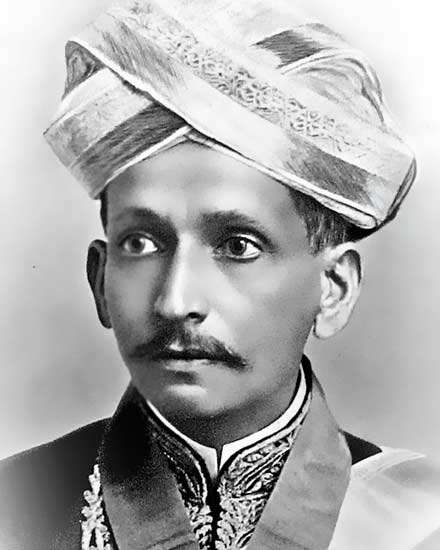
M (Mokshagundam) Visvesvaraya (1861-1962)
Engineers’ Day Celebrating M Visvesvaraya's Birth Anniversary
Contributions:
- Served as Diwan of Mysore (now Mysuru).
- Designed the Krishnaraja Sagara dam on the Kaveri River.
- Created steel doors to prevent water wastage in dams.
- Established Bangalore Agricultural University and University Visvesvaraya College of Engineering.
Awards and recognition:
- Awarded 'Knight Commander of the Order of the Indian Empire' by the British in 1915.
- Received the Bharat Ratna award in 1955.
Ethical Values:
- Emphasized values such as perseverance, honesty, scientific temper, and compassion.
"Successful Conclusion of 20th MSDC in Goa"
- The MSDC meeting focused on addressing challenges such as establishing Places of Refuge for distressed ships and developing radioactive detection equipment at ports to enhance security in the maritime sector.
- The meeting also aimed to improve working conditions for seafarers by advocating for their recognition as essential workers.
Key Initiatives Launched at 20th MSDC
- Indian Maritime Centre: A policy think tank was launched to bring together various maritime stakeholders, promote innovation, knowledge sharing, and strategic planning to drive development in India's maritime sector.
- Indian International Maritime Dispute Resolution Centre: This initiative aims to establish India as a global arbitration hub for maritime disputes, offering industry-governed solutions for complex transactions.
- National Safety in Ports Committee application on National Single Window System platform: This initiative aims to streamline regulatory processes and enhance operational efficiency in the maritime sector.
- Showcasing state-led initiatives: Innovative projects from states like Kerala and Gujarat were highlighted, including dredging monetization techniques and port-driven urban development projects.
- Construction of India's largest dredger: A collaboration between Cochin Shipyard Limited and Royal IHC Holland to build India's largest dredger.
- Mega Shipbuilding Park Plan: Discussions were held on consolidating shipbuilding capabilities across states to foster greater efficiency and innovation.
- State Ranking Framework: A framework was discussed to promote healthy competition, performance enhancement, and sustainable practices among coastal states.
About MSDC (Ministry of Ports, Shipping and Waterways)
- Established in 1997, the Apex advisory body was created to oversee the development of the Maritime Sector and promote the integrated growth of major and non-major ports in collaboration with State governments.
- The Union Minister of Ports, Shipping, and Waterways serves as the chairperson of the MSDC, which is required to convene at least once every six months.
- The MSDC has played a crucial role in coordinating policies and programs such as the Indian Ports Bill and the Sagarmala program to drive progress in the maritime industry.
"ITU's Global Cybersecurity Index 2024 Released"
- GCI 2024 evaluates country-level cybersecurity commitments across five pillars: legal, technical, organizational, capacity development, and cooperation.
- A new five-tier analysis (Tier 1 to Tier 5) is used to assess each country's progress with cybersecurity commitments and the resulting impacts.
Key Highlights of GCI 2024
- India recognized as a role model country: 46 countries, including India, are in Tier 1, demonstrating strong commitment to all five cybersecurity pillars.
- Global improvement in cybersecurity: All regions have shown improvement since 2021, with Africa making significant advancements in cybersecurity.
- Expansion of digital services: Most countries are either "establishing" (Tier 3) or "evolving" (Tier 4), indicating an expansion of digital services and connectivity that requires integration of cybersecurity measures.
Key Issues Identified in GCI 2024
- Worrisome threats: Ransomware attacks, cyber breaches in core industries, and costly system outages are among the key threats identified.
- Cybercapacity gap: Limitations in skills, staffing, equipment, and funding pose challenges to effective cybersecurity measures.
- Operating cybersecurity framework: Implementing cybersecurity agreements in practice remains a challenge for many countries.
Key Recommendations from GCI 2024
- Develop and regularly update a comprehensive national cybersecurity strategy to address evolving threats.
- Provide capacity building to cybersecurity professionals, youth, and vulnerable groups to enhance cybersecurity capabilities.
- Foster domestic and international cooperation on information sharing, training opportunities, and other collaborative efforts to strengthen cybersecurity measures.
International Telecommunication Union (ITU)
Establishment of ITU
- On 17 May 1865, the International Telegraph Convention was signed in Paris, creating the International Telegraph Union, which later became the International Telecommunication Union (ITU).
- 17 May is now celebrated as World Telecommunication and Information Society Day.
Role of ITU
- ITU is the UN's oldest specialized agency and is responsible for digital technology.
- Its role is to promote innovation and ensure connectivity for all to create a better future.
Members of ITU
- ITU has 193 Member States, including India, as well as other members such as companies and universities.
Flagship reports of ITU
- ITU publishes reports such as the Global Connectivity Report and the Global e-waste Monitor to provide insights into global digital connectivity and electronic waste management.
"UNESCO Advocates for Open Science in AI"
UNESCO emphasized the need for open science, noting that the lack of transparency in AI systems and the dominance of private companies in AI research are hindering its adoption.
About Open Science
- The 'UNESCO Recommendation on Open Science' adopted in 2021 outlines what open science is and its importance.
- Open science is a broad concept that encompasses different movements and practices with the goal of making scientific knowledge available, accessible, and reusable in multiple languages.
Core Values And Guiding Principles
- Quality and integrity: Open science should prioritize academic freedom and human rights while promoting high-quality research.
- Collective benefit: Open science should be considered a global public good that belongs to all of humanity.
- Equity and fairness: Open science should strive to ensure fairness and equity among researchers from both developed and developing countries.
- Diversity and inclusiveness: Open science should embrace a wide range of knowledge, practices, languages, research outputs, and topics to promote diversity and inclusivity in the research community.
Why is Open Science Threatened Due to AI?
- Open science helps AI by providing data through collaborative research, but AI can hinder open science due to various challenges.
- The reproducibility crisis arises when experiments conducted with AI tools cannot be replicated by other researchers.
- Limited collaboration between AI and non-AI disciplines can result in inconsistent adoption of AI in science.
- High quality data is crucial for AI applications, but researchers often face difficulties related to volume, heterogeneity, and bias.
- Incentives in the scientific community may prioritize researchers being proficient in AI over being proficient in their respective fields.
- To overcome these challenges, it is important to apply open science principles to AI, with a focus on transparency.
Introducing BHASKAR: Empowering India's Startup Ecosystem
- The BHASKAR initiative, part of the Ministry of Commerce and Industry, aims to improve collaboration among key players in the entrepreneurial ecosystem such as startups and investors.
- The main objective of BHASKAR is to create the largest digital registry for stakeholders in the startup ecosystem.
- BHASKAR is a part of the Startup India program, which focuses on fostering innovation and attracting investments to build a robust ecosystem for startups.
Key Features of BHASKAR
- Networking: BHASKAR will facilitate seamless interaction between startups and other stakeholders in the entrepreneurial ecosystem.
- Centralized Access to Resources: Startups will have immediate access to critical tools and knowledge, enabling faster decision-making and scaling.
- Personalized Identification: Each stakeholder will have a unique BHASKAR ID for personalized interactions and tailored experiences.
- Enhancing Discoverability: Users can easily find relevant resources, collaborators, and opportunities through powerful search features.
- Supporting India’s Global Brand: BHASKAR will promote India as a hub for innovation, making cross-border collaborations more accessible.
India’s Startup Ecosystem
- India has the 3rd largest startup ecosystem globally with over 1,46,000 DPIIT-recognized startups.
- The Department for Promotion of Industry and Internal Trade (DPIIT) recognizes businesses as startups.
Eligibility Criteria for Startup Recognition
- Startup status is valid for up to 10 years from incorporation.
- Must be incorporated as a private limited company, partnership firm, or limited liability partnership.
- Turnover should be less than INR 100 Crores in any previous financial year.
Other Initiatives for Startups
- Atal Incubation Centers established by NITI Aayog.
- MAARG portal (Mentorship, Advisory, Assistance, Resilience, and Growth) provided by Startup India through DPIIT.
- Fund of Funds for Startups (FFS) Scheme available for funding support.
"Inquiry Wing Formed by Lokpal to Investigate Graft Cases"
The Lokpal of India has created an investigative department in accordance with Section 11 of the Lokpal and Lokayukta Act 2013 in order to carry out its legal duties.
About Inquiry Wing of Lokpal
- Purpose: Conduct preliminary inquiries into offenses by public servants under Prevention of Corruption Act, 1988.
- Timeline: Submit inquiry report to Lokpal within 60 days.
- Composition: Headed by Director of Inquiry, assisted by 3 Superintendents of Police and other staff.
- Powers: Granted powers of civil court under Code of Civil Procedure, 1908.
Overview of Lokpal
- Established by Lokpal & Lokayuktas Act, 2013 to investigate and prosecute corruption cases involving public servants.
- Consists of a chairperson and 8 members, with 50% being judicial members appointed by the President.
- Justice Pinaki Chandra Ghosh was the first Lokpal, with Justice AM Khanwilkar currently serving.
- Has superintendence and direction over central investigation agencies like CBI for cases referred to them.
Issues with Lokpal
- Vacancies in prosecution wing headed by Director of Prosecution.
- Limitation of 7 years for filing complaints may prevent victims or whistleblowers from seeking justice.
- Ineffectiveness in addressing corruption complaints, with 68% of cases against public servants being disposed of without action.
WHO Prequalifies First Mpox Vaccine
- The WHO has prequalified the MVA-BN vaccine from Bavarian Nordic, a pharmaceutical company in Denmark.
- This vaccine is approved for individuals aged 18 and older in Europe and the US.
- When administered before exposure, a single dose of the vaccine is approximately 76% effective, while a double dose is around 82% effective.
About WHO Vaccine Prequalification (PQ)
- The WHO Vaccine Prequalification program was established in 1987 to ensure the quality of vaccines purchased by UN agencies.
- Vaccines are added to the WHO List of Prequalified Vaccines after a thorough evaluation of data, testing of samples, and inspection of manufacturing sites by the WHO.
- Being on the list does not mean the vaccines and manufacturing sites are approved by the WHO, as that authority lies with National Regulatory Authorities (NRAs).
Significance of WHO Prequalification
- Contributes to the WHO Expanded Programme on Immunization for universal vaccine access.
- Helps governments and international agencies like GAVI and UNICEF in vaccine procurement.
- Facilitates fast-track approvals for National Regulatory Authorities.
About Mpox: A Zoonotic Disease
- Mpox, previously known as monkeypox, is a zoonotic disease spread between animals and humans.
- Caused by the Monkeypox virus (MPXV), a double-stranded DNA virus of the Orthopoxvirus genus.
- Discovered in Denmark in 1958 and first reported in humans in the DRC Congo in 1970.
Mpox Transmission and Symptoms
- Mpox is transmitted through close contact with infected individuals or animals.
- Symptoms include skin rash, fever, headache, and swollen lymph nodes.
- Mpox was declared a public health emergency of international concern by WHO in 2022 and 2024.