

Cartosat-2 De-orbiting
- ISRO successfully de-orbited and re-entered Cartosat-2 at the end of its life.
- Launched in 2007, advanced remote sensing satellite.
- Lowered perigee using leftover fuel to comply with space debris guidelines.
- Signifies ISRO's commitment to long-term sustainability in outer space.
Pandaram Lands in Lakshadweep
- Lakshadweep administration continues to number trees on Pandaram lands.
- Laccadive Minicoy and Amini Islands Land Revenue and Tenancy Regulation, 1965 defines Pandaram lands as land in which the Government has a proprietary right.
- Jenmam land is defined as land other than Pandaram land over which a person has proprietary rights under customary law of the Islands.
Regional Security Dialogue on Afghanistan
- 6th regional dialogue of security officials held in Bishkek, Kyrgyzstan.
- Key participants include India, Iran, Kazakhstan, Kyrgyz, Russia, Tajikistan, Turkmenistan, and Uzbekistan.
- Important mechanism for assessing the situation in Afghanistan post-Taliban takeover.
Indian Skimmer
- India and Bangladesh propose listing Indian skimmers under Convention on Migratory Species.
- Found in coastal estuaries of western and eastern India, primarily on larger sandy rivers, lakes, marshes, estuaries, and coasts.
- Breeds colonially on large sandbars and feeds on fish, crustaceans, and insect larvae.
- Endangered on IUCN Red List, not listed on CITES.
Nohar irrigation project
- Project in Hanumangarh district of Rajasthan to receive boost with repairing of Ferozepur feeder in Punjab.
- Utilizes Rajasthan's share in Ravi and Beas waters based on 1981 agreement.
- Aims to bring desert land under irrigation in northern Rajasthan and combat environmental degradation due to wind erosion.
Amphipods
- A new species of marine amphipod called 'Parhyale odian' has been discovered in Chilika Lake in Odisha.
- Amphipods are crustaceans, which are a large group of Arthropods including crabs, lobsters, shrimp, etc.
- They have a hard exoskeleton and a segmented body that is bilaterally symmetrical.
- They are mostly found in freshwater or marine environments, but some are terrestrial like woodlice.
Char Areas
- Chief Minister of Assam announces survey of land within char areas under Mission Basundhara 4.0.
- Mission Basundhara is a land management initiative of the Assam government.
- Char areas, also known as Chapori, are riverine areas of the river Brahmaputra that are subjected to erosion and deposition, causing migration downstream.
- Constant threat from flood and erosion in char areas creates developmental issues.
Sora
- Sora is a new Generative AI model developed by OpenAI that can convert text prompts into videos.
- It can generate videos up to a minute long while maintaining visual quality and adhering to the user's prompt.
- Sora is significant because it can analyze moving objects in 3D space, adding complexity to its capabilities.
- Gen-AI refers to AI algorithms that generate new outputs based on their training data, using generative adversarial networks.
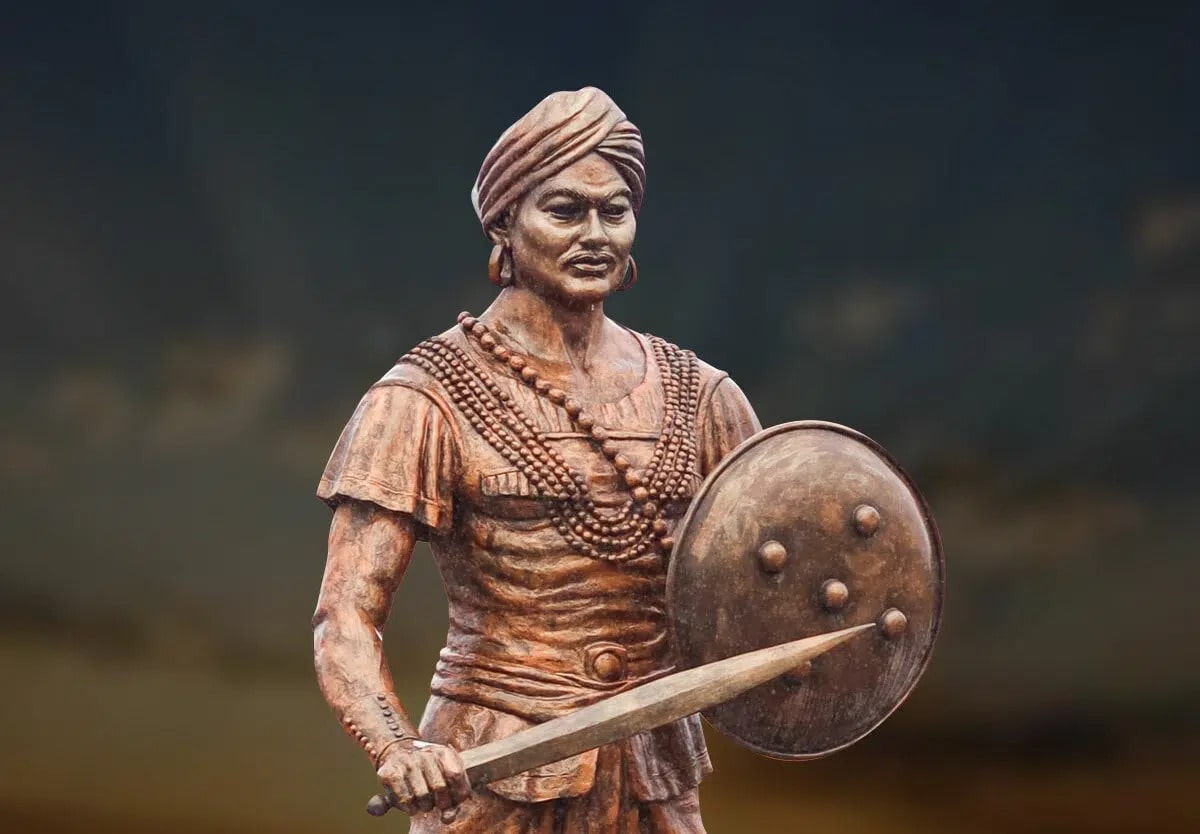
U Tirot Sing (18021835)
- Khasi freedom fighter U Tirot Sing’s statue unveiled in Dhaka.
- U Tirot Sing, also known as U Tirot Sing Syiem, was a Khasi chief in the early 19th century.
- He declared war and fought against the British for attempting to take control of the Khasi Hills.
- Used guerilla tactics in the Anglo-Khasi war (1829-33) against the militarily superior British forces.
- Captured by the British in January 1833 and deported to Dhaka.
- Values: Patriotism, Courage, Determination, Leadership.
Ministry of Corporate Affairs (MCA) Operationalizes Central Processing Centre to facilitate Ease of Doing Business (EoDB)
Centralized Processing Centre (CPC) for Regulatory Compliance Forms:
- Established for processing regulatory compliance forms under Companies Act and Limited Liability Partnership Act.
- It processes applications in a time-bound and faceless manner, similar to CRC and C-PACE.
- CRC provides services for speedy incorporation of companies, while C-PACE processes applications for voluntary closure of companies.
- EoDB aims to simplify, make more efficient, and cost-effective the process of setting up, operating, and closing businesses in a specific territory.
EoDB Reforms Focus Areas:
- EoDB reforms focus on simplifying procedures related to applications, renewals, inspections, filing records, etc.
- Rationalization involves repealing, amending, or subsuming redundant laws to streamline processes.
- Digitization aims to create online interfaces to eliminate manual forms and records.
- Decriminalization focuses on minor technical or procedural defaults not being treated as criminal offenses.
Significance of EoDB Reforms:
- Economic growth: Improved resource allocation, enhanced competitiveness, and innovation
- Foreign investment: Reduced bureaucratic hurdles, increased transparency for investors.
- Social development: Promoting inclusivity, providing opportunities for marginalized communities to participate in economic activities.
Initiatives for Ease of Doing Business (EoDB) Reforms:
- Labour Law reforms: Consolidation of 29 Central Labour Laws into 4 codes.
- Foreign investment reforms: Establishment of Foreign Investment Facilitation Portal (FIF Portal).
- Business Reform Action Plan 2022: Business-centric reforms (National Single Window System) and Citizen-centric reforms (Online Single Window, Certificates).
Global Pulses Conference (GPC) urges India to augment Production of Pulses to meet Nutritional requirements
- Global Pulse Confederation (GPC) is an annual global meet representing all segments of the pulse industry value chain.
- India is represented by India Pulses and Grains Association in GPC.
- Pulses are leguminous crops harvested for dry seeds, such as Chickpeas and Pigeon peas.
- Pulses have high protein content (20-25% by weight), double that of wheat.
- India is the largest producer (25%), consumer (27%), and importer (14%) of pulses globally.
- Chickpea and Pigeon pea make up around 60% of all pulses produced in India.
- Major pulses producing states in India include MP, Maharashtra, Rajasthan, and UP.
- Pulses play a significant role in improving soil health through nitrogen fixation and addressing malnutrition.
- Issues with pulses production in India include limited nutrient management and price volatility.
- Initiatives for promoting pulses production include considering them as a residual crop and growing them under rain-fed conditions.
- Market challenges for pulses include inadequate warehousing facilities and price volatility due to the 'Cobweb' phenomenon.
- Policy issues include limited focus on R&D for pulses and not being beneficiaries of the Green Revolution.
Initiatives taken for promotion of Pulses:
- National Food Security Mission Pulses and Pradhan Mantri Annadata Aay Sanrakshan Abhiyan (PM AASHA) for remunerative prices.
- Rainfed Area Development Programme and Integrated Scheme for Oilseeds, Pulses, Oil Palm & Maize.
NITI Aayog released a Report titled ‘Senior Care Reforms in India Reimagining the Senior Care Paradigm: A Position Paper’
Status of Elderly in India:
- Currently, the elderly make up around 10% of the population, with projections to reach 19.5% by 2050.
- 75% of the elderly population has one or more chronic diseases, according to the Longitudinal Ageing Study of India 2021 report.
- 70% of the elderly are dependent for everyday maintenance, and 78% do not have any pension cover.
Key Challenges and Recommendations:
| Dimensions | Challenges | Recommendations |
|---|---|---|
| Health | Challenges include lack of comprehensive services, shortage of trained manpower, and lack of knowledge repository for geriatric diseases. | Recommendations include focusing on preventive interventions, ensuring palliative and long-term healthcare services, and promoting research and development in geriatric care. |
| Social | Challenges include fragmented social support system, changing family structures, and neglect of care workers. | Recommendations include establishing a comprehensive social security system, promoting community-based support, and strengthening assisted living facilities. |
| Economic | Challenges include insufficient financial literacy, lack of support in financial planning, and financial abuse. | Recommendations include creating occupational opportunities for the elderly, designing special health insurance products, and providing support in financial planning. |
| Digital | Challenges include insufficient access to digital goods and lack of digital training modules for the elderly. | Recommendations include enhancing ease and safety of digital operations, and developing enabling digital infrastructure. |
US House passes bill titled 'Strengthening the Quad Act'
Key Provisions of the Bill:
- Directs the US State Department to create a strategy for engaging with the Quad.
- Aims to establish a Quad Intra-Parliamentary Working Group for member cooperation.
About the Quadrilateral Security Dialogue (Quad):
- Informal forum of like-minded countries: USA, India, Australia, Japan.
- Originated from collaboration during the 2004 Tsunami rescue operations.
- Held its first Quad Leaders' Summit in 2021.
- Focuses on promoting a free, open, and inclusive Indo-Pacific region.
Importance for India:
- Counters China's Indo-Pacific presence and Belt and Road Initiative.
- Allows India to project influence beyond Indo-Pacific.
- Informality of Quad allows flexibility for pursuing foreign policy interests and cooperation.
Key initiatives by QUAD:
- Leader level Working Groups: Six working groups have been established to focus on key areas such as climate, critical and emerging technologies, cyber, health security partnership, infrastructure, and space.
- Vision Statement: The vision statement for 2023 focuses on being enduring partners for the Indo-Pacific region.
- Quad Debt Management Resource Portal: A portal has been launched to address challenges related to unsustainable debt financing.
- Quad Investors' Network (QUIN): This private sector-led platform aims to facilitate investments in strategic technologies.
- Quad Climate Change Adaptation and Mitigation Package (Q-CHAMP): Launched in 2022, this package aims to enhance cooperation in climate and clean energy initiatives.
“Law on Matrimonial Issues Relating to Non-Resident Indians (NRI) and Overseas Citizens of India (OCI)” report submitted:
Key Issues Highlighted by the Law Commission of India (LCI)
Lack of regulation:
- No law governing marriages with NRIs.
- No central legislation prescribing compulsory registration of marriages.
Rising trend of fraudulent matrimony:
- NRIs marrying Indians leaving Indian spouses vulnerable to domestic violence, abandonment, ex-parte divorce, etc.
- Ex-parte divorce initiated in a foreign court without knowledge/consent of Indian spouse.
Difficulty in legal assistance: Inter-country nature of marriages makes it difficult for Indian spouses to seek legal recourse.
Key Recommendations by the LCI:
Enact comprehensive law:
- Broaden NRI Bill, 2019 to cover divorce, maintenance, and child support.
- Make it applicable to OCIs and Persons of Indian Origin (PIOs) in addition to NRIs.
Compulsory registration in India:
- Registration should include information like social security number, passport particulars, ID card, etc. for proper identification and tracking.
- Failure to register should attract fines or imprisonment.
- Law will have an overriding effect on all other laws.
About OCIs, PIOs and NRIs:
- NRIs are Indian citizens living abroad, while OCIs and PIOs are foreign citizens with Indian origin.
- PIO and OCI Card Scheme merged in 2015, leading to discontinuation of new PIO card issuance.
Economic Nationalism is quintessentially fundamental to our economic growth: Vice-President
Economic Nationalism:
- Ideology favoring domestic control of economy, labor, and capital formation.
- Favors tariffs to restrict free trade, promote indigenous industries, and seek import substitution.
- Contrasts with globalization, which promotes interdependence among nations.
Benefits of Economic Nationalism:
- Protects domestic market in the early stages of nation-building.
- Example: India adopted Import Substitution after independence.
- India still reserves certain items for public procurement from MSEs.
- Prevents drain of foreign exchange caused by imports.
- Facilitates local employment by promoting domestic businesses, including MSMEs.
Concerns associated with economic nationalism:
- Protectionist policies stifle innovation by lowering competition from foreign businesses.
- Example: Prolonged protectionism led to Economic crisis in India in the 1990s.
- May lead to trade wars, imperialism, and conflicts as seen in the 20th century.
- Economic isolation can lead to political and cultural isolation.
Economic nationalism in India:
- Economic nationalism in pre-independence India was seen in the critique of colonial rule and the swadeshi movement.
- Recent initiatives like Vocal for Local, make in India, Atmanirbhar Bharat, etc. fall under the idea of Economic nationalism but are not against globalization.