
Daily Current Affairs UPSC 16 October 2024
Welcome to our daily current affairs blog post for UPSC aspirants! In today's edition, we will be discussing the most significant events and news updates that took place on 16th October 2024. Staying updated with current affairs is crucial for UPSC preparation, as it not only helps you stay informed but also enhances your understanding of various subjects. So, let's dive into the important happenings of the day and explore their potential impact on the upcoming UPSC examinations.

AI Centres of Excellence (AI-CoE)
- The Education Minister revealed plans to create three AI Centers of Excellence dedicated to Healthcare, Agriculture, and Sustainable Cities.
- These centers are part of the goal to promote AI development in India and ensure it benefits the country.
- The establishment of these centers is expected to boost the startup ecosystem, generate new jobs and wealth, and set new standards for global public benefit.

INS Samarthak
- The first Indigenous multi-purpose vessel, INS Samarthak, has been launched in India.
- INS Samarthak is a specialized platform designed for testing next-generation weapons and sensors for the Indian Navy.
- Larsen & Toubro (L&T) is building two Multi-Purpose Vessels for the Indian Navy, with INS Samarthak being one of them.
- The vessel is capable of reaching a top speed of 15 knots.
- In addition to its primary role, INS Samarthak will also be used for tasks such as launching and recovering targets, maritime surveillance, humanitarian assistance, and combating sea pollution.
Blue Line
- The UN reported that Israeli military personnel shot at UN peacekeepers near the Blue Line.
- The Blue Line was created by UNIFIL in 2000 to oversee the withdrawal of Israeli forces from southern Lebanon.
- This boundary serves as a de facto border between Israel and Lebanon, marked by blue barrels and stretching from the Mediterranean to the Golan Heights.

THAAD Missile Defense System
- The USA has announced that it will be sending its THAAD Battery System to assist Israel.
- The THAAD System is a sophisticated defense system created by Lockheed Martin Corporation to protect against various ballistic missile threats.
- This system is unique in that it can intercept targets both inside and outside the atmosphere using hit-to-kill technology.
- A THAAD battery includes soldiers, launchers, interceptors, radar surveillance, and other components.
- India recently purchased the S-400 Triumf air defense missile system from Russia.
Nile Basin
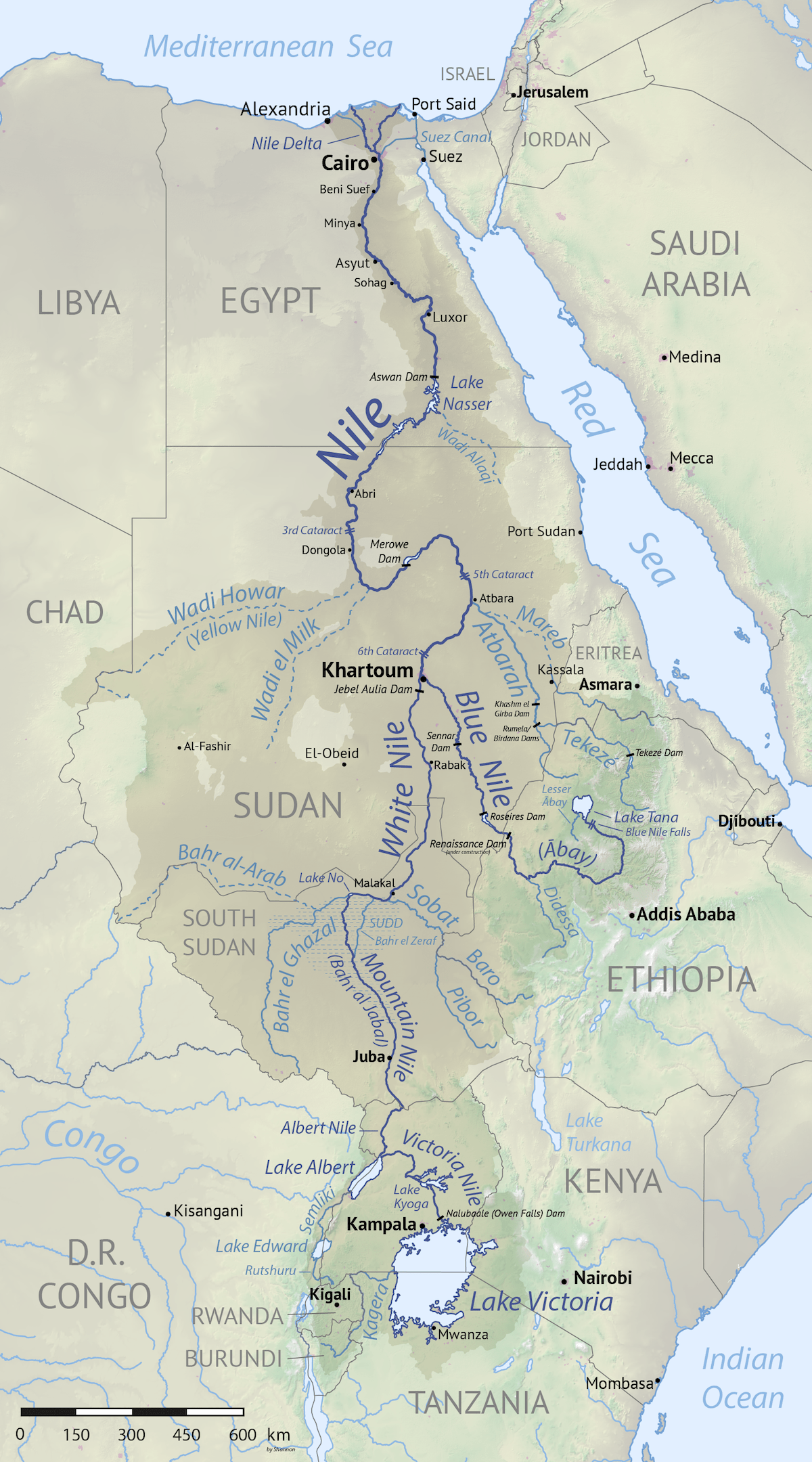
- Recently, an agreement has been reached on the fair use of water resources from the Nile River basin, despite Egypt's opposition.
- The Nile is the longest river in the world and covers nearly 10% of the African continent's landmass.
- The Nile runs through 11 countries from south to north, with two main tributaries: the White Nile originating from Burundi and Rwanda, and the Blue Nile originating in Ethiopia.
- Other tributaries of the Nile include the Sobat River, Atbara River, and Bahr el Ghazal.
Mechazilla
- SpaceX has reached a major achievement in space exploration by successfully landing its Starship rocket using a unique structure known as "Mechazilla."
- Mechazilla is the nickname given to the 400-ft tall rocket-catching structure equipped with massive mechanical arms designed to catch the Super Heavy booster in mid-air as it returns to Earth.
- This innovative method of rocket recovery is more efficient and reusable compared to traditional landing techniques, marking a significant advancement in space technology.

Persons with Benchmark Disability
- The Supreme Court recently ruled that having a physical disability should not prevent someone from pursuing medical education.
- The Graduate Medical Education Regulation, 1997 currently prohibits individuals with benchmark disabilities from enrolling in MBBS courses.
- Persons with Benchmark Disability (PwBD) are defined by the Rights of Persons with Disabilities Act, 2016 as individuals with at least 40% of a specified disability certified by the appropriate authority.
- Special provisions for PwBD include free education for children aged 6-18, 5% reservation in government and aided higher educational institutions, and 4% reservation in government jobs.

Small Modular Reactors (SMRs)
- Google has made a historic agreement with Kairos Power in California to purchase nuclear energy from small modular reactors (SMRs).
- Small Modular Reactors (SMRs) are advanced nuclear reactors with a power capacity of up to 300 MW(e) per unit.
- Only two SMR projects have successfully reached the operational stage worldwide.
- India's Budget 2024-25 includes plans to develop Bharat Small Reactors (BSRs).
- The significance of SMRs includes reduced fuel requirements, faster construction time, and decreased risk of unsafe releases of radioactivity into the environment.
Dr. A.P.J. Abdul Kalam (1931-2015)
- World Students' Day is observed on October 15 to honor the contributions of Dr. APJ Abdul Kalam in the field of education.
- Dr. A. P. J. Abdul Kalam was born on October 15, 1931 in Rameswaram, Tamil Nadu and served as the 11th President of India.
- Key Contributions of Dr. A. P. J. Abdul Kalam
- He was the Project Director for India's first indigenous Satellite Launch Vehicle (SLV-III) which successfully launched the Rohini satellite in 1980.
- Known as the 'Missile Man of India', he led the Integrated Guided Missile Development Programme at DRDO.
- Introduced the concept of PURA (Providing Urban Amenities to Rural Areas) for rural development.
- Major Literary Works by Dr. A. P. J. Abdul Kalam
- Wings of Fire
- India 2020 - A Vision for the New Millennium
- Ignited Minds
- Rewards and Recognition
- Awarded Bharat Ratna in 1997 and Padma Vibhushan in 1990.
- Values upheld by Dr. A. P. J. Abdul Kalam
- Integrity
- Humility
- Visionary leadership

"Preventing Greenwashing: CCPA Guidelines 2024"
- The Central Consumer Protection Authority (CCPA) has released Guidelines under the Consumer Protection Act, 2019 to promote honest practices in environmental claims.
- The Guidelines aim to ensure that environmental claims made by companies are both accurate and significant.
- These Guidelines were created in response to the growing issue of misleading advertisements for 'green' products, which not only deceive consumers but also detract from larger environmental initiatives.
Key Highlights of the Guidelines
- Greenwashing is defined as deceptive practices that involve exaggerating or misleading environmental claims, concealing relevant information, and using symbols to emphasize positive aspects while hiding negative ones.
- The guidelines for greenwashing apply to all environmental claims.
- Transparency requirements prohibit the use of generic terms like "eco-friendly" or "sustainable" without proper substantiation.
- Detailed information on methodology and data used to support claims is included.
- Third-party certifications are used to verify claims such as compostable, degradable, recyclable, and climate-positive.
- Aspirational or futuristic claims can only be made when clear and actionable plans are in place to achieve them.
"GSS-24: Global Standards Symposium in New Delhi"
- The International Telecommunication Union (ITU) organized the first Global Standards Symposium (GSS-24) in the Asia-Pacific region, which was hosted by the Department of Telecommunications, Government of India.
- The theme of GSS-24 was "Charting the Next Digital Wave: Emerging Technologies, Innovation, and International Standards".
- ITU, founded in 1865, is the oldest specialized agency of the United Nations focused on Information and Communication Technologies.
Key Outcomes of the GSS-24
- Consensus based international standards system: Emphasizes the need to bridge the standardization gap between developed and developing countries through initiatives like the ITU Bridging the Standardization Gap programme.
- International standards for sustainable development of emerging digital technologies: Calls for increased collaboration among Standards Development Organizations to help developing countries adopt digital innovation.
- High-level segment catalyzing changes: Recognizes the importance of international cooperation in driving digital transformation, including the role of emerging technologies like AI.
- Standards and SDGs: Highlights the importance of international standards in promoting the sustainable development of digital technologies, as seen in the #Standards4SDGs campaign.
- Celebrating Smart Cities: Recognizes sustainable initiatives in cities and reaffirms commitment to the United for Smart Sustainable Cities (U4SSC) initiative led by ITU, UNECE, and UN-Habitat to empower cities and communities in achieving the UN SDGs.
Significance of International Standards
- Promoting international trade
- Guaranteeing consumer safety
- Improving efficiency and reducing costs
- Supporting environmental sustainability
- Facilitating global cooperation
Navigating the Polycrisis: World Bank Report 2024
The report seeks to establish a structure that can effectively balance competing priorities and achieve optimal results in the areas of poverty alleviation, economic prosperity, and environmental sustainability.
Key findings of the Report
Stalled Global Poverty Reduction
- Global poverty reduction has slowed significantly in the past 5 years due to a 'polycrisis'.
- Polycrisis refers to a combination of slow economic growth, increased fragility, climate risks, and heightened uncertainty that make national development strategies and international cooperation challenging.
Non-attainment of Targets
- The global population living in extreme poverty is projected to be 7.3% in 2030, which is double the World Bank target of 3% and far from the UN SDGs elimination target.
- This indicates a failure to meet the goals set for reducing extreme poverty on a global scale.
Global Prosperity Gap
- Progress in reducing the global prosperity gap has stalled since the pandemic, showing a slowdown in inclusive income growth.
- The prosperity gap is the average factor by which incomes need to be multiplied to bring everyone in the world to the prosperity standard of $25 per person per day.
India's Progress
- India has seen a significant decrease in the number of people living in extreme poverty, from 431 million in 1990 to 129 million in 2024.
- Currently, extreme poverty in India is defined as living on less than $2.15 per person per day according to the World Bank.
Proposed Pathways and Priorities
- Speeding up and making growth more inclusive by increasing productivity, income, and employment
- Building resilience to climate change by improving risk management and mitigation strategies, and finding ways to balance economic growth with lower emissions
- Global priorities for different income levels:
- Low-income countries should focus on reducing poverty by investing in human, physical, and financial capital
- Middle-income countries should prioritize income growth that reduces vulnerability and look for ways to reduce air pollution
- High-income and upper-middle-income countries should work on accelerating mitigation efforts while managing the costs of transitioning to a more sustainable economy
"iForest Report: Just Transition, Just Finance"
- The think-tank conducted research in districts that rely on coal (Korba, Angul, Bokaro, and Ramgarh) to analyze the costs and factors involved in transitioning to green energy.
- The study defines a just energy transition as a development strategy that involves moving from fossil fuels to renewable energy sources, with a focus on economic growth, support for workers and communities, and improved energy security.
Key Findings
- India currently relies on coal for 55% of its commercial energy needs and coal-based thermal power plants generate over 70% of electricity.
- Transitioning away from coal mining and thermal power plants in the next 30 years will require over a trillion dollars at current rates.
- The costs of this transition are divided into green energy costs (52%) for infrastructure development and non-energy costs (48%) for supporting affected workers and communities.
Recommendations
- DMF and CSR funds play a crucial role in starting just transition initiatives at the district level.
- International funding will be needed to fully implement just transition measures, as outlined in India's LT-LCDC.
- Additional financial options include private investments, as well as grants and subsidies from public sources.
Coal in India
- Currently the world's second largest producer of coal and ranked fifth in terms of coal deposits.
- Approximately 80% of the coal deposits in the country are bituminous type and non-coking grade.
- The states with the highest coal reserves are Odisha, Jharkhand, and Chhattisgarh.
- The coal in the country is known for its high ash content, low sulfur content, and high ash fusion temperature.
"AI Risks in Financial Sector: RBI Governor Warns"
- At the 90th High-Level Conference organized by the RBI in New Delhi, the Governor raised concerns about the potential for a few technology providers to dominate the market due to the increasing use of AI.
- AI is currently being utilized in the financial system for algorithmic and high-frequency trading, credit scoring and approvals, customer service through chatbots, and predictive analytics for risk management and market trends.
Risks Posed by AI to banking and financial services
- Concentration risks: If multiple financial institutions rely on similar AI models for trading or risk assessment, any errors or failures in these algorithms can have widespread impacts on global financial markets. For example, AI trading systems could exacerbate market volatility by causing mass sell-offs during market downturns.
- Algorithmic biases: AI systems that are trained on historical data may result in unfair practices such as discriminatory lending or credit decisions. For instance, an AI-powered loan approval system could unintentionally deny loans to certain demographic groups.
- Data security and privacy: Breaches or misuse of data can lead to identity theft, fraud, and significant financial losses for both institutions and customers.
- Other risks: Lack of transparency due to the 'Black Box' problem, as well as misleading information caused by 'AI hallucinations', are additional concerns associated with the use of AI in the financial sector.
Measures to be taken to address these risks
- Implementing comprehensive AI regulation through collaboration with researchers, security experts, and policymakers.
- Drawing inspiration from global best practices like the Algorithmic Accountability Act of 2023 in the US.
- Enhancing defense capabilities by adopting a 'Security by design' approach to integrate strong security features throughout the AI development process.
- Utilizing advanced threat detection techniques to analyze large data sets in real-time and identify patterns and anomalies that may indicate cyber threats.
"UN Women Releases World Survey on Women in Development"
- The report focuses on utilizing social protection to promote gender equality, resilience, and transformation.
- It evaluates the advancements made, areas where improvements are needed, and obstacles faced in developing inclusive social protection systems that address gender disparities.
Need for Gender responsive social protection (GRSP)
- Gender-responsive approaches in social protection aim to address risks, vulnerabilities, and constraints that are specific to gender, such as women having less access to resources and being disproportionately responsible for unpaid care and domestic work.
- These approaches recognize the different levels of risks and constraints that individuals face based on their gender.
Key findings of the report
- Two billion women and girls do not have access to social protection like cash benefits, unemployment insurance, pensions, or healthcare.
- More than 63% of women worldwide give birth without access to maternity benefits.
- Gender-specific risks and vulnerabilities are made worse by issues such as conflict, climate change, and economic shocks.
Key recommendations
- Gender disparities and prejudices in current social protection systems, policies, and programs need to be addressed.
- Enhance collaboration with gender-sensitive employment policies and public services.
- Modify social protection policies and programs to cater to the specific needs of women and girls in both sudden and prolonged emergencies.
- Implement a rights-focused strategy in the delivery of social protection.
Initiatives taken by India for women social protection
- MGNREGA was established in 2005 to ensure a minimum of 100 days of paid work annually.
- PMMVY offers financial assistance to pregnant and nursing women.
- PMUY provides free LPG connections to households below the poverty line in order to safeguard women's health.