
Daily Current Affairs UPSC 05 November 2024
Welcome to our daily current affairs blog post for UPSC aspirants! In today's edition, we will be discussing the most significant events and news updates that took place on 5th November 2024. Staying updated with current affairs is crucial for UPSC preparation, as it not only helps you stay informed but also enhances your understanding of various subjects. So, let's dive into the important happenings of the day and explore their potential impact on the upcoming UPSC examinations.

Gravity Energy Storage (GES)
GES is becoming a popular alternative to battery energy storage for solar and wind power.
About GES:
- It is a mechanical energy storage system that utilizes gravitational potential energy to store and generate electricity.
- The process involves lifting a heavy mass during excess energy generation and releasing it to produce electricity when demand rises or solar energy is unavailable.
- Common weights used include water, concrete blocks, or compressed earth blocks.
- Advantages of GES include high efficiency, large storage capacity, low environmental impact, and longevity.
- Limitations of GES include high initial cost, space requirements, and complexity.
- Applications of GES include renewable energy integration and grid stabilization.
Analog Space Mission
- ISRO's first analog space mission launched in Leh for lunar mission experiments.
- Developed by ISRO's Human Spaceflight Center, AAKA space studio, University of Ladakh, and IIT Bombay.
About Analog Space Mission:
- Field tests in locations similar to extreme space environments.
- Testing new technologies, robotic equipment, vehicles, studying behavioral effects.
- Reasons for choosing Leh (Ladakh): Geographical features like dry and cold climate, barren land, high-altitude terrain, and extreme isolation resemble Martian and lunar landscapes.
- Other analog missions: NEEMO (NASA), SIRIUS Program (UAE).
Offshore Mining
The Centre has introduced new royalty rates ahead of the first offshore mineral auction for offshore mining.
About Offshore Mining:
- Offshore mining involves retrieving mineral deposits from the deep seabed, typically at a depth of more than 200 metres.
- India's offshore mineral reserves include gold, diamond, copper, nickel, cobalt, manganese, and rare earth elements crucial for development.
- Significance: Offshore mining can help meet the increasing demand for terrestrial metals, reduce dependence on mineral imports, and address the world's need for critical minerals.
Concerns with Offshore Mining:
- Ecosystem disruption and biodiversity loss are potential concerns associated with offshore mining.
- There is a risk of harming fish populations, which could impact the livelihoods of fishing communities.
Depresión Aislada en Niveles Altos (DANA)
DANA is a weather phenomenon that causes catastrophic flash floods in Spain.
About DANA:
- DANA occurs when very cold polar air becomes isolated at high altitudes.
- It forms independently of polar or subtropical jet streams.
- When it collides with warm, humid air in the Mediterranean Sea, it creates strong storms.
- DANA can stay in one place or move westward, unlike common storms that move eastward.
Agentic AI
Abu Dhabi National Oil Company's Use of Agentic AI
- First application of highly autonomous Agentic AI in the energy industry.
- Expected benefits in efficiency, decision-making, and problem-solving in the energy sector.
About Agentic AI
- Allows systems to operate autonomously and perform tasks on behalf of users.
- Action-oriented and capable of independent decision making.
- Different from generative AI which focuses on creation with human input.
Applications of Agentic AI
- Business operations, healthcare, cybersecurity, etc.
- Significance: Improved problem-solving, adaptability, scalability.
PM Vishwakarma Scheme
Two million applications registered successfully.
About PM Vishwakarma Scheme:
- Ministry: Ministry of Micro, Small and Medium Enterprises.
- Type: Central Sector Scheme.
- Purpose: Support traditional artisans and craftspeople in rural and urban areas.
- Objectives:
- Recognize artisans as Vishwakarmas and provide skill upgrades.
- Promote brands and provide market linkages for growth opportunities.
River Cities Alliance
Ganga Utsav 2024 organized by NMCG had participation from River City Alliance.
About River Cities Alliance:
- Includes 145 river cities nationwide.
- Open to all river cities in India.
Objectives of River Cities Alliance:
- Promote healthy urban rivers through river-sensitive urban planning.
- Contribute to water-secure cities and sustainable urban development.
Provides a platform for member cities to:
- Manage urban rivers sustainably.
- Share best practices.
- Support innovation in river management.
Thadou Tribe
Thadou Convention issued a 10-point declaration to safeguard Thadou tribe's unique culture in Manipur.
About Thadou Tribe:
- Thadou people are an indigenous non-Naga tribe (Scheduled Tribe) residing in Imphal Valley, Manipur.
- Language: Thadou language is part of the Tibeto-Burman family of Sino-Tibetan languages.
- Religion: Thadou follow a folk religion believing in God Pathen as the creator of all things.
- Dwellings: Thadou settlements are situated in forests without a defined urban layout or perimeter.
- Ethnic Conflict: Since 2023, Thadou tribe has been embroiled in ethnic conflicts between the Meitei and Kuki-Zo communities.
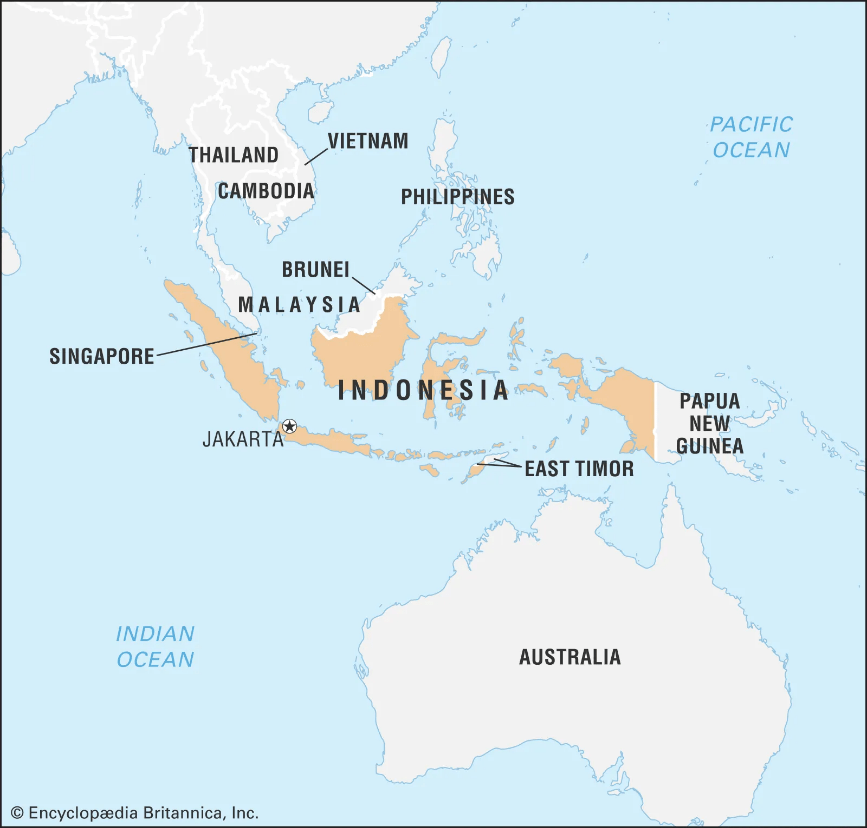
Indonesia (Capital: Jakarta)
Mount Lewotobi Laki-Laki volcano has erupted on the Indonesian island of Flores.
Political Features:
- Indonesia is the world's largest archipelago located in the Indian and Pacific oceans.
- The country consists of five main islands: Sumatra, Java, Kalimantan, Sulawesi, and Papua.
- Indonesia shares land borders with East Timor, Papua New Guinea, and Malaysia.
- Indonesia is a founding member of the Non-Aligned Movement along with India.
Geographical Features:
- Indonesia is located at the intersection of shifting tectonic plates, making it prone to earthquakes and volcanic eruptions.
- There are over 100 active volcanoes in Indonesia, including Mount Merapi and Mount Krakatoa.
- Due to its location near the equator, Indonesia has a tropical climate.
India Participates in G-20’s Disaster Risk Reduction Working Group (DRRWG) ministerial meeting in Brazil
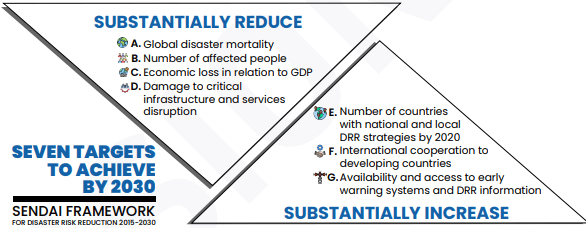
- G20 ministers and delegates adopted a Ministerial Declaration calling for greater action to implement the Sendai Framework for Disaster Risk Reduction (DRR).
- The Declaration recognized the need for mobilizing financial resources and adopting nature-based solutions and ecosystem-based approaches for DRR.
About G-20's DRRWG:
- Established in 2023 under India's G-20 Presidency with the aim of integrating disaster risk reduction across the work of the G-20.
- The DRRWG's 5 priority areas include early warning systems, disaster-resilient infrastructure, DRR financing, disaster recovery, rehabilitation, and reconstruction, and nature-based solutions and ecosystem approaches for DRR.
About Sendai Framework for Disaster Risk Reduction (2015-30):
- A 15-year non-binding agreement with 7 targets, an improved version of the Hyogo Framework for Action (2005-15).
- Adopted at the 3rd United Nations World Conference on Disaster Risk Reduction in 2015 in Sendai, Japan.
- DRR is the concept and practice of reducing disaster risks through systematic efforts to analyze and reduce causal factors of disasters.
- The aim is a substantial reduction of disaster risk and losses in various aspects of life and assets.
- Priorities of the framework include understanding disaster risk, strengthening disaster risk governance, investing in disaster risk reduction, enhancing disaster preparedness, and building back better in recovery, rehabilitation, and reconstruction.
53% of Indian women remain outside labor force due to care responsibilities: ILO Report
- Care responsibilities are the main reason why 53% of Indian women are not in the labor force.
- Men often cite other personal reasons like education or illness.
Key Highlights of ILO Report on Gender Gaps in Labor Force:
- Global labor force participation rate in 2023: 48.7% for women and 73% for men, a gap of 24%.
- 748 million people aged 15 and above are out of the labor force due to care responsibilities, with 708 million being women.
- Rural women face multiple disadvantages in the labor market.
Key Recommendations to Improve Women's Labor Force Participation:
- Investing in Early Childhood Care and Education to increase women's employment.
- Promoting the 5Rs of decent work in care work: recognize, reduce, redistribute, reward, and represent.
- Collecting and disseminating data on paid and unpaid care work.
Key Frameworks in India to Promote Women's Labor Force Participation
- Directive Principles of State Policy promote equal pay for equal work for men and women.
- Maternity Benefit Act, 1961 amended in 2017 to increase paid maternity leave duration.
- Code on Social Security, 2020 includes provision for creche facility in establishments with 50 or more employees.
Government releases Operational Guidelines of Namo Drone Didi scheme
- Oversight by Empowered Committee of Secretaries
- Key departments involved in overseeing scheme.
- Implementation through Drone Portal
- IT-based MIS for real-time monitoring and tracking.
- Ensures smooth execution and effectiveness.
About Namo Drone Didi Scheme:
- Ministry: Ministry of Agriculture & Farmers Welfare.
- Type: Central Sector Scheme under Deendayal Antyodaya Yojana – National Rural Livelihoods Mission.
- Objective: Provide drones to 15000 selected Women SHGs for rental services to farmers for agriculture purpose from 2024-25 to 2025-2026.
Key features of the Namo Drone Didi Scheme:
Cluster-Based Implementation:
- Farmers must commit to using drone services to be considered for selection.
- Areas/clusters will be chosen based on demand from farmers.
Financial Support:
- Women SHGs receive 80% financial assistance for drone and accessory costs, up to Rs. 8 lakhs.
- SHGs can secure loans from the National Agriculture Infrastructure Financing Facility with a 3% interest subvention for the remaining 20% cost.
Training:
- Qualified women SHG members will be trained as drone pilots for agricultural applications.
Infrastructure and Support from Lead Fertilizer Companies (LFCs):
- LFCs will assist SHGs in procurement, repair, and maintenance of drones.
- LFCs will also promote the use of nano fertilizers.
Significance of Namo Drone Didi Scheme:
- Empowerment of Women: Women SHGs will receive financial assistance and training, empowering them in the agricultural sector.
- Enhancement of Agricultural Efficiency: The use of drones can improve efficiency in farming practices and crop management.
- Skill Development and Knowledge Expansion: Training women SHG members as drone pilots will enhance their skills and knowledge in agriculture and technology.
- Community and Networking Opportunities: The scheme will provide opportunities for women SHGs to network with lead fertilizer companies and other stakeholders in the agricultural sector.
16th Conference of Parties (CoP-16) to Convention on Biological Diversity concluded in Colombia
- The 16th Conference of Parties to Convention on Biological Diversity took place in Colombia.
- It was the first COP since the adoption of the Kunming-Montreal Global Biodiversity Framework (KMGBF).
- The conference assessed progress and addressed challenges to the framework.
Major Outcomes of CoP-16:
- Operationalisation of Cali Fund: Companies benefiting from Digital Sequence Information to contribute to support indigenous people.
- Establishment of a Permanent Subsidiary body under Article 8(j) of CBD to enhance indigenous participation.
- Launch of Kunming Biodiversity Fund (KBF) to support action towards 2030 and 2050 goals.
- Discussions on synthetic biology, invasive alien species, and identification of Ecologically or Biologically Significant Marine Areas.
Kunming-Montreal Global Biodiversity Framework (KMGBF):
- Adopted in CoP-15 in 2022 in Montreal, Canada.
- Includes goals for 2050 and targets for 2030 to address threats to biodiversity and sustainable use.
- Targets include protecting 30% of land and water by 2030 and reducing invasive alien species introduction by 50%.
About Convention on Biological Diversity (CBD)
- Secretariat located in Montreal, Canada.
- Established in 1993 after the Rio "Earth Summit" in 1992.
- Objectives include conservation of biodiversity, sustainable use, and fair sharing of benefits.
- 196 Parties, including India, are part of the treaty.
- Protocols include Nagoya Protocol on Access and Benefit-sharing, Cartagena Protocol on Biosafety, and Nagoya – Kuala Lumpur Supplementary Protocol.
Marine Protected Areas (MPAs) can conserve biodiversity and improve nutritional security
A study highlights that MPAs management and governance can conserve biodiversity and improve nutritional security.
Key highlights of the study on Marine Protected Areas (MPAs) and their impact on biodiversity and nutritional security:
- Sustainable-use MPAs contribute significantly to global catch, fisheries revenue, and nutrient supply.
- 7% of total global catches come from exclusive economic zones (EEZs) within MPAs.
- Establishing MPAs in nutritionally vulnerable coastal communities can improve human health and nutrition.
Significance of Marine Protected Areas (MPAs)
- MPAs are designated areas in the ocean where human activities are more strictly regulated than in surrounding waters
- These areas are given special protections for natural or historic marine resources by various authorities
- MPAs act as reservoirs of genetic material for natural or assisted recovery of areas affected by pollution
- They provide crucial refuges for marine species, protecting them from threats like overfishing, habitat destruction, and pollution
- MPAs serve as reference sites for scientific research, offering insights into marine ecology
- They also act as sites for nature-based recreation and tourism
- MPAs help in climate change mitigation and adaptation
- Challenges in conservation of MPAs include difficulties in enforcing regulations, the requirement of substantial resources, and impacts on the livelihoods of local fishing communities
Global Initiatives to Protect Marine Biodiversity:
- The Kunming-Montreal Global Biodiversity Framework aims to protect 30% of the planet's oceans and lands by 2030.
- The Agreement on Marine Biodiversity of Areas beyond National Jurisdiction (High Seas Treaty) is another global initiative.
- India has established Marine Protected Areas such as Gulf of Mannar Marine Park in Tamil Nadu, Lothian Island in West Bengal, and Gahirmatha in Odisha.
Global Tuberculosis (TB) Report 2024 released by World Health Organisation
- India continues to have the highest disease burden of TB.
- TB is caused by bacteria and primarily affects the lungs.
- TB is curable and preventable, spreading through the air.
Key Findings of the Report:
- TB likely became the world's leading cause of death in 2023.
- TB treatment coverage has increased to 75%.
- India accounted for 26% of global TB burden and deaths in 2023.
- India ranks first globally in burden of multidrug resistant/Rifampicin-resistant TB.
Issues highlighted by Report:
- Inadequate funding in low- and middle-income countries: Only US$ 5.7 billion was allocated in 2023, which is just 26% of the global target of US$ 22 billion per year by 2027.
- Funding in TB Research: Only US $1 billion was allocated in 2022, falling short of the target of US$ 5 billion by 2027.
- Catastrophic health costs: Around 50% of TB-affected households globally face catastrophic costs, exceeding the WHO End TB Strategy target of zero.
India’s Initiatives for TB Prevention
- Pradhan Mantri TB Mukt Bharat Abhiyan.
- Universal Drug Susceptibility Testing (UDST): to detect drug resistance before or at the start of treatment.
- Addition of newer drugs like Bedaquiline and Delamanid for managing drug-resistant TB.