
What are the different layers in the Earth's interior? How is the layered structure of the Earth determined? Name two most abundant elements of each layer of the Earth. IAS 2024, 15 Marks
What are the different layers in the Earth's interior? How is the layered structure of the Earth determined? Name two most abundant elements of each layer of the Earth. IAS 2024, 15 Marks

Introduction:
The Earth's interior is composed of several layers that vary in composition, temperature, and physical properties. These layers are determined through a combination of seismic data, laboratory experiments, and geological observations.
Different Layers in the Earth's Interior
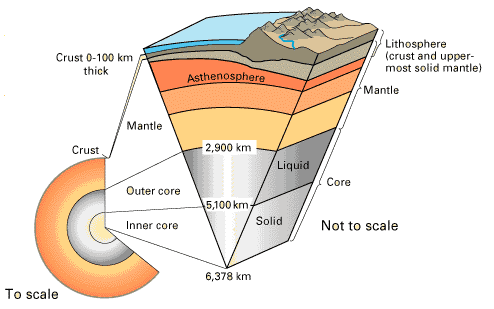
The Earth’s interior is divided into distinct layers based on composition and physical properties:
Crust
- Composition: Composed of solid rocks; mainly silicates.
- Types:
- Continental Crust: Rich in silica and aluminum (SIAL).
- Oceanic Crust: Rich in silica and magnesium (SIMA).
- Thickness: 5-70 km.
- Abundant Elements: Oxygen and silicon.
Mantle
- Composition: Semi-solid, composed mainly of silicate minerals rich in iron and magnesium.
- Sub-layers:
- Upper Mantle: Includes the lithosphere and asthenosphere.
- Lower Mantle: More rigid due to high pressure.
- Thickness: About 2,900 km.
- Abundant Elements: Oxygen and magnesium.
Core
- Composition: Primarily iron and nickel.
- Sub-layers:
- Outer Core: Liquid, generates Earth's magnetic field.
- Inner Core: Solid due to immense pressure.
- Thickness: Outer core is about 2,200 km; inner core is about 1,200 km.
- Abundant Elements: Iron and nickel.
How is the Layered Structure of the Earth Determined?
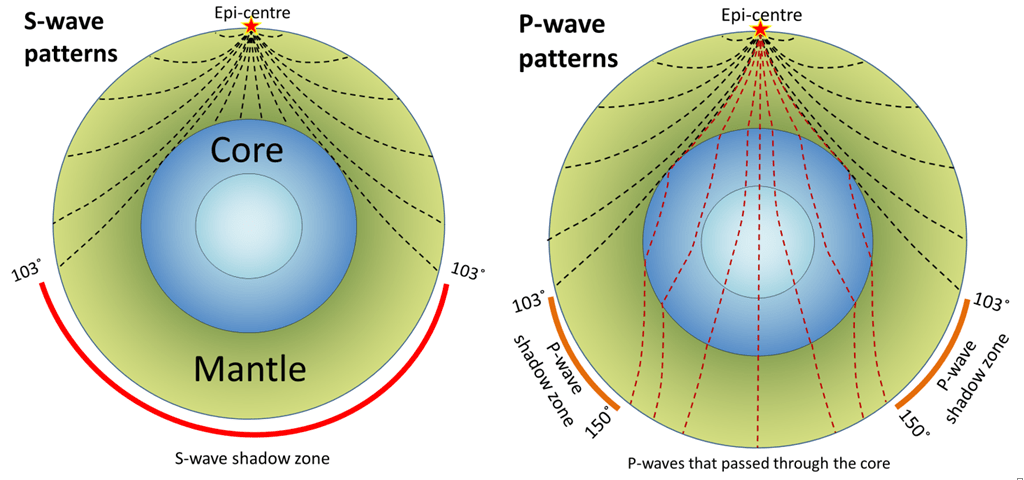
The Earth’s internal structure is inferred through indirect methods due to its inaccessibility:
Seismic Studies
- Types of Waves:
- P-waves: Travel through solids, liquids, and gases; faster and refract at layer boundaries.
- S-waves: Only travel through solids; their absence in the outer core indicates its liquid nature.
- Seismic Discontinuities: Abrupt changes in wave velocity at boundaries like the Mohorovičić discontinuity (crust-mantle boundary) and Gutenberg discontinuity (mantle-core boundary).
Gravity and Magnetic Studies
- Variations in gravity and magnetic fields provide insights into the density and composition of different layers.
Heat Flow and Volcanic Activity
- Heat flow from the Earth's interior and analysis of volcanic materials provide information about the mantle and core.
Meteorite Composition
- Similarity in composition between Earth’s layers and certain meteorites (e.g., iron meteorites for the core).
Two Most Abundant Elements of Each Layer
- Crust: Oxygen and silicon.
- Mantle: Oxygen and magnesium.
- Core: Iron and nickel.
Conclusion:
The Earth's interior is composed of distinct layers that play a crucial role in shaping the planet's geology and dynamics. Through a combination of seismic data, laboratory experiments, and geological observations, scientists have been able to determine the composition and properties of each layer, providing valuable insights into the Earth's complex structure.