
Discuss the geological parameters used to subdivide the Dharwar Craton into two subcratons. IAS 2024, 10 Marks
Discuss the geological parameters used to subdivide the Dharwar Craton into two subcratons. IAS 2024, 10 Marks

Introduction:
The Dharwar Craton, located in southern India, is one of the oldest cratons on Earth and is known for its rich geological history. It is subdivided into two main subcratons based on various geological parameters:
Geological Parameters for Subdividing the Dharwar Craton into Two Subcratons
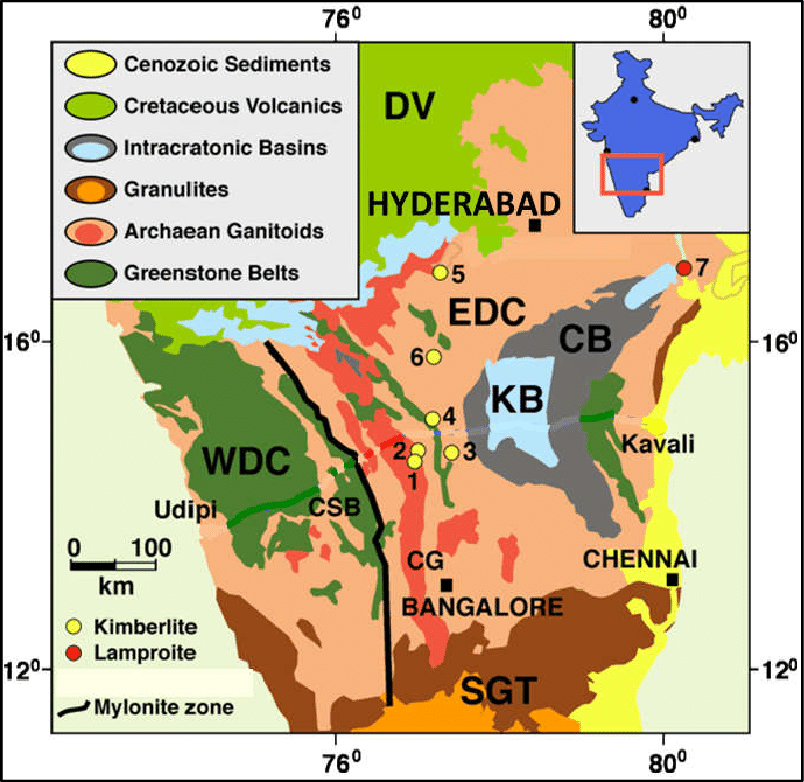
The Dharwar Craton, a major geological formation in India, is divided into two subcratons: the Western Dharwar Craton (WDC) and the Eastern Dharwar Craton (EDC). The subdivision is based on several geological parameters:
1. Geological History
- WDC: Represents older lithological units with a predominance of Archean greenstone belts and gneisses.
- EDC: Displays relatively younger granitoid intrusions and volcanic sequences, indicating active magmatism and tectonism during the Proterozoic.
2. Lithology
- WDC: Composed of older high-grade metamorphic rocks like tonalite-trondhjemite-granodiorite (TTG) gneisses.
- EDC: Dominated by low-grade greenstone belts with associated volcanic and sedimentary sequences.
3. Structural Features
- WDC: Characterized by limited tectonic deformation and relatively stable crust.
- EDC: Shows significant evidence of deformation, faulting, and shearing, often associated with plate tectonics.
4. Tectonic Evolution
- WDC: Represents a stable tectonic environment with minimal reworking during Proterozoic tectonic events.
- EDC: Exhibits evidence of extensive tectonic reworking and crustal growth.
5. Geophysical Characteristics
- WDC: Displays higher seismic velocities and lower heat flow, indicative of older, thicker crust.
- EDC: Shows lower seismic velocities and higher heat flow, suggesting thinner and younger crustal features.
6. Economic Mineral Deposits
- WDC: Known for gold deposits and iron-rich formations.
- EDC: Hosts significant deposits of base metals and volcanic-hosted massive sulfides (VHMS).
7. Isotopic Ages
- WDC: Crustal components date back to ~3.4 billion years, suggesting an ancient origin.
- EDC: Radiometric dating indicates ages of ~2.7 billion years, signifying newer crustal formation episodes.
Conclusion:
The subdivision of the Dharwar Craton into two subcratons is based on a combination of lithological, tectonic, age-related, and structural parameters. These differences highlight the complex geological history of the region and provide valuable insights into the evolution of the Earth's crust over billions of years.