
Geology IAS Paper 2 UPSC 2013 with Solutions
In this article, all questions of Geology Optional Paper 2 are answered. Click on the question links to view the answers.
This article is part of Synopsis IAS Geology Optional Course for UPSC IAS.

Geology Optional Paper 2 UPSC 2013 - Question Paper with Solutions
Click on the links for the solutions
SECTION-A
1. Attempt the following questions with suitable sketches wherever necessary.
Geology 1a Explain how the radius ratio of cation to anion influences coordination in minerals. Cite examples of two common coordination in rock forming minerals. UPSC 2013, 10 Marks
Geology 1b Define the Gibbs phase rule and calculate the variance of the assemblage containing enstatite + forsterite + Mg-spinel + Mg-cordierite + corundum in the appropriate chemical system. UPSC 2013, 10 Marks
Geology 1c With suitable examples, enumerate the essential difference between regional dynamothermal metamorphism and contact metamorphism. UPSC 2013, 10 Marks
Geology 1d Explain why in any igneous rock, primary forsterite and quartz cannot stably coexist. UPSC 2013, 10 Marks
Geology 1e Describe the critical differences between porosity and permeability. Add a note on how these two properties of sediments are determined. UPSC 2013, 10 Marks
Geology 2a With theoretical details, discuss (i) optical indicatrix, and (ii) determination of sign of elongation of uniaxial minerals. UPSC 2013, 15 Marks
Geology 2b With suitable examples, discuss the causes behind and effects of (i) pleochroism and (ii) birefringence in minerals. UPSC 2013, 15 Marks
Geology 2c Derive Bragg's law for X-ray diffraction. Calculate the inter-planar spacing in a crystal for a plane that gives a sharp reflection at 20 = 50° for CuKa radiation (A = 1-5418 Å) in a powder X-ray diffraction experiment. UPSC 2013, 20 Marks
Geology 3a Thin sections of three basaltic rocks contain (i) phenocrysts of Ca-rich plagioclase in diopside matrix, (ii) phenocrysts of diopside in Ca-rich plagioclase matrix, and (iii) coexisting phenocrysts of both Ca-rich plagioclase and diopside. On the basis of phase diagram in the diopside-anorthite system, describe the initial melt composition and temperatures, along with crystallization behavior of the above rocks. UPSC 2013, 20 Marks
Geology 3b By suitable reactions, discuss various mineralogical and mineral-chemical changes that take place during metamorphism of a basaltic rock at the greenschist-amphibolite facies transition. UPSC 2013, 15 Marks
Geology 3c In a P-T diagram show the domains of various metamorphic facies and briefly explain these facies. UPSC 2013, 15 Marks
Geology 4a What are turbidites? With a neat sketch, show different units of a Bouma cycle and the flow regimes under which they are formed. UPSC 2013, 15 Marks
Geology 4b With neat sketches, describe the primary depositional sedimentary structures, with emphasis on their application in determining paleocurrent directions. UPSC 2013, 15 Marks
Geology 4c With the help of a neat sketch, briefly discuss the classification of sandstone. What is the general tectonic environment in which quartz arenites are found? UPSC 2013, 20 Marks
SECTION-B
5. Attempt the following questions with suitable sketches wherever necessary.
Geology 5a Describe the relationship between average crustal abundance of metals and their content in ore deposits. Add a brief note on tonnage, grade and cut-off grade of oredeposits. UPSC 2013, 10 Marks
Geology 5b What are the sources for the formation of coal and petroleum deposits? Briefly discuss the process of coalification. UPSC 2013, 10 Marks
Geology 5c Briefly enumerate the various sampling methods in mineral exploration and mining. UPSC 2013, 10 Marks
Geology 5d From the first and the second laws of thermodynamics and assuming reversible process, derive the expression dU = TdS - PdV; where U, S, T, P and V respectively stand for internal energy, entropy, temperature, pressure and volume. UPSC 2013, 10 Marks
Geology 5e Discuss the various causes and environmental impacts of acid mine drainage. UPSC 2013, 10 Marks
Geology 6a Explain the ore forming processes that result in chromite and Ni-Cu sulphide deposits hosted by ultramafic rocks. UPSC 2013, 15 Marks
Geology 6b With schematic sketches, show and elucidate the zones of hydrothermal alteration in a porphyry copper deposit, emphasizing their mineralogy and temperature of alteration. Explain why the ore zone is localized at the boundary between two specific alteration zones. UPSC 2013, 15 Marks
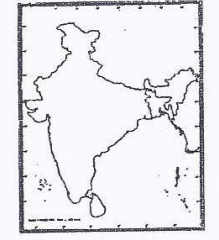
Geology 6c Mark the location of following mineral and coal deposits in the outline map of India and write a brief description of each of these deposits: (i) Khetri copper belt, (ii) Hutti gold deposit, (iii) Jharia coal field, and (iv) Nellore mica belt. UPSC 2013, 15 Marks
Geology 7a Explain how ore concentrates are produced from run-off mine by mineral beneficiation, with the help of examples of two different beneficiation processes. UPSC 2013, 15 Marks
Geology 7b With suitable examples, define indicator and pathfinder elements in geo-chemical prospecting. Discuss mobility of elements in near surface environment. UPSC 2013, 20 Marks
Geology 7c Compare and contrast the corrections used in gravity and magnetic methods of mineral prospecting. UPSC 2013, 15 Marks
Geology 8a Discuss the mineralogical and chemical compositions of various meteorites, with a note on how meteorites furnish evidence about planetary interiors. UPSC 2013, 15 Marks
Geology 8b Discuss the effects of river flooding and response to flood hazards. UPSC 2013, 15 Marks
Geology 8c Explain the role of water in slope stability and add a note on types of slope failure. UPSC 2013, 20 Marks