
Hows Discuss the process of magma generation in the Earth's interior and its causes. IAS 2024, 20 Marks
Hows Discuss the process of magma generation in the Earth's interior and its causes. IAS 2024, 20 Marks

Introduction:
Magma generation is a complex process that occurs deep within the Earth's interior. It is essential for the formation of igneous rocks and plays a crucial role in shaping the Earth's surface.
Processes of Magma Generation
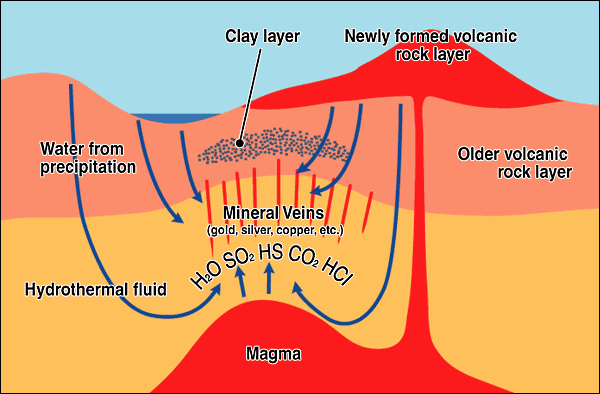
- Heat-Induced Melting (Raising the Temperature):
- Mechanism: Rocks melt when they are exposed to high temperatures, exceeding their melting point.
- Causes:
- Heat from radioactive decay of elements.
- Mantle plumes or hotspots (e.g., Hawaiian Islands).
- Example: Formation of migmatites, where heat melts part of metamorphic rocks.
- Decompression Melting (Lowering the Pressure):
- Mechanism: As rocks ascend from the mantle to shallower depths, pressure decreases while retaining their heat, causing them to cross the solidus line and melt.
- Occurrence:
- Mid-Ocean Ridges (MORs): Upwelling of mantle material forms basaltic magma.
- Mantle convection currents aid this process.
- Key Feature: Rapid pressure reduction minimizes heat loss, promoting melting.
- Flux Melting (Adding Volatiles):
- Mechanism: Addition of volatile substances like water (H₂O) and carbon dioxide (CO₂) reduces the melting point of rocks.
- Occurrence:
- Subduction zones (Ring of Fire): Water from subducted oceanic plates induces melting of the overlying mantle wedge.
- Result: Magma generation in island arcs and volcanic chains.
Causes of Magma Generation
- Plate Tectonics:
- Divergent Boundaries: Decompression melting occurs at MORs.
- Convergent Boundaries: Flux melting in subduction zones.
- Hotspots: Heat-induced melting due to mantle plumes.
- Thermal Anomalies:
- Localized heat sources like plumes or decaying radioactive elements.
- Geothermal Gradient:
- The Earth's temperature increases by approximately 25°C per kilometer of depth, influencing melting processes.
- Partial Melting:
- Rocks partially melt to form magma with different compositions, depending on mineral melting points. For example:
- Basaltic magma from mantle peridotite.
- Rhyolitic magma from continental crust.
- Rocks partially melt to form magma with different compositions, depending on mineral melting points. For example:
Conclusion:
Magma generation is a complex process that is driven by a combination of heat, pressure, and water within the Earth's interior. Understanding the causes and processes of magma generation is essential for studying the formation of igneous rocks and the dynamics of the Earth's crust.