
Gamontogamy in Monocystis. (IAS 2020/10 Marks)
Gamontogamy in Monocystis. (IAS 2020/10 Marks)

Gamontogamy in Monocystis
Gamontogamy in Monocystis refers to the process of sexual reproduction in this parasitic protozoan. Monocystis is a type of sporozoan that infects the reproductive organs of earthworms. The gamonts are the sexual stage of Monocystis, and gamontogamy is the fusion of gamonts to form a zygote.
Overview of Monocystis:
- Monocystis is a genus of unicellular parasites belonging to the phylum Apicomplexa.
- Commonly found in the intestinal tract of earthworms.
- Plays a role in the complex life cycle of these organisms, contributing to their reproductive strategies.
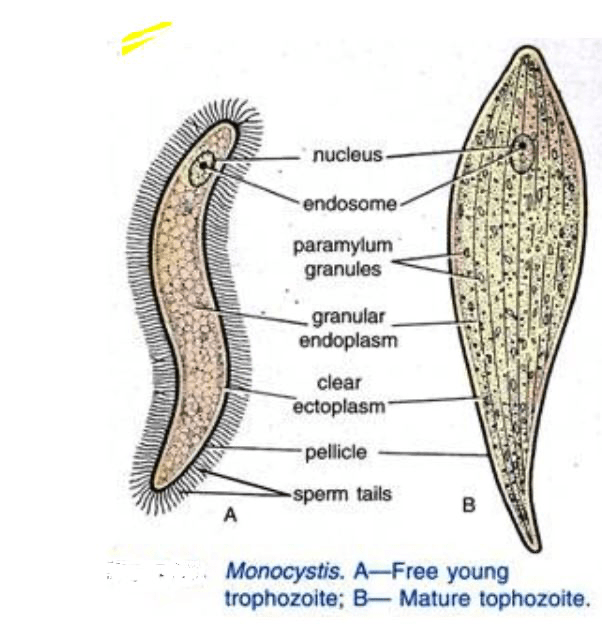
Features of Gamontogamy in Monocystis
- Sexual Reproduction:
- Involves the fusion of two gamonts, leading to genetic recombination and increased genetic diversity.
- This is significant in the life cycle of Monocystis, as it allows adaptation to different environmental conditions.
- Life Cycle Stages:
- The life cycle of Monocystis includes both asexual and sexual phases.
- Gamontogamy occurs after a series of asexual reproductions (schizogony) that produce numerous gamont cells.
- Formation of Zygote:
- Upon fusion, the gamont cells form a zygote.
- The zygote undergoes further development to produce oocysts, which can be released into the environment to infect new hosts.
Examples of Gamontogamy in Monocystis
- Monocystis agilis:
- A species found in the earthworm Lumbricus terrestris.
- Exhibits gamontogamy in its life cycle, where gamont cells from different individuals fuse, leading to genetic diversity.
- Monocystis sp. in Other Hosts:
- Similar processes occur in other species of Monocystis, affecting different earthworm hosts.
- The ability to undergo gamontogamy helps these parasites adapt to various ecological niches.
- Comparison with Other Apicomplexans:
- Gamontogamy can also be observed in other members of the Apicomplexa phylum, such as Plasmodium (causative agent of malaria) and Toxoplasma, which exhibit similar sexual reproduction strategies to enhance survival and adaptability.
Conclusion
Gamontogamy in Monocystis is a crucial step in the life cycle of this parasitic protozoan. It is through gamontogamy that Monocystis is able to reproduce sexually and produce infective sporozoites. The process of gamontogamy in Monocystis is important for studying the biology and ecology of this parasite, as well as for developing strategies to control its spread and impact on earthworm populations.