
PT 360 IR (International Relations) November 2024: UPSC Prelims 2025
Tip: For reading free UPSC Prelims 2025 Current Affairs for International Relations online, use the Next/Previous buttons or refer to the Sidebar. If you are using a mobile device, click the menu icon (three horizontal lines) to access the sidebar.
Click here for Printable PDF and Lectures.

ASEAN DEFENCE MINISTERS’ MEETING-PLUS (ADDMPLUS)
- 11th ADMM-Plus Held in Vientiane, Lao PDR.
About ADMM-Plus:
- Composition: Includes 10 ASEAN member states and 8 dialogue partners: Australia, China, India, Japan, New Zealand, South Korea, Russia, and the United States.
- Inception: The inaugural ADMM-Plus meeting was held in Hanoi, Vietnam, in 2010.
- Frequency: Since 2017, ADMM-Plus Ministers have met annually to enhance dialogue and collaboration between ASEAN and its partner countries.
- Objective: Aims to bolster security and defense cooperation to ensure peace, stability, and development in the region.
- Key Focus Areas:
- Maritime Security.
- Counterterrorism.
- Humanitarian Assistance and Disaster Relief (HADR).
- Peacekeeping Operations.
- Military Medicine.
- Humanitarian Mine Action.
- Cybersecurity.
CAIRO CALL TO ACTION
- The 12th edition of the World Urban Forum (WUF) recently concluded in Cairo, Egypt, with the adoption of the 10-point Cairo Call to Action.
About the World Urban Forum (WUF):
- Established in 2001 by the United Nations, WUF is the leading global platform focused on sustainable urbanization.
Highlights of the Cairo Call to Action:
The action plan emphasizes:
- Addressing the global housing crisis: Advocating for inclusive sharing of urban spaces and improved urban planning to achieve better outcomes at the local level.
- Localizing global goals: Promoting local-level actions to meet global objectives, ensuring representation of local stakeholders across all levels, and fostering alliances to amplify local impact.
- Unlocking urban finance: Ensuring equitable and just financial solutions for cities and communities.
- Data-driven decision-making: Utilizing local and grassroots data to inform policies and strategies.
- Sustainability through culture: Recognizing the role of culture and heritage as key assets in advancing sustainability goals.
CHENNAI-VLADIVOSTOK EASTERN MARITIME CORRIDOR OPERATIONAL
- Eastern Maritime Corridor (EMC): The Eastern Maritime Corridor, also known as EMC, aims to strengthen maritime relations between India and Russia.
About of EMC:
- First proposed during the Eastern Economic Forum in Vladivostok, Russia, in 2019.
- Designed to establish a sea route connecting Chennai in India with Vladivostok in Russia through Northeast Asia.
- Covers a total distance of approximately 10,300 km.
- Traverses key waterways, including the Sea of Japan, the South China Sea, and the Malacca Strait.
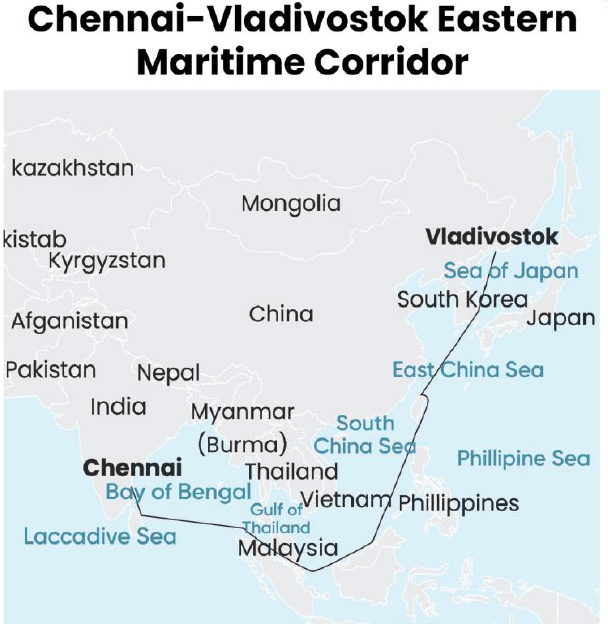
Importance of the Corridor:
- Lower Logistics Costs:
- Reduces transportation time by around 16 days and distance by nearly 40%.
- Current trade route via the Suez Canal from Mumbai to St. Petersburg spans 16,066 km and takes about 40 days.
- Enhancement of India’s Maritime Sector:
- India’s maritime sector currently manages 95% of trade volume and 70% of trade value.
- Aligns with India’s Maritime Vision 2030, which includes over 150 initiatives for sectoral growth.
- Strategic Counter to China:
- The route crosses the South China Sea, addressing China’s dominance in the region.
- Vladivostok is geographically close to the Russia-China border, adding strategic relevance.
- Support for India’s Act Far East Policy: Facilitates access to Russian resources and strengthens India’s role in the Pacific trade network.
Other Significant Maritime Corridors
- India-Middle East-Europe Economic Corridor (IMEC): Announced at the G20 Leaders’ Summit (2023, New Delhi) to connect Asia, Europe, and the Middle East.
- International North-South Transport Corridor (INSTC): Initiated in 2000 to establish a trade route linking Russia’s Baltic Sea coast with India’s western ports through Iran.
FIRST TRILATERAL POWER TRANSACTION
- The first-ever trilateral power transaction from Nepal to Bangladesh, utilizing the Indian power grid, was inaugurated.
Key Highlights of the Agreement:
- A tripartite power sales agreement was previously signed between NTPC Vidyut Vyapar Nigam, Nepal Electricity Authority (NEA), and the Bangladesh Power Development Board.
- The agreement facilitates the transfer of up to 40 MW of electricity from Nepal to Bangladesh through India's power grid.
- This initiative underscores a commitment to enhancing sub-regional cooperation, particularly in the energy sector, fostering stronger economic interconnections and mutual benefits for all stakeholders involved.
INDIA-AUSTRALIA RELATIONS
News Context
The 2nd India-Australia Annual Summit recently took place on the sidelines of the G20 Summit in Rio de Janeiro.
Key Highlights of the Summit
- India-Australia Renewable Energy Partnership (REP): A framework was launched to foster practical collaboration in priority areas such as solar PV, green hydrogen, and energy storage.
- Extension of Australia-India Business Exchange (AIBX) Programme: The AIBX programme, initially launched in 2021 to provide market insights and promote commercial partnerships, has been extended for another four years starting in 2024.
- Defence and Security Cooperation Renewal: Both countries agreed to renew and enhance the Joint Declaration on Defence and Security Cooperation in 2025.
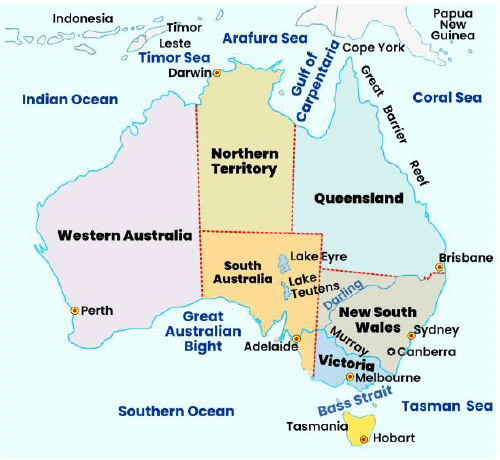
Significance of India-Australia Bilateral Relations
1. Strategic Partnership
- Established as a Comprehensive Strategic Partnership in 2020, the relationship aims to counter China's influence in the Indo-Pacific, especially through the Quad grouping.
- Example: The Australia-India Indo-Pacific Oceans Initiative Partnership (AIIPOIP) promotes maritime collaboration.
2. Economic and Trade Relations
- Bilateral Trade: Surpassed $30 billion in 2023, with significant growth potential under the Economic Cooperation and Trade Agreement (ECTA).
- Key Exports:
- Australia exports coal and LNG to India.
- India exports textiles, pharmaceuticals, and IT services to Australia.
- Supply Chain Resilience Initiative (SCRI): India, Australia, and Japan collaborate to diversify supply chains and promote sustainable trade practices.
- Key Exports:
3. Critical Minerals Cooperation
- A Critical Minerals Investment Partnership supports Indian investments in Australian critical mineral projects.
- Australia is a leading producer of lithium, cobalt, and rare earths.
4. Green Energy Collaboration
- Joint initiatives include:
- Australia-India Green Hydrogen Taskforce for green hydrogen production.
- India-Australia Solar Taskforce to accelerate solar PV deployment and supply chain development.
5. Defence and Security Cooperation
- Agreements such as the Air-to-Air Refueling Agreement and Mutual Logistics Support Agreement enhance operational readiness.
- Joint defence exercises like AUSTRAHIND, AUSINDEX, and Pitch Black improve interoperability and address shared security challenges.
6. Regional and Multilateral Engagement
- Australia's support for India’s UN Security Council bid highlights shared commitment to global governance reforms.
- Active collaboration on platforms such as the G20 and the Indian Ocean Rim Association (IORA) addresses regional issues.
7. People-to-People Ties
- India is Australia’s largest source of skilled migrants and second-largest source of international students.
- The India-Australia Migration and Mobility Partnership Agreement facilitates the movement of students, professionals, and researchers.
8. Science and Technology
- Both nations are collaborating under an agreement to establish and operate transportable telemetry terminals on Cocos Island for India’s Human Space Flight Mission.
2ND INDIA-CARICOM SUMMIT CONCLUDED IN GUYANA
India's Engagement with CARICOM:
Key Highlights
Seven Pillars to Strengthen India-CARICOM Ties
- India has outlined seven foundational pillars to bolster its partnership with the Caribbean Community (CARICOM), forming the acronym C-A-R-I-C-O-M:
- Capacity Building
- Agriculture and Food Security
- Renewable Energy and Climate Change
- Innovation, Technology, and Trade
- Other critical areas of cooperation.
The first India-CARICOM Summit was convened in 2019, marking a significant milestone in the relationship.
About CARICOM
- Establishment: Formed in 1973 to foster economic integration and cooperation in the Caribbean region.
- Members: Comprises 21 countries (15 Member States and 6 Associate Members), including nations like Antigua and Barbuda, Bahamas, Barbados, and Belize.
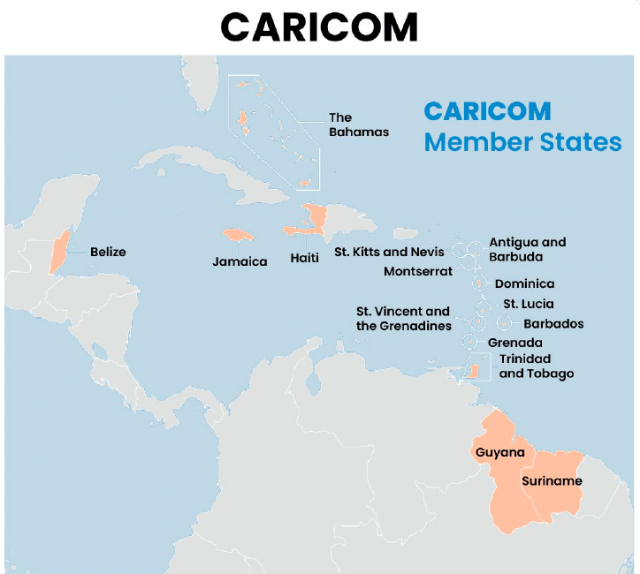
Significance of CARICOM for India
1. Partnership in Multilateral Forums
- CARICOM nations, such as Antigua and Barbuda, support India’s positions in global forums.
- Example: Advocacy for India’s permanent membership in the UNSC.
2. South-South Cooperation
- CARICOM nations participated in the 3rd Voice of Global South Summit (2024), hosted by India.
3. Defence Exports
- Example: Delivery of two Dornier 228 planes by HAL to Guyana.
4. Collaboration on Climate Action and Energy Security
- Example: Suriname joined the International Solar Alliance (ISA), reinforcing joint efforts on renewable energy.
5. Broader Strategic Importance
- Gateway to Latin America: Facilitates access to the region.
- Disaster Resilience: Cooperation through initiatives like the Coalition for Disaster Resilient Infrastructure (CDRI).
- Indian Diaspora: Significant presence in CARICOM countries, notably in Trinidad and Tobago.
India's relationship with CARICOM is pivotal for advancing mutual goals in sustainable development, economic growth, and global diplomacy.
INDIA – GERMANY RELATIONS
News Context
The German Chancellor recently visited India to strengthen bilateral relations between India and Germany.
Highlights of the Visit:
- 25th Anniversary of Strategic Partnership (2000-2024): The year 2024 commemorates 25 years since the establishment of the strategic partnership between India and Germany.
- 50th Anniversary of Scientific and Technological Cooperation (1974-2024): It also marks five decades since the signing of the Inter-Governmental Agreement on Cooperation in Scientific Research and Technological Development.
- 7th Inter-Governmental Consultations (IGC): The visit included the 7th round of IGC, alongside the launch of the 'India-Germany Innovation and Technology Partnership Roadmap' focusing on renewable energy, artificial intelligence, quantum technologies, and space exploration.
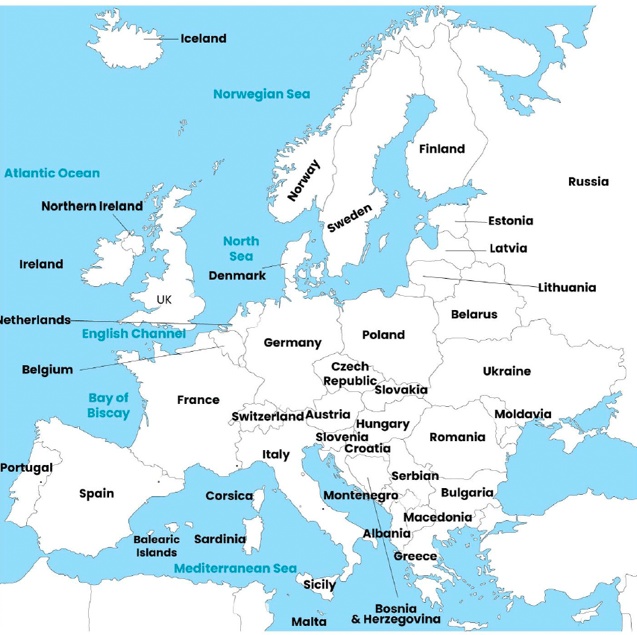
Timeline of India-Germany Relations:
- 1951: Establishment of diplomatic relations.
- 2000: Signing of the Strategic Partnership Agreement.
- 2005: Creation of the Indo-German Consultative Committee.
- 2011: Initiation of Inter-Governmental Consultations (IGC), a biennial dialogue at the level of Heads of Government.
- 2019: Launch of the Indo-German Track 1.5 Dialogue under the IGC framework.
INDIA-MIDDLE EAST-EUROPE ECONOMIC CORRIDOR
News Context
The ambitious India-Middle East-Europe Economic Corridor (IMEC), announced a year ago, has made notable progress despite encountering some challenges.
About the India-Middle East-Europe Economic Corridor (IMEC)
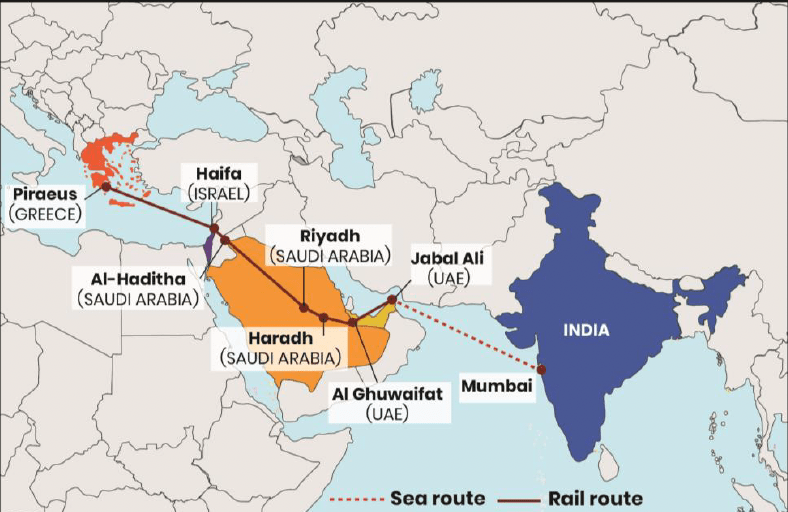
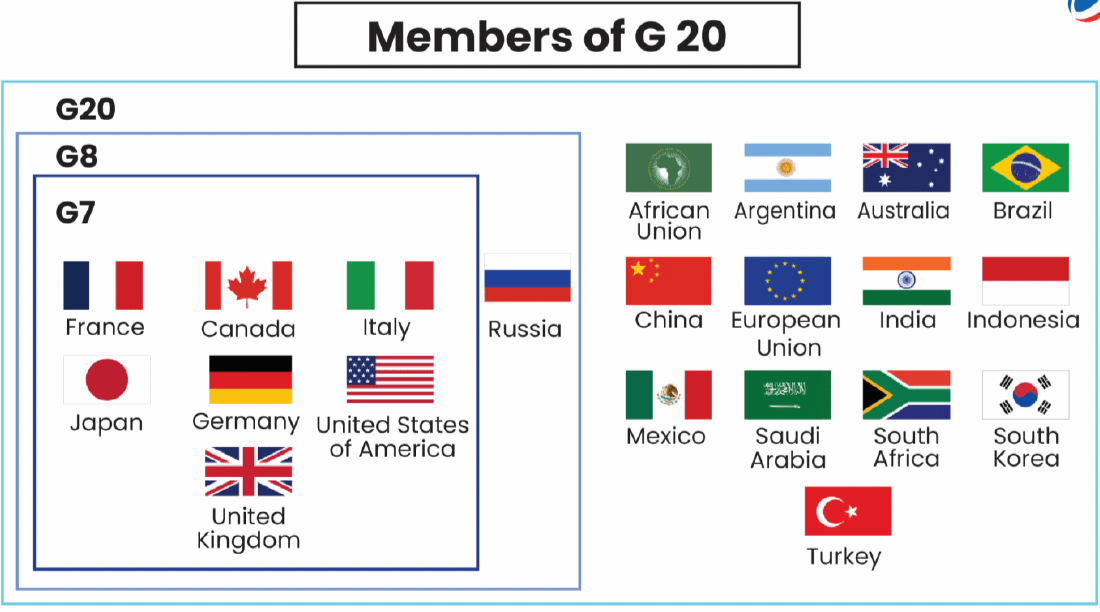
- Establishment: Formed through an MoU signed at the G20 Summit (2023) in New Delhi by India, the European Union, France, Germany, Italy, Saudi Arabia, UAE, and the US.
- Aim: A multi-modal connectivity initiative to develop infrastructure such as ports, railways, roads, sea routes, and pipelines to facilitate trade between India, the Arabian Peninsula, the Mediterranean region, and Europe.
- Structure:
- Eastern Corridor: Links India with the Gulf.
- Northern Corridor: Connects the Gulf with Europe.
- Global Partnership: IMEC is part of the Partnership for Global Infrastructure and Investment (PGII), launched at the 2021 G7 Summit in the UK as a countermeasure to China’s Belt and Road Initiative (BRI).
Implementation Status of IMEC
- Infrastructure Progress: Advancements include the UAE-to-Israel railway network and expansion of Haifa Port in Israel.
- Sectoral Development: Progress in connectivity, but other areas—such as clean energy exports, undersea fiber-optic cables, energy grids, and clean technology cooperation—face delays due to instability in West Asia.
- Trade Processes: The ‘Virtual Trade Corridor (VTC)’ by India and the UAE aims to simplify administrative processes, reduce logistics costs, and enhance trade efficiency.
- Inclusive Approach: The IMEC framework is open to extending connectivity benefits to regional countries like Qatar, Oman, Egypt, Türkiye, and Iraq.
Global Significance of IMEC
- Connectivity Diversification: Offers an alternative trade route, enhancing physical, digital, and green energy connectivity, while promoting plurilateral collaboration.
- Economic Prosperity: Facilitates energy and digital communication flows among participating nations, whose combined GDP is around $47 trillion, nearly 40% of global GDP.
- Geostrategic Benefits: Reduces reliance on congested maritime chokepoints like the Suez Canal, enhancing trade resilience.
- Geoeconomic Impacts: Encourages economic integration and interdependence, fostering peace in the conflict-prone Middle East.
- Geopolitical Counterbalance: Provides an alternative to China’s growing influence in the Middle East through its BRI.
Other Key Regional Corridors
- International North–South Transport Corridor (INSTC):
- Description: A 7,200 km trade route proposed in 2000 by India, Russia, and Iran to enhance connectivity.
- Members: 13 members including India, Iran, Russia, and others. Bulgaria is an observer.
- China’s Belt and Road Initiative (BRI):
- Launch: 2013 initiative connecting Asia with Africa and Europe via:
- Silk Road Economic Belt: Land route linking China to South Asia, Central Asia, and Europe.
- Maritime Silk Road: Sea route connecting China’s coastal regions to Africa, the Middle East, and Europe.
- Launch: 2013 initiative connecting Asia with Africa and Europe via:
- Trans-Caspian International Transport Route (TITR):
- Also Known As: The ‘Middle Corridor’.
- Launch: 2017.
- Route: Multi-modal pathway connecting China to Europe via Central Asia, the Caucasus, Türkiye, and Eastern Europe.
INDIA-ITALY RELATIONS
News Context
The Prime Ministers of India and Italy recently met on the sidelines of the G20 Summit in Rio de Janeiro, Brazil. During the meeting, they announced the Joint Strategic Action Plan 2025–2029 to strengthen bilateral relations.
Timeline of India-Italy Relations
- 1947: Diplomatic relations established.
- 2012: Enrica Lexie case involving the shooting of Indian fishermen by Italian marines.
- 2013: AgustaWestland VVIP chopper scam.
- 2021: Strategic Partnership on Energy Transition established.
- 2023: Strategic Partnership Agreement and Defence Cooperation Agreement signed.
Key Highlights of the India-Italy Joint Strategic Action Plan 2025–2029
- Economic Cooperation and Investments:
- Strengthen ties in automotive, semiconductors, infrastructure, and advanced manufacturing sectors.
- Promote bilateral trade and investments through platforms like the Joint Commission for Economic Cooperation and the Joint Working Group on Food Processing.
- Connectivity: Enhance collaboration on maritime and land infrastructure under the India-Middle East-Europe Economic Corridor (IMEC) framework.
- Science and Technology:
- Expand cooperation in critical technologies, including AI and digitalization, through the 2025–27 Executive Programme for Scientific and Technological Cooperation.
- Launch the Indo-Italian Innovation and Incubation Exchange Program to encourage academic and industrial partnerships.
- Space Sector: Deepen collaboration between the Indian Space Research Organisation (ISRO) and the Italian Space Agency (ASI) on Earth observation, heliophysics, and lunar exploration.
- Energy Transition: Organize "Tech Summits" and strengthen partnerships like the Global Biofuels Alliance and International Solar Alliance.
- Defense Cooperation:
- Annual Joint Defense Consultative (JDC) meetings and Joint Staff Talks (JST) to enhance defense collaboration.
- Explore a Defense Industrial Roadmap to bolster defense manufacturing partnerships.
India-Italy Relations: Overview
Historical Connect
- Italian port cities played a key role in the ancient spice trade routes.
- Venetian merchant Marco Polo visited India in the 13th century.
Strategic Relations
- 2023: Italy became a Strategic Partner, enhancing ties in the Indo-Pacific and Mediterranean regions.
- Italy joined India-led initiatives like the Indo-Pacific Oceans Initiative (IPOI) and IMEC.
- Exited China’s Belt and Road Initiative (BRI) in 2023, aligning with India’s stance against China’s dominance in Europe.
Economic Relations
- Italy is India’s 4th largest trading partner in the EU, after Germany, Belgium, and the Netherlands.
- Bilateral trade (2023–24): USD 14.56 billion (India’s exports: USD 8.76 billion).
- Italy is the 18th largest FDI source into India (April 2000–June 2024).
Defence and Security
- Signed the Defence Cooperation Agreement (2023) to enhance research, industrial cooperation, and maritime domain awareness.
- Collaborate on counter-terrorism through forums like the UN, GCTF, and FATF.
Environment and Climate
- Italy participates in India-led initiatives like the International Solar Alliance (ISA), Coalition for Disaster Resilient Infrastructure (CDRI), and Global Biofuels Alliance (GBA).
People-to-People Ties
- Italy has the second-largest Indian diaspora in the EU (~200,000, including Persons of Indian Origin).
- Signed a Migration and Mobility Agreement (2023) to allow Indian students temporary residence for up to 12 months post-graduation.
Other Emerging Areas
- Recent Blue and Space Economy conference discussed cooperation in the space sector and sustainable use of ocean resources.
- Past collaborations include the Chandrayaan-2 mission, which carried a laser instrument developed by the Italian Space Agency.
INDIA-SPAIN RELATIONS
News Context
The President of Spain recently visited India on a bilateral mission, accompanied by a business delegation, to strengthen cooperation between the two countries.
Key Outcomes of the Visit
- Defense Manufacturing:
- Joint inauguration of the C295 Aircraft Final Assembly Line in Vadodara by Tata Advanced Systems in collaboration with Airbus Spain.
- 40 aircraft will be produced in India, while 16 will be delivered by August 2025.
- This initiative positions India as a future aviation hub for both domestic and export markets.
- Investment Facilitation: Creation of a Fast Track Mechanism between India’s DPIIT and Spain’s Directorate General of International Trade and Investment to boost bilateral investments.
- Consular Expansion:
- Spain will open a Consulate in Bengaluru.
- India will operationalize its Consulate in Barcelona.
- Cultural Cooperation:
- Launch of the Cultural Exchange Programme for 2024–2028.
- Declaration of 2026 as the India-Spain Year of Culture, Tourism, and Artificial Intelligence.
- Establishment of ICCR Chairs for Hindi and Indian Studies at the University of Valladolid.
Other Highlights
- Commitment to advancing EU-India agreements on Free Trade, Investment Protection, and Geographical Indications.
- Strengthening connectivity via the EU-India Connectivity Partnership and the India-Middle East-Europe Economic Corridor (IMEEC).
- Focus on a free, inclusive Indo-Pacific and countering terrorism through UN resolutions.
India–Spain Bilateral Relations
- Diplomatic Relations:
- Established in 1956, with enhanced collaboration since 2017 under the Association for Peace, Growth, and Innovation (APCI), focusing on security, defense, and technology.
- Spain serves as a vital EU partner for India’s strategic engagement with Europe.
- Multilateral Cooperation: Spain supports India’s membership in international security frameworks such as the Missile Technology Control Regime (MTCR).
- Trade and Economic Relations:
- Spain is India’s 6th largest trade partner in Europe, with bilateral trade valued at $9.9 billion in 2023.
- Spain ranks as the 16th largest investor in India, with $4.2 billion in FDI (April 2000–June 2024), with over 280 Spanish companies operating in India.
- Indian companies have invested over $900 million in Spain, mainly in IT services, pharmaceuticals, and logistics.
- Defense and Security Cooperation:
- In 2020, India and Spain signed an agreement for the co-development of next-generation naval ships.
- Joint activities include Spain’s participation in the EU-India joint naval exercise (2023) and Passage Exercises (PASSEX) with the Indian Navy.
- Cultural Exchange:
- Around 75,000 Indians reside in Spain.
- The Indian Council for Cultural Relations (ICCR) promotes yoga and classical dance in Spain.
INDIAN CHEMICAL COUNCIL WINS OPCW-THE HAGUE AWARD
- The 2024 OPCW-The Hague Award has been presented to the Indian Chemical Council (ICC).
Key Highlights:
- Recognition by OPCW: The Organisation for the Prohibition of Chemical Weapons (OPCW) awarded the ICC for its contributions to chemical safety and compliance with the Chemical Weapons Convention (CWC).
- First-Time Recognition: This is the first instance where a chemical industry body has been acknowledged with this prestigious award.
- Hague Award Background: Established in 2014 to honor efforts aligned with OPCW’s mission to achieve the goals of the Chemical Weapons Convention.
About the Chemical Weapons Convention (CWC):
- Establishment and Membership:
- Came into effect in 1997 and currently includes 193 State Parties.
- India is an original signatory to the Convention.
- Objective: To eradicate weapons of mass destruction by prohibiting the development, production, acquisition, stockpiling, transfer, or use of chemical weapons.
- Implementation:
- The OPCW serves as the implementing body, working towards a world free of chemical weapons.
- Recognitions: OPCW received the Nobel Peace Prize in 2013.
- Definition of Chemical Weapons:
- Toxic chemicals intended to cause harm or death.
- Includes munitions, devices, or equipment designed to weaponize toxic chemicals.
- India’s Implementation Mechanism:
- The National Authority Chemical Weapons Convention (NACWC) is responsible for enforcing the CWC in India.
- Established under the Chemical Weapons Convention Act, 2000.
Indian Chemical Council (ICC):
- Origin: Founded in 1938 in Mumbai to support and promote the growth of India’s chemical industry.
- Overview:
- Serves as the apex national body for all branches of the chemical sector, including organic/inorganic chemicals, plastics, and petrochemicals.
- Represents over 80% of India’s chemical industry.
- Plays a pivotal role in an industry valued at $220 billion.
INTERNATIONAL COOPERATIVE ALLIANCE
- The International Cooperative Alliance (ICA) Global Cooperative Conference is being hosted in India for the first time in its 130-year history.
Key Highlights:
- Theme: "Cooperatives Build Prosperity for All," which resonates with the Indian Government's vision of “Sahkar Se Samriddhi” (Prosperity through Cooperation).
About ICA:
- Established: 1895 in London.
- Purpose: A global organization dedicated to uniting, representing, and supporting cooperatives worldwide.
- Membership: Comprises 306 member organizations from 105 countries.
- Role: Acts as the apex body of the cooperative movement, offering a platform for global collaboration, knowledge sharing, and coordinated efforts.
THE GROUP OF TWENTY (G20) SUMMIT
News Context
The 18th G20 Summit took place in Rio de Janeiro, Brazil, under the theme "Building a Just World and a Sustainable Planet."
About G20 Rio de Janeiro
- Significant First: The summit marked the African Union's (AU) debut as a full member of the G20.
- Host: Brazil, the third Global South host following Indonesia (2022) and India (2023).
- The next summit will be hosted by South Africa. Together, Brazil, India, and South Africa form the G20 Troika, representing the Global South and also part of IBSA and BRICS.
Key Takeaways from the Summit: The G20 Rio de Janeiro Leaders’ Declaration
Social Inclusion and Poverty Eradication
- Global Alliance against Hunger and Poverty: Launched to address poverty and hunger (details in the box).
- Global Coalition for Local and Regional Production, Innovation, and Equitable Access: Aimed at equitable access to vaccines, diagnostics, and health technologies for neglected diseases and vulnerable populations.
- Basic Needs and Equality: G20 committed to mobilizing resources for sanitation, drinking water, combating racism, and promoting racial equality to address inequalities.
Sustainable Development and Climate Action
- Task Force on Climate Change Mobilization: Established to tackle barriers preventing private capital flows for climate action, particularly in developing countries.
Global Governance Reforms
- Endorsed the G20 roadmap to enhance the efficiency and scale of multilateral development banks (MDBs).
Tax on Wealthy Individuals
- For the first time, leaders agreed to work cooperatively to ensure ultra-high-net-worth individuals are taxed effectively.
About the Global Alliance Against Hunger and Poverty
- Need: By 2030, an estimated 622 million people will live in extreme poverty, and 582 million will face hunger—numbers comparable to 2015.
- Aim: Accelerate efforts to eradicate poverty and hunger globally.
- Goals:
- Reach 500 million people with cash transfer programs in low-income nations by 2030.
- Provide quality school meals to an additional 150 million children in vulnerable countries.
- Approach: Operates through voluntary partnerships and commitments.
- Membership: Includes 148 members (82 countries, AU, EU, etc.), including India.
- Funding: Relies on connecting countries with donors and technical support rather than a dedicated fund.
Pillars of the Alliance:
- National Pillar: Domestic policies, programs, and cross-country collaborations.
- Financial Support Pillar: Includes multilateral funding, climate financing, philanthropy, and innovative mechanisms.
- Knowledge Pillar: Provides technical assistance, capacity building, and knowledge sharing.
About G20
- Origins: Established in 1999 as a forum for finance ministers and central bank governors after the Asian financial crisis. It was elevated to the level of Heads of State/Government following the 2007 global economic crisis.
- Purpose: Shapes and strengthens global governance in major international economic issues.
- Summit: Held annually, under a rotating presidency supported by the Troika (previous, current, and incoming presidencies).
- Representation: Prior to the AU’s inclusion, the G20 represented 85% of global GDP, 75% of global trade, and two-thirds of the world’s population.
Challenges Facing the G20
Representational Inequity
- Reluctance to rename the forum "G21" after AU's inclusion underscores barriers to equitable representation.
Diplomatic Fragmentation
- Absences of leaders like the Russian President and Saudi Crown Prince highlight divisions within the G20.
- Disparities in approaches to sustainable development and taxation, with key economies like the US and Germany opposing wealth tax proposals.
Unrealized Governance Goals
- Global institutional reforms (e.g., UN Security Council, World Bank) remain unaddressed.
- Limited progress on climate goals despite coinciding with COP29.
Structural and Operational Weaknesses
- Non-binding decisions reduce enforceability.
- Operates without a formal charter, limiting accountability and public scrutiny.
Competition from Other Groups
- Organizations like BRICS and SCO challenge the G20's influence.
Recommendations to Enhance G20 Effectiveness
- Establish a Permanent Secretariat: To ensure policy continuity and provide strategic insights.
- Clear Division of Roles:
- G20 to focus on global public goods like monetary stability, trade, poverty reduction, and pandemic control.
- G7 to focus on geopolitical issues.
- Empower Middle-Income Members: Promote active diplomatic roles for countries like Argentina, Brazil, India, and South Africa.
- Introduce Accountability Frameworks: Track commitments, monitor implementation, and conduct transparent annual performance reviews.
- Coordinate with UN Agencies: Work with WHO, UNEP, and UNDP to maximize impact and avoid duplication.
- Prioritize Global South Issues: Advocate equitable governance, reducing G7 dominance in institutions like IMF and World Bank.
TRITON ISLAND
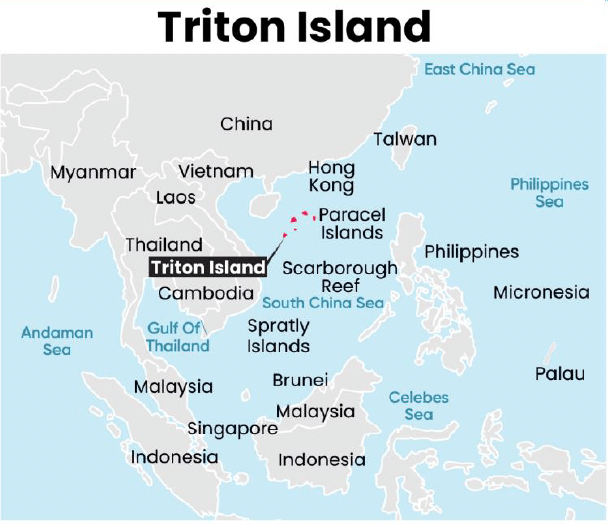
- Recent satellite images highlight a substantial Chinese military buildup on Triton Island.
About Triton Island
- Location: Situated in the Paracel Islands, also referred to as the Xisha Islands by China, in the South China Sea.
- Control and Claims: While under China’s effective control, the island is also claimed by Vietnam and Taiwan.
- Historical Context: China gained control of the Paracel Islands from South Vietnam after a naval confrontation in 1974.
- Strategic Significance: The military expansion on Triton Island marks a notable escalation in China’s efforts to assert military dominance in the South China Sea.
U.S., JAPAN AND SOUTH KOREA SIGNED DIGI FRAMEWORK
Digital Infrastructure Growth Initiative for India Framework (DiGi Framework)
- The DiGi Framework aims to foster collaboration between the United States, Japan, the Republic of Korea, and India to advance digital infrastructure development.
Key Highlights:
- Objective: Strengthen partnerships with the Indian private sector to enhance digital infrastructure.
- Partner Agencies:
- U.S. International Development Finance Corporation (DFC)
- Japan Bank for International Cooperation (JBIC)
- Export-Import Bank of Korea (Korea Eximbank)
- Focus Areas: Projects in the information and communications technology (ICT) sector, including:
- 5G and Open RAN
- Submarine cables and optical fiber networks
- Data centers and smart city initiatives
- E-commerce, artificial intelligence (AI), and quantum technology
Digital Public Infrastructure (DPI) in India
- India has pioneered the development of foundational Digital Public Infrastructures (DPIs), collectively known as India Stack, which includes:
- Digital Identification: Aadhaar
- Real-Time Payments: Unified Payments Interface (UPI)
- Data Sharing Framework: Data Empowerment and Protection Architecture (DEPA)
Significance of DPI:
- Inclusive Development:
- Achieved 80% financial inclusion between 2018-2023.
- Enabled direct benefit transfers, supporting 87% of poor households during the COVID-19 pandemic.
- Economic Growth: Potential to increase economic growth by 33% with DPI implementation in the financial sector.
- Emission Reduction: DPI in the climate sector can fast-track emissions control by 5-10 years through applications in carbon offsets, land mapping, and weather monitoring.
India’s Efforts to Globalize DPIs
- India is actively promoting the adoption of DPIs globally through various initiatives:
- US-India Global Digital Development Partnership: Promotes the responsible use of emerging digital technologies in Asia and Africa.
- G20 Framework for Systems of DPI: Established under India’s G20 leadership, outlining principles for DPI design and deployment.
- Virtual Global DPI Repository: A platform being developed by India to share DPI-focused tools, resources, and global experiences.