
PT 360 Economy August 2024: UPSC 2025
Tip: For reading free UPSC Prelims 2025 Current Affairs for Economy online, use the Next/Previous buttons or refer to the Sidebar. If you are using a mobile device, click the menu icon (three horizontal lines) to access the sidebar.
Click here for Printable PDF and Lectures.

BANKING LAWS (AMENDMENT) BILL, 2024 INTRODUCED IN LOK SABHA
- An amendment has been introduced to enhance governance within the banking sector, which has evolved over the years.
- The proposed bill aims to amend several acts, including the RBI Act of 1934, the Banking Regulation Act of 1949, the SBI Act of 1955, and both the Banking Companies (Acquisition and Transfer of Undertakings) Acts of 1970 and 1980.
Key Provisions of the Bill
- Increased Nominees: Depositors will now be permitted to nominate up to four nominees at the same time (with specified shares) and in succession.
- Successive Nomination: Nominees will be arranged in a specific order and claims for funds will be processed according to that order.
- Investor Education and Protection Fund (IEPF): This allows for the transfer of unclaimed dividends, shares, and interest or redemption of bonds to the IEPF after they have remained unclaimed for seven years.
- Individuals will be able to claim transfers or refunds from the IEPF.
- Increased Shareholding Threshold: The threshold for shareholding has been raised from ₹5 lakh to ₹2 crore for eligibility in directorships.
- Provisions for Cooperative Banks: The tenure of directors in cooperative banks has been extended from eight years to ten years.
Significance
- Ensures consistency in reporting to the RBI.
- Aims to decrease the amount of unclaimed deposits (which exceeded ₹42,000 crore in March 2023) by allowing for a greater number of nominees.
- Unclaimed deposits refer to balances in savings or current accounts that haven’t been operated for ten years or term deposits not claimed within ten years of maturity.
Investor Education and Protection Fund (IEPF) Established under the Companies Act of 1956 through the Companies (Amendment) Act of 1999, the IEPF aims to raise investor awareness and protect their interests. The Investor Education and Protection Fund Authority (IEPFA), under the Ministry of Corporate Affairs, oversees the administration of the IEPF.
BHARATIYA VAYUYAN VIDHEYAK 2024 INTRODUCED IN THE LOK SABHA
- The new legislation will replace the 90-year-old Aircraft Act of 1934, which governs the manufacture, possession, use, operation, sale, import, and export of aircraft.
Key Highlights of the Bill
- Objective: To clarify the existing law and facilitate business and manufacturing within the aviation sector.
- Key Provisions:
- Grants the Central Government the authority to create rules for implementing international civil aviation conventions, such as the Chicago Convention (1944) and the International Telecommunication Convention (1932).
- Enhances the powers of the Directorate General of Civil Aviation (DGCA), the Bureau of Civil Aviation Security (BCAS), and the Aircraft Accident Investigation Bureau (AAIB).
- Authorizes the Central Government to issue emergency orders (such as aircraft detainment) for public safety.
Significance of the Bill
- The regulation of aircraft design and manufacturing supports the Atmanirbhar Bharat initiative.
- It encompasses drones, unmanned aerial vehicles (UAVs), flying taxis, and specific electronic gliders.
- It addresses the demands of the swiftly expanding aviation market, with ICRA projecting an 8-13% growth in domestic air passenger traffic for FY2024.
CREATIVE ECONOMY
News Context
The Indian Chamber of Commerce has launched the All-India Initiative on Creative Economy (AIICE) to harness the immense potential of India's creative industries.
Creative Economy or Orange Economy:
- This is a developing concept centered on creative assets that can drive economic growth and development.
- It primarily involves knowledge-based economic activities that form the foundation of 'creative industries.'
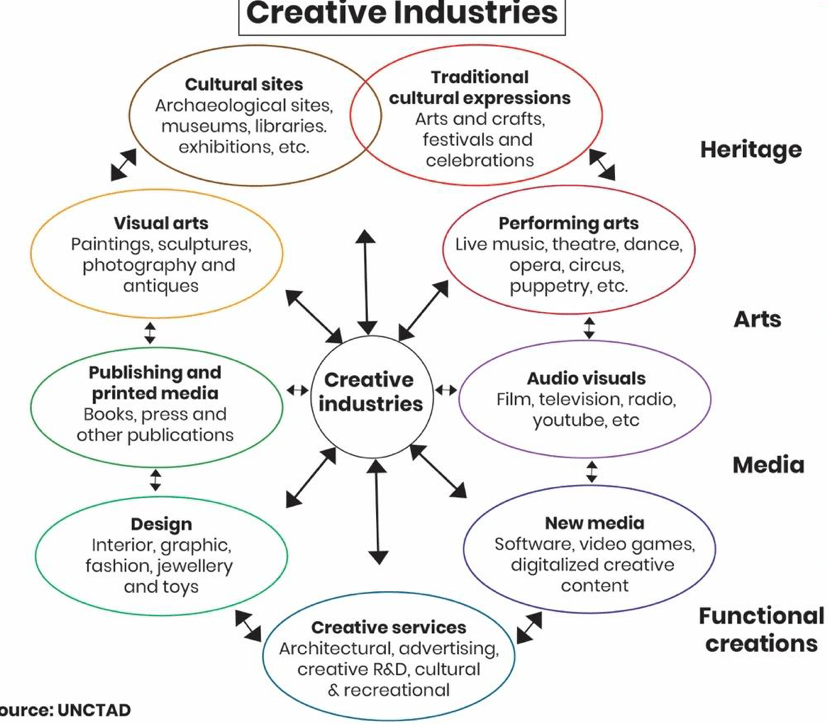
- Creative industries encompass the processes of creating, producing, and distributing goods and services, relying on creativity and intellectual capital as key resources (see infographic).
CLIMATE RESILIENT AND BIOFORTIFIED VARIETIES OF CROPS RELEASED
- The Prime Minister has introduced 109 new varieties of crops that are high-yielding, resilient to climate change, and biofortified.
- These varieties were developed by the Indian Council of Agricultural Research (ICAR) and represent a practical application of the "lab to land" initiative.
- ICAR's crop improvement program focuses on creating new crop varieties and hybrids that are adaptable and produce higher yields.
- The crop improvement process employs various strategies, including:
- Genomics-assisted selection
- Phenomics, which involves the systematic measurement and analysis of traits
- Traditional breeding and biotechnology techniques like genetic engineering and genome editing.
The Need for Crop Improvement
- Addressing Climate Change: Seeds that are resilient to climate change can produce good harvests even under challenging weather conditions, such as heatwaves and droughts (e.g., Bt cotton). These crops also help minimize losses from diseases and pests.
- Ensuring Food Security: Agricultural yields are expected to decline by 16% by 2030, according to the World Economic Forum.
- Promoting Nutritional Security: The government aims to encourage the cultivation of biofortified crops by integrating them into programs like the Mid-Day Meal (PM Poshan Scheme), with the goal of eliminating malnutrition in India. Additionally, these biofortified varieties are cost-effective, as they do not require extra expenses for producing enriched food grains (e.g., vitamin A-rich maize).
- Increasing Farmers' Income: The availability of high-yielding and adaptable crop varieties helps boost farmers' incomes.
About Biofortification
- Biofortification is the method of enhancing the nutritional value of food crops, such as increasing the iron and zinc content in wheat grains. Unlike traditional fortification, which adds nutrients during processing, biofortification increases nutrient levels during the growth of the crops.
About the Lab to Land Program
- This program facilitates the transfer of advanced agricultural technologies developed by research institutions and agricultural universities to farmers.
DIGITAL AGRICULTURE MISSION
News Context
The Union Cabinet has recently sanctioned the Digital Agriculture Mission, which has a total budget of ₹2,817 Crore.
Overview of the Digital Agriculture Mission (DAM)
- This initiative serves as a comprehensive framework built on the foundation of Digital Public Infrastructure (DPI) and focuses on leveraging technology to enhance the lives of farmers.
- It aligns with the announcements made in the Union Budgets for 2023-24 and 2024-25 regarding the implementation of DPI in the agricultural sector.
Initiatives to Foster Digital Agriculture
- India Digital Ecosystem of Agriculture (IDEA) Framework: This aims to develop an integrated database of farmers to facilitate the creation of innovative agricultural solutions.
- National e-Governance Plan in Agriculture (NeGP-A): This initiative seeks to provide farmers with free access to relevant farming information.
- Market-Based Interventions: Initiatives such as e-NAM and AGMARKNET support this effort.
- Drones for Land Mapping: Utilized in the Swamitva Scheme and the Sensor-based Smart Agriculture (SENSAGRI) program, drones assist in mapping agricultural lands.
- National Strategy on AI: Acknowledges agriculture as a key priority sector as per Niti Aayog.
- Applications to Support Farmers: Tools such as the PM-KISAN Mobile App, Kisan Suvidha App, and the HORTNET project for horticultural advancement contribute to this effort.
Related News
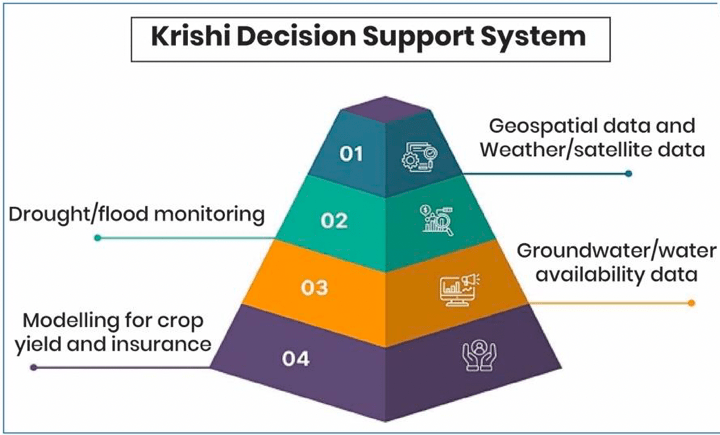
- The Union Minister of State for Agriculture introduced the Krishi-Decision Support System (Krishi-DSS), a geo-spatial platform designed to provide real-time insights into crop conditions, weather patterns, water resources, and soil health. This system was developed by the Union Ministry of Agriculture and Farmers Welfare in collaboration with the Department of Space, utilizing RISAT-1A and the Visualization of Earth Observation Data and Archival System (VEDAS).
Application of Space Technology in Agriculture
- Remote Sensing and Imagery: Used for early detection of pests and diseases and land use mapping.
- Global Positioning System (GPS): Supports precision farming and livestock tracking.
- Communication Technologies: Facilitate real-time data dissemination.
- Weather Forecasting and Climate Modeling: Enables early warning systems and monitoring of climate change impacts.
Other Initiatives Using Space Technology in Agriculture
- FASAL Project: Forecasts agricultural output through the integration of space data, agro-meteorology, and land observations.
- CHAMAN Project: A coordinated program focused on horticultural assessment and management through geoinformatics.
- KISAN Project: Enhances yield estimation using space technology and geoinformatics for crop insurance purposes.
DEBT-FOR-DEVELOPMENT SWAPS (DEBT SWAPS)
- The International Monetary Fund (IMF) has published a framework paper titled "Debt for Development Swaps."
Overview of Debt Swaps:
- These agreements involve a government and one or more creditors, where sovereign debt is exchanged for new liabilities that require a commitment to fund specific development objectives.
- These objectives can encompass areas such as environmental conservation, climate initiatives, education, nutrition, and refugee assistance.
- When assessing the suitability of these swaps, factors such as the country’s initial debt conditions and the net financial advantages must be evaluated.
- Debt swaps fall into two categories: bilateral swaps, which involve the cancellation of official bilateral debt, and commercial swaps, which target debt owed to private creditors.
FRONT RUNNING
SEBI Implements Regulations for Mutual Funds to Combat Fraudulent Transactions and Front Running
Front Running
- This term describes the practice of using confidential information to buy or sell securities, or to engage in options or futures contracts, ahead of a large order. (Securities and Exchange Board of India (SEBI))
- Such activities damage trust in financial markets and create an unfair advantage for certain investors.
- In India, this practice is considered illegal.
GLOBAL EMPLOYMENT TRENDS (GET) FOR YOUTH 2024 REPORT
- The International Labour Organization's report marks the 20th anniversary of the GET for Youth initiative, highlighting the progress, obstacles, and future prospects in youth employment.
Key Highlights of the Report:
- Post-COVID Recovery: The global youth unemployment rate in 2023 stands at 13%, the lowest in 15 years, with 64.9 million young individuals unemployed, the least since 2000.
- NEET Status: In 2023, 20.4% of youth fall into the NEET category, reflecting a wider exclusion from the labor market, with women comprising two-thirds of this group.
- Global Challenges:
- Inequalities of Opportunity: Four out of five young workers are employed in regular paid jobs in high-income nations, whereas only one in five in low-income countries enjoys the same.
- Regional Disparities: Africa is expected to see growth in its youth labor force by 2050, while other regions will experience a decline. Additionally, one-third of youth in the Arab states and North Africa are unemployed.
- Concerns for Youth Well-Being: Many young people express anxiety about job security, the economic climate, and the lack of social mobility between generations.
- Educational Mismatch: In developing countries, two-thirds of young workers possess qualifications that do not align with their job roles.
Recommendations from the Report:
- Improve education and training to facilitate smoother transitions from school to work and to address skill mismatches.
- Design labor market policies that specifically assist disadvantaged youth.
- Encourage entrepreneurship and self-employment opportunities for young people.
- Increase focus on job creation through gender-sensitive macroeconomic and sectoral strategies.
- Foster youth participation in policymaking, enhance international collaboration, and strengthen public-private partnerships.
GRAIN ATM
- The World Food Programme (WFP) and the Government of Odisha have launched the 24/7 'Grain ATM' in Bhubaneswar.
- Named 'Annapurti,' this initiative is India’s first round-the-clock 'Grain ATM' designed to ensure beneficiaries can access food grains anytime under the National Food Security Act (NFSA).
- The NFSA provides subsidized food grains to approximately 75% of the rural population and 50% of the urban population in India.
About Annapurti:
- It is a product developed in India by WFP India.
- The ATM dispenses selected grains (wheat, rice, or millet) to beneficiaries after verifying their biometric information.
- It aims to ensure universal access to food grains and can reduce waiting times by 70%.
- It is energy-efficient and can be linked to solar panels for automatic refilling.
- Recognized as one of the top five innovative solutions for combating hunger at the 2022 WFP Innovation Awards.
About the UN World Food Programme (WFP):
- Genesis: Founded in 1961 by the United Nations to combat global hunger, focusing on achieving Sustainable Development Goal 2 (Zero Hunger).
- Objective: The largest humanitarian organization dedicated to saving lives during emergencies and delivering food assistance.
- Achievement: Awarded the Nobel Peace Prize in 2020.
- Funding: Supported by voluntary contributions from governments, corporations, and individuals.
- Reports: Collaborates with organizations like FAO and UNICEF to produce the State of Food Security and Nutrition in the World reports.
HORTICULTURE SECTOR IN INDIA
News Context
The Cabinet has sanctioned a scheme for the sustainable development of horticulture, with a total budget of ₹1,129.30 crore.
Details on the Initiative:
- This scheme aims to enhance farmers' income from horticulture and includes:
- Tropical, subtropical, and temperate horticultural crops
- Root, tuber, bulbous, and arid crops
- Vegetable, floriculture, and mushroom crops
- Plantation crops, spices, and medicinal and aromatic plants
- Additionally, the government has recently green-lit a ₹1,766-crore 'Clean Plant Programme' as part of the Mission for Integrated Development of Horticulture (MIDH) to further support the horticulture sector.
Overview of the Clean Plant Programme (CPP):
- Objective: To promote sustainable, eco-friendly agricultural practices while decreasing reliance on imported planting materials.
- The initiative is expected to strengthen India’s horticulture sector, aligning with the Mission LiFE and One Health initiatives.
- Implementing Body: The National Horticulture Board will work in collaboration with the Indian Council of Agricultural Research.
- Key Components:
- Establishment of 9 state-of-the-art Clean Plant Centers (CPCs) that will feature advanced diagnostic facilities and tissue culture laboratories.
- A Certification Framework supported by a regulatory framework under the Seeds Act of 1966.
- Assistance for the development of infrastructure for large-scale nurseries.
Key Advantages of Clean Plant Production (CPP)
- Farmers: Access to high-quality, virus-free planting materials boosts crop yields and farmers' incomes.
- Nurseries: Efficient certification processes and infrastructure support the propagation of clean planting materials.
- Consumers: Enjoy superior produce that is virus-free, improving taste, appearance, and nutritional benefits.
- Exports: Expanding market opportunities enhance India’s participation in the global fruit trade.
Overview of the Horticulture Sector
- The horticulture sector is extensive and varied, covering the cultivation, production, processing, and marketing of fruits, vegetables, flowers, and ornamental plants.
- The main branches of horticulture include Pomology (fruit cultivation, including Viticulture for grapes), Olericulture (vegetable cultivation), Floriculture (flower and ornamental plant cultivation), and Arboriculture (tree and shrub cultivation).
Current Status of India's Horticulture Sector
- Production: In the 2022-23 period, India produced 355.48 million tonnes of horticultural products, constituting 13.1% of the total cropped area. Fruits and vegetables make up nearly 90% of this production.
- Contribution to Agriculture: Horticulture contributes 33% to the Gross Value Added (GVA) of agriculture.
- Global Standing: India is the second-largest producer of fruits and vegetables globally, following China. According to the FAO (2022), India is the leading producer of onions, ginger, and okra, and ranks second for potatoes, cauliflowers, brinjals, and cabbages. For fruits, India ranks first in banana, mango, and papaya production.
- Exports: India ranks 14th in vegetable exports and 23rd in fruit exports.
Initiatives for the Horticulture Sector
- Mission for Integrated Development of Horticulture (2014): A centrally sponsored scheme aimed at the comprehensive growth of the horticulture sector, comprising two sub-schemes:
- National Horticulture Mission (2005-06): Focuses on the holistic development of horticulture through a cluster approach, ensuring both forward and backward linkages via the Horticulture Cluster Development Programme.
- Horticulture Mission for North East and Himalayan States.
- Financial Support: The Agriculture Ministry has allocated ₹18,000 crores for establishing 100 export-oriented horticulture clusters.
- Research Program: The Coordinated Program on Horticulture Assessment and Management using Geo-informatics (CHAMAN) aims to develop a scientific methodology for estimating area and production of horticultural crops.
- Capital Investment Subsidy Scheme: Supports the construction, expansion, and modernization of cold storage facilities for horticultural products.
- Commercial Cultivation Advances: In the 2022-23 period, 347 varieties and hybrids of 44 crops were launched, and 99 varieties of horticultural crops received notification for commercial cultivation.
LIVESTOCK SECTOR IN INDIA
News Context
- The Cabinet has approved a sustainable livestock health and production scheme with a total budget of ₹1,702 crore, aimed at increasing farmers' income from livestock and dairy.
- The scheme includes:
- Animal health management and veterinary education
- Development of dairy production and technology
- Management, production, and improvement of animal genetic resources
- Animal nutrition and the development of small ruminants
Status of the Livestock Sector in India
- India has the largest livestock population in the world.
- It is the top producer of buffalo meat and the second-largest producer of goat meat.
Initiatives for India’s Livestock Sector
- Rashtriya Gokul Mission: Aims at developing and conserving indigenous breeds through selective breeding and genetic enhancement.
- National Livestock Mission: Seeks to improve both the quantity and quality of livestock production systems while building capacity among stakeholders.
- Extension of the Kisan Credit Card (KCC) to the livestock sector and the creation of an Animal Health Infrastructure Development Fund.
- Dairy Development Programs: Initiatives such as the National Programme for Dairy Development (NPDD) and the Dairy Entrepreneurship Development Scheme (DEDS) focus on modernizing the dairy industry and fostering entrepreneurship.
- Livestock Health and Disease Control Programs: This includes the National Animal Disease Control Programme (NADCP) for Foot and Mouth Disease (FMD) and Brucellosis, along with the Livestock Health and Disease Control Scheme, which aims to enhance disease surveillance and diagnostic services.
LONG-TERM CAPITAL GAINS (LTCG) & INDEXATION BENEFIT
News Context
The Lok Sabha has passed the Finance Bill for 2024, which modifies the Long Term Capital Gain (LTCG) tax provisions concerning immovable properties.
Additional Details
- This amendment follows a proposal in the 2024-25 Budget to eliminate indexation benefits when calculating LTCG from the sale of immovable properties.
- While the amendment maintains the removal of indexation benefits, it includes a grandfathering clause for properties acquired before July 23, 2024.
Key Features of the Amendment Act
- Options for Taxpayers: The amendment provides taxpayers with a choice between two tax schemes:
- Old Scheme: Pay a 20% LTCG tax with indexation benefits for properties acquired before July 23, 2024.
- New Scheme: Pay a reduced LTCG tax of 12.5% without indexation (down from the previous 20%).
- Properties purchased after July 23, 2024, will only qualify for the new scheme.
- Increased Exemption: The exemption limit for LTCG on listed equities, equity-oriented mutual funds, and business trust units has risen from ₹1 lakh to ₹1.25 lakh.
- Additionally, the tax rate for these assets has increased from 10% to 12.5%.
Understanding Long-Term Capital Gains (LTCG) Tax
- Capital gains tax is charged on the profits earned from selling capital assets such as real estate, stocks, and bonds.
- There are two categories of capital gains tax: Long-Term Capital Gains (LTCG) Tax and Short-Term Capital Gains (STCG) Tax.
- LTCG Tax applies to profits from assets held for extended periods, with specific holding periods:
- More than 12 months for listed equity shares and equity-oriented mutual funds.
- 24 months for unlisted equity shares and immovable assets like houses or land.
- 36 months for movable assets such as gold.
- Taxation of LTCGs:
- For equity shares and mutual funds, LTCG exceeding ₹1.25 lakh is taxed at 12.5% without indexation benefits.
- For other assets like property, LTCG is taxed as per the latest amendments.
Understanding Indexation and Its Calculation
- Indexation Defined: This process involves adjusting an asset's purchase price for inflation when calculating capital gains.
- Changes in Union Budget 2024: The indexation benefit for all assets has been removed, except for properties acquired before July 23, 2024.
- Cost Inflation Index (CII): This index is utilized to determine the inflation-adjusted price of an asset, reflecting the increase in value due to inflation.
- The CII is updated annually by the Income Tax Department and is outlined in Section 48 of the Income Tax Act, 1961.
- The formula for calculating the inflation-adjusted price is:
- Inflation Adjusted Price = (CII of Sale Year/(CII of Purchase Year)) x Actual Purchase Price
- Advantages of Indexation:
- It enables taxpayers to mitigate the effects of inflation, thereby reducing their tax burden.
- It ensures that taxes are levied on actual gains rather than nominal increases caused by general price hikes, which do not reflect economic growth.
Concerns Regarding the Amendments
- Increased Tax Burden: A long-term capital gains (LTCG) tax of 12.5% without indexation could result in a higher tax obligation compared to a 20% tax with indexation in certain situations.
- Potential Rise in Black Money Transactions: This change may lead to property sales at circle rates, the minimum mandated price for real estate.
- Risk of Tax Evasion: A higher tax burden could prompt the undervaluation of assets, leading to decreased tax revenues for the government.
- Investment Deterrent: Increased tax liability may discourage individuals from investing in property, especially as a long-term investment.
LITHIUM RESERVES IN INDIA
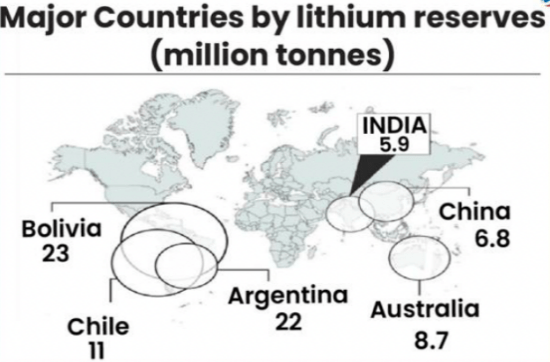
The Atomic Minerals Directorate for Exploration and Research has confirmed the existence of 1,600 tonnes of lithium resources in Mandya district.
- The discovery of lithium reserves is expected to result in:
- Decreased dependence on imports (as India currently relies heavily on China and Hong Kong)
- Enhanced self-sufficiency in energy storage solutions and progress towards a greener transition
- Growth in industrial sectors, such as the vehicle and automobile industries
About Lithium (often referred to as "white gold")
- Lithium is a soft, silvery-white alkali metal known for being toxic and having the lowest density among all metals.
- It has been classified as a critical and strategic mineral under the Mines and Mineral (Development and Regulation) (Amendment) Act 2023.
Applications of Lithium
- Batteries: Utilized in rechargeable lithium-ion batteries for mobile devices and electric vehicles, as well as in non-rechargeable batteries for heart pacemakers, clocks, and other devices.
- Alloys: Combined with aluminum and magnesium to enhance strength and reduce weight, which is beneficial for applications such as armor plating, aircraft, bicycle frames, and high-speed trains.
- Industrial Use: Employed in air conditioning systems, industrial drying processes, and glass ceramics.
Actions Undertaken
- KABIL is investigating strategic minerals in foreign regions.
- The Australia-India Critical Minerals Investment Partnership has been established.
- The Geological Survey of India (GSI) is actively exploring lithium reserves within India.
- The Ministry of Mines has joined the Mineral Security Partnership (MSP) led by the United States.
JAN POSHAN KENDRAS
- The Union Minister of Consumer Affairs, Food, and Public Distribution has initiated a pilot project aimed at transforming 60 Fair Price Shops (FPS) into Jan Poshan Kendras.
- FPSs are licensed establishments that distribute essential commodities to ration card holders under the Targeted Public Distribution System, in accordance with the Essential Commodities Act of 1955.
- About Jan Poshan Kendras:
- These centers will provide a variety of nutrition-rich food products to consumers and also serve as an additional income source for FPS dealers.
- They must allocate 50% of their inventory to nutrition-focused products, while the remaining space can be used for other household goods.
- The pilot project will take place in the states of Gujarat, Rajasthan, Telangana, and Uttar Pradesh.
MODEL SKILL LOAN SCHEME
News Context
Recently, the Government unveiled the updated Model Skill Loan Scheme.
About the Scheme
- Background: The previous Credit Guarantee Fund Scheme for Skill Development (CCFSSD) was initiated in 2015 to offer institutional loans for skill development courses that meet National Occupation Standards and Qualification Packs, leading to a certificate, diploma, or degree from recognized training institutes under the National Skill Qualification Framework.
- Objective: The scheme aims to facilitate easier access to advanced skill courses, which often present significant financial challenges for many eligible students seeking skills that are in high demand in the industry.
- Loan Amount: The maximum loan amount has been increased from ₹1.5 lakh to ₹7.5 lakh.
- Lending Institutions: Previously, only banks that were members of the Indian Banks’ Association (including private, public, and foreign banks) could issue these loans. The revised scheme now permits Non-Banking Financial Companies (NBFCs), Micro Finance Institutions (MFIs), and Small Finance Banks (SFBs) to also offer loans.
- Credit Guarantee: Loans issued will be supported by a guarantee covering up to 75% of the disbursed loan amount against defaults.
Government Initiatives
- Skill India Mission (SIM): This initiative provides skill training, re-skilling, and up-skilling through a wide network of development centers, colleges, and institutes under various programs, such as the Pradhan Mantri Kaushal Vikas Yojana (PMKVY) and Jan Shikshan Sansthan (JSS).
- JSS: Focuses on training for non-literate or neo-literate individuals and those with basic education.
- PMKVY: Offers skill training through Short-Term Training (STT) and Up-skilling and Reskilling via Recognition of Prior Learning (RPL) for youth nationwide, including in rural areas.
- Skill India Digital Hub: A platform utilizing AI/ML technology to facilitate access to training, credit, and employment.
- Skill India International Centres (SIIC): The budget for FY24 announced the establishment of 30 SIICs.
- Skill India Digital Platform: This initiative aims to create a comprehensive ecosystem for skill acquisition, education, employment, and entrepreneurship, enhancing the ease of accessing skills in India.
- National Skill Development Council (NSDC): Established in 2008 as a non-profit public limited company, it operates as a Public-Private Partnership under the Ministry of Skill Development and Entrepreneurship, in accordance with section 8 of the Companies Act, 2013.
- Skill Impact Bond: Launched by NSDC in 2021, this initiative employs a Development Impact Bond model to attract private sector investment in skill development and job placement, focusing on outcome-based financing.
- National Skill Development Mission: Initiated in 2015, this mission aims to create coordination among various sectors and states regarding skill training activities.
- Additional Initiatives: The National Education Policy (NEP) 2020 emphasizes vocational education and skill development, along with the National Apprenticeship Promotion Scheme (NAPS), among other efforts.
NEW SCHEMES FOR AGRICULTURE SECTOR
News Context
The Cabinet has approved seven significant schemes aimed at enhancing the lives and livelihoods of farmers, with a total budget of ₹14,235.30 crore.
About of the Seven New Schemes:
- Digital Agriculture Mission
- Advancements in Crop Science for Food and Nutritional Security
- Enhancement of Agricultural Education, Management, and Social Sciences
- Promotion of Sustainable Livestock Health and Production
- Sustainable Development of Horticulture
- Strengthening of Krishi Vigyan Kendras
- Management of Natural Resources
Current Situation of Farmers' Lives and Livelihoods
- According to the Economic Survey 2022-23, 65% of the population (based on 2021 data) resides in rural regions, with 47% relying on agriculture for their livelihood.
- The average monthly income of Indian farmers stood at Rs. 10,218 during the 2018-19 period.
How New Schemes Can Enhance Farmers' Lives and Livelihoods
- Utilizing Technology:
- The Digital Agriculture Mission aims to minimize potential yield losses through precision farming techniques.
- A digital land map can assist in identifying optimal land for agricultural use, enhancing land efficiency.
- Weather forecasting and climate modeling tools are designed to reduce the adverse effects of extreme weather and disasters.
- Advancements in crop science will focus on food and nutritional security by:
- Promoting the development of high-yield, disease-resistant, and climate-adaptive crop varieties using both traditional breeding and modern biotechnological methods, such as genetic modification and gene editing (e.g., CRISPR).
- Implementing biofortification strategies to combat micronutrient deficiencies, also known as hidden hunger, within communities.
- Agricultural Education and Outreach:
- Enhancing agricultural education, management, and social sciences will foster a deeper understanding of rural development concepts.
- This initiative will facilitate better policy formulation and execution aimed at enhancing rural infrastructure, credit access, market connectivity, and social services.
- Strengthening Krishi Vigyan Kendras (KVKs) will ensure farmers receive high-quality technological resources (such as seeds, planting materials, bio-agents, and livestock) and organize frontline extension services to improve their living conditions.
- Enhancing agricultural education, management, and social sciences will foster a deeper understanding of rural development concepts.
- Targeted Focus on Specific Sectors:
- Special schemes aimed at the livestock and horticulture sectors will promote sustainable productivity enhancements in these high-output areas.
- For instance, the Sustainable Livestock Health and Production initiative emphasizes dairy production and technology development, as well as animal genetic resource management.
- Special schemes aimed at the livestock and horticulture sectors will promote sustainable productivity enhancements in these high-output areas.
Structural Recommendations from the Ashok Dalwai Committee:
- Transitioning farm owners from cultivators to farm managers by outsourcing various farming operations to enhance resource efficiency and outcomes.
- Encouraging a network of professional service providers, including Original Equipment Manufacturers (OEMs), to manage cultivation services such as pest management, irrigation, and harvesting.
- Broadening the agricultural mandate beyond food and nutrition security to include the generation of raw materials for industrial sectors such as chemicals, construction, energy, fiber, and food.
- Promoting secondary agriculture, which focuses on adding value through the utilization of natural resources generated from farming, aside from the primary yield.
- Implementing a 'Fork to Farm' approach to maximize monetization opportunities by improving agro-logistics (storage and transportation), agro-processing, and marketing.
- Increasing the Variety Replacement Ratio (VRR) by phasing out older seed varieties in favor of hybrid and improved seeds to boost productivity across the country’s 128 agro-climatic zones.
- Enhancing water management through efficient irrigation practices, groundwater recharge initiatives, and crop production systems tailored to specific agro-climatic conditions.
- Advocating for sector diversification, including a shift in focus from major cereals (such as paddy and wheat) to nutrient-rich cereals, from solely food grains (cereals and pulses) to fruits, vegetables, and flowers, and from carbohydrate-centric crops to protein-rich options (including pulses and animal-based proteins like eggs, milk, meat, and fish), as well as expanding beyond field crops to incorporate horticulture, dairy, livestock, and fisheries.
NON-TARIFF MEASURES (NTMS)
- According to the WTO's 'World Tariff Profiles' Report for 2024, India ranks as the second-largest user of Non-Tariff Measures (NTMs) in 2023.
About Non-Tariff Measures (NTMs):
- NTMs are defined as policy measures that are not regular customs tariffs but can negatively impact international trade in goods by altering trade volumes, prices, or both.
- Examples include quotas, price controls, and Sanitary and Phytosanitary measures, as well as Technical Barriers to Trade.
- While many NTMs are primarily intended to safeguard public health or the environment, they also influence trade by imposing information, compliance, and procedural costs.
NATIONAL PEST SURVEILLANCE SYSTEM (NPSS)
News Context
The Union Ministry of Agriculture has introduced the AI-driven National Pest Surveillance System (NPSS) to facilitate connections between farmers and agricultural scientists for effective pest control.
About the National Pest Surveillance System (NPSS)
- Objective: The NPSS aims to decrease farmers' reliance on pesticide retailers and foster a scientific mindset towards pest management.
- Collaborating Agencies: The NPSS is a joint initiative of the Directorate of Plant Protection, Quarantine & Storage and the ICAR National Research Centre for Integrated Pest Management (ICAR-NCIPM).
- Key Features:
- Advanced Technologies: The platform employs cutting-edge technologies like Artificial Intelligence (AI) and Machine Learning (ML) to deliver timely and accurate pest management recommendations.
- Mobile Application and Web Portal: Farmers can upload photos of infested crops or pests directly to the platform.
- Expert Guidance: Agricultural scientists and experts will provide precise advice and recommend appropriate pesticides to combat the pest issues.
- The NPSS is designed to encourage responsible pesticide use and advance Integrated Pest Management practices in India.
About Integrated Pest Management (IPM)
- Integrated Pest Management is an eco-friendly strategy aimed at maintaining pest populations below levels that cause economic damage or loss. It emphasizes the use of alternative pest control methods and techniques, focusing on biopesticides and plant-origin pesticides.
Components/Methods of Integrated Pest Management (IPM)
- Cultural Control: Techniques such as crop rotation, fallowing, and adjusting planting and harvesting schedules to disrupt pest life cycles.
- Physical or Mechanical Control: Involves manual removal of pests, such as hand-picking, as well as the use of mechanical devices.
- Biological Control: Enhancing and protecting natural pest predators, including insects, parasitoids, parasitic nematodes, fungi, and bacteria, to regulate pest populations.
- Chemical Control: The application of chemical pesticides is considered a last option, employed only when other strategies have proven ineffective, to keep pest populations below economically harmful thresholds.
Concerns
- Potential for Initial Yield Decrease: This risk may deter farmers from embracing Integrated Pest Management (IPM).
- High Upfront Costs: Significant initial investment is required for new tools, technologies, and training.
- Insufficient Awareness and Education: A lack of understanding of IPM principles and their advantages can lead to resistance to change.
- Inadequate Monitoring and Data Collection: Effective IPM depends on consistent pest population monitoring and data gathering, which can be labor-intensive and costly.
- Pest Resurgence: This can occur if IPM practices are improperly applied or if pests become resistant to biological control methods.
- Impact of Weather and Environmental Conditions: These factors can influence the effectiveness of certain IPM strategies.
Steps Taken to Promote IPM in India
- IPM Policy: Since 1985, India has embraced IPM as a fundamental principle and a key component of its Crop Production Programme.
- ICAR-NCIPM: Established in 1988, this leading research institute focuses on developing and promoting IPM technologies for major crops.
- Scheme for “Strengthening & Modernization of Pest Management”: This initiative encourages the IPM approach through various Central IPM Centres (CIPMCs) across the country, focusing on pest and disease monitoring, the production and release of bio-control agents and biopesticides, conservation of bio-control agents, and human resource development in IPM.
Technological Applications for IPM
- CRISPR-based Genetic Control Strategies: These include gene drive and sex ratio distortion techniques.
- Variable Rate Technology (VRT): This system adjusts pesticide application rates based on real-time data.
- Sensor-based Traps: These traps utilize pheromones or other attractants to lure specific insect species, employing infrared (IR) sensors to detect them.
- Geographic Information System (GIS): GIS technologies provide detailed spatial maps showing the distribution and intensity of pest infestations.
- Drones with Specialized Sensors: Equipped with multispectral and thermal cameras, drones can identify areas of insect infestation.
NITI AAYOG’S REPORT ON SEAWEED VALUE CHAIN
- NITI Aayog has released a report titled “Strategy for the Development of the Seaweed Value Chain.”
- Seaweeds, which include various types of marine plants and macroalgae, flourish in rivers, lakes, and other aquatic environments.
- The farming of seaweeds falls under aquaculture, which, along with fishing, contributes 1.5% to India’s GDP.
Importance of Seaweed Farming
- Economic: Seaweeds are significant sources of bioactive compounds, with applications in food and pharmaceuticals.
- Environmental: They play a crucial role in carbon sequestration and enhancing climate resilience.
- Nutritional Value: Seaweeds provide essential minerals and vitamins such as A, B1, and B12.
Challenges in Seaweed Farming
- Absence of a comprehensive policy framework.
- Limited access to quality seeds.
- Ecological issues, including the impact of non-native species on biodiversity and coral reefs.
Recommendations for Enhancing Seaweed Farming
- Regulatory and Governance Reforms: Establish a National Steering Committee and prioritize sector lending (PSL) for seaweed initiatives.
- Social Security and Financial Assistance: Implement crop insurance and organize farmers through Self-Help Groups (SHGs).
- Infrastructure and Institutions: Create seed banks, processing facilities, and marketing centers.
Actions Taken by India
- The PM Matsya Sampada Yojana aims for a production target of 1 million tons of seaweed annually by 2025.
- An expert committee led by Dr. V K Saraswat from NITI Aayog is reviewing a draft policy for the seaweed value chain's development.
- Offshore seaweed cultivation has commenced in the Andaman region by NIOT-ACOSTI.
- A GIS-based portal has been developed to display mapped seaweed cultivation sites.
OPEN MARKET SALE SCHEME (OMSS) (DOMESTIC)
- Starting August 1, 2024, states will have the option to buy rice from the Food Corporation of India (FCI) through the Open Market Sale Scheme (OMSS) Domestic without needing to take part in the e-auction process.
- This initiative is intended to help reduce the significant surplus of stocks before the new procurement season begins.
OMSS – Domestic
- This scheme involves selling food grains (wheat and rice) in the open market at prices determined by the Ministry of Consumer Affairs, Food, and Public Distribution via e-auction.
- Its objective is to regulate market prices and help mitigate inflation.
PRADHAN MANTRI MUDRA YOJANA
News Context
NITI Aayog and KPMG have released a report assessing the impact of the Pradhan Mantri Mudra Yojana (PMMY).
About of PM Mudra Yojana (PMMY)
- Launched in 2015 during the Union Budget for FY-2016, the PMMY is a key initiative by the Government of India aimed at providing affordable credit to Micro and Small Enterprises (MSMEs).
- Objective: To integrate MSMEs into the formal financial system and provide them with accessible credit.
Key Achievements Noted in the Report
- Credit Support to MSMEs: Since its inception in 2015, the scheme has engaged approximately 35 crore accounts of Micro and Small Entrepreneurs, disbursing about ₹18.39 lakh crore in credit. The average loan size has consistently increased across most banks.
- Financial Inclusion:
- Women entrepreneurs constitute a significant portion of PMMY beneficiaries, accounting for around 71.4% of total accounts (FY 2022).
- The amount sanctioned to new entrepreneurs rose from INR 61,650 crore to INR 72,685 crore.
- Support for Small Businesses: Approximately 80% of loan accounts fall under the Shishu category (FY 2021), with Kishore loans at 18.70%. The distribution of Shishu accounts is notably high among SC, ST, and OBC groups, with percentages of 83.92%, 83.53%, and 78.68% respectively for FY 2022.
- Performance in Aspirational Districts: There has been a year-on-year increase of 12% in loan accounts and 14.7% in the amount sanctioned to these districts under PMMY.
Other Issues
Implementation Challenges
- Staffing Limitations: There are not enough employees and staff to manage operations.
- Lack of Borrower Knowledge: Many borrowers are unfamiliar with essential documentation, processes, and credit discipline.
- Connectivity Issues: Remote areas suffer from inadequate connectivity.
Additional Concerns
- Insufficient Monitoring and Evaluation: There is a lack of effective mechanisms for target setting and performance monitoring for micro-entrepreneurs.
- Control Mechanisms: Adequate supervisory controls are needed.
Barriers to Accessing MUDRA Loans
- Long Processing Times: The duration for loan application processing is lengthy.
- High Fees and Interest Rates: Borrowers face significant processing fees and interest rates.
- Credit History Issues: Many borrowers lack credit histories and are burdened with existing debts.
- Collateral Challenges: Difficulties arise in providing guarantees or securing adequate collateral.
Success Stories, Best Practices, and Case Studies
- The Central Bank of India, IDBI, ICICI, Yes Bank, and others have integrated the MUDRA scheme with the "Loans in 59 Minutes" initiative, allowing individuals to apply for credit through their online platforms.
- UCO Bank hosts a "MUDRA Day" each month to enhance awareness and accessibility, featuring campaigns and personal outreach efforts.
- Bandhan and IndusInd Bank have implemented a group-based lending system that educates individuals about the scheme, resulting in a substantial reduction in non-performing assets (NPA).
RBI REVISED NPAS PROVISION NORMS FOR CO-OPERATIVE BANKS
- Need for New Norms: The necessity for new regulations has arisen because some banks were failing to recognize necessary provisions for Non-Performing Assets (NPAs) as expenses.
- These new regulations, which apply to urban, state, and central co-operative banks, aim to standardize the treatment of the Bad & Doubtful Debt Reserve (BDDR).
- Many co-operative banks established BDDR to ensure financial stability by managing bad loans.
New Regulations:
- All provisions related to BDDR or other categories under the Income Recognition, Asset Classification, and Provisioning (IRACP) norms must be recorded as expenses in the Profit and Loss Account.
- After fulfilling all provisions as mandated by IRACP norms and other regulations, co-operative banks may allocate net profits to the BDDR.
Co-operative Banks:
- These banks operate on the principle of cooperation and are owned and run by their members.
- They can be categorized into rural and urban co-operative banks.
Challenges Facing Co-operative Banks:
- Regional Disparity: Approximately 82% of total Urban Co-operative Banks (UCBs) and around 90% of all UCB branches are concentrated in the western and southern regions of the country (as of 2020).
- Dual Regulation: While managerial and administrative functions are overseen by state governments, banking operations are regulated and supervised by the RBI and NABARD.
- Additional Issues: There are limited options for raising capital and high gross NPAs.
Reform Measures for Co-operative Banks:
- The Banking Regulation (Amendment) Act of 2020 has placed management and governance under the jurisdiction of the RBI.
- An Umbrella Organization for Urban Co-operative Banks has been established, known as the National Federation of Urban Co-operative Banks and Credit Societies Ltd.
TRANSIT ORIENTED DEVELOPMENT
News Context
The Union Budget for 2024-25 revealed plans for the Union Government to create a transit-oriented development (TOD) strategy for 14 major cities with populations exceeding 3 million, including implementation and financial plans.
Transit-Oriented Development (TOD)
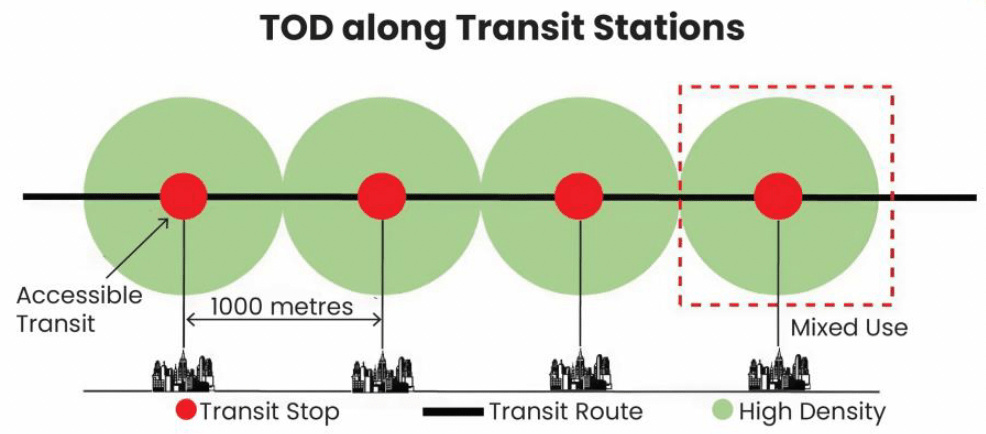
- Concept: TOD combines land use and transportation planning to foster sustainable urban growth centers that are walkable and livable, featuring high-density mixed-use development.
- It encourages urban growth that is compact and diverse, prioritizing pedestrian and bicycle access, and closely linking with mass transit by clustering jobs, housing, services, and amenities around public transport stations.
- Transit Stations: TOD emphasizes development around transit stations (such as metro and BRTS stations) within a walkable distance (500-800 meters) or along corridors where station spacing is about 1 kilometer.
- It promotes pedestrian access to various facilities like shopping, entertainment, and workplaces.
Components of TOD
- Influence Zone: This area near the transit station features high-density, compact development with mixed land use to meet the basic needs of residents.
- A higher population density in this area boosts public transport ridership, leading to increased fare revenue and reductions in pollution and congestion.
- Mandatory and Inclusive Housing: Housing within the influence zone should cater to a mix of economic groups and social sections.
- Multimodal Integration: The influence area must provide a high-quality, integrated multimodal transport system.
- The transit system should prioritize facilities for pedestrians, followed by provisions for bicycles, feeder buses, drop-off areas, and park-and-ride facilities.
- Vibrant Public Spaces: There should be designated areas for street vendors, preservation of open spaces, playgrounds, and parks, with an emphasis on natural surveillance through street lighting and active storefronts.
Government Initiatives for Transit Oriented Development (TOD)
- National Transit Oriented Development Policy: This policy has three main objectives:
- Facilitate the transition of cities from reliance on private vehicles to a focus on public transport-oriented development.
- Encourage public transport use by enhancing accessibility and promoting eco-friendly mobility options.
- Foster the creation of livable and affordable communities that are compact and walkable.
- Metro Rail Policy 2017: This policy emphasizes last-mile connectivity through the development of pedestrian pathways, infrastructure for non-motorized transport, and facilities for para-transit nodes.
- Smart Cities Mission: Within this initiative, Transit Oriented Development, public transport, and last-mile para-transport connectivity are integral features of smart city planning.
- Urban Infrastructure Development Fund (UIDF): Created from priority sector lending shortfalls, this fund is intended for public agencies to develop urban infrastructure, including TOD, in Tier 2 and Tier 3 cities.
- Pradhan Mantri Awas Yojana: This program aims to provide affordable housing, promoting sustainable and inclusive growth in urban regions.
- Multimodal Transport Development: India is improving multimodal transport connectivity in urban settings through the implementation of bicycle lanes, pedestrian paths, and metro rail systems.
- Local Initiatives: Several states and cities, such as Delhi and Madhya Pradesh, have begun developing their own TOD policies, some of which are still in the draft phase.
Eight Principles of Inclusive and Resilient TOD
- Align human and economic densities with mass transit capacity and network features to enhance accessibility.
- Create compact regions that facilitate short commutes.
- Ensure the resilience of areas linked by mass transit systems.
- Plan and zone for mixed-income neighborhoods along transit corridors.
- Develop vibrant, people-focused public spaces surrounding transit stations.
- Foster neighborhoods that promote walking and biking.
- Establish high-quality, accessible, and integrated public transit systems.
- Manage demand for private vehicle use effectively.
TANTALUM
The Central Government has classified Tantalum as a Critical and Strategic Mineral in accordance with the Mines and Minerals (Development and Regulation) Act of 1957.
Overview of Tantalum
- Tantalum is a rare metal, identified by the atomic number 73.
- It has a grey color, is heavy, very durable, and resistant to corrosion.
- Key Features:
- In its pure form, tantalum is ductile, allowing it to be stretched into thin wires.
- It possesses an exceptionally high melting point.
- Applications: Tantalum is used in the production of capacitors for electronic devices, surgical instruments and implants, components for chemical and nuclear power plants, as well as in aircraft and missile technology.
UN GLOBAL TAX TREATY
- The UN’s Ad Hoc Committee tasked with drafting the Terms of Reference for a United Nations Framework Convention on International Tax Cooperation has endorsed a set of guidelines for the UN Global Tax Convention.
- The goal is to create a UN Global Tax Treaty that fosters a legitimate, fair, stable, inclusive, and effective international tax system.
- Developing nations, including India, predominantly supported the treaty's terms, while industrialized countries like Australia, Israel, Japan, the UK, and the USA opposed it.
Objectives of the UN Global Tax Convention:
- To enhance international tax cooperation and ensure its inclusivity and effectiveness.
- To tackle current tax-related issues, particularly those arising from digitalization and the global operations of large multinational corporations (MNCs).
- To mobilize domestic resources and leverage tax policy for sustainable development.
- To expedite the implementation of the Addis Ababa Action Agenda on Financing for Development and the 2030 Agenda for Sustainable Development Goals (SDGs).
Commitments of the UN Global Tax Convention:
- To ensure a fair distribution of taxing rights, including equitable taxation of MNCs.
- To combat illicit financial flows, tax evasion, and tax avoidance by wealthy individuals.
- To address taxation on income generated from cross-border services.
- To promote effective mutual administrative support in tax matters and the resolution of tax disputes.
Other Global Initiative:
- The OECD Global Minimum Tax, based on the Global Anti-Base Erosion Model Rules, requires MNCs to pay a minimum tax rate in every jurisdiction where they operate, thereby diminishing incentives for profit shifting.
- It sets a minimum effective tax rate of 15% on corporate profits.
WORLD TRADE STATISTICAL REVIEW (WTSR) 2023
- The World Trade Organization (WTO) presents its premier statistical report.
- The WTSR 2023 examines recent trends in international trade, showcasing essential statistics on global merchandise and commercial services trade.
- Notable points include:
- India maintained its 8th place in global agricultural exports in 2023.
- India ranked 18th in merchandise exports and 7th in service exports.
- In 2022, China, the USA, and Germany were the leading merchandise exporters.
WHITE CATEGORY SECTORS
- Industries classified under the white category will no longer need to obtain prior approval from state pollution control boards to set up and operate according to the Air Act of 1981 and the Water Act of 1974.
- The approvals, referred to as 'consent to establish' (CTE) and 'consent to operate' (CTO), are designed to manage industries that release waste or pollutants into the environment.
- White category industries are required to notify the state pollution control boards through self-declaration.
White Category Industries
- The Central Pollution Control Board designates industries as 'white category' if they are virtually non-polluting.
- This category includes projects such as wind and solar energy, the assembly of air coolers, and bicycle assembly, among others.
QCI SURAJYA RECOGNITION & RANKING FRAMEWORK
- The Quality Council of India (QCI) has introduced the QCI Surajya Recognition & Ranking Framework.
About the Framework:
- Its goal is to acknowledge and reward states and organizations that demonstrate excellence in quality and innovation, contributing to the vision of a Developed (Viksit) India.
- It is structured around four main pillars:
- Shiksha (Education)
- Swasthya (Health)
- Samriddhi (Prosperity)
- Sushasan (Governance)
About QCI:
- Established in 1996, QCI serves as the national accreditation body and operates as an autonomous non-profit organization under the Societies Registration Act of 1860.
- This initiative was based on recommendations from the Expert Mission of the European Union.
- It was founded collaboratively by the Government of India and Indian industry groups (ASSOCHAM, FICCI, CII).
Nodal Department:
- The Department for Promotion of Industry and Internal Trade (DPIIT) within the Ministry of Commerce and Industry oversees QCI.
Governing Council:
- Comprises 39 members, including the Chairperson and Secretary General, with balanced representation from the Government, Industry, and other stakeholders.
- The Chairperson is appointed by the Prime Minister.
Role of QCI:
- Serves as the National Accreditation Body (NAB) aimed at enhancing quality through a National Quality Campaign aligned with global standards.
- Develops mechanisms for third-party evaluations of products, services, and processes.
- Aims to enhance the quality of life and well-being for citizens in India.
Achievements:
- Healthcare: Collaborated with ICMR to increase COVID-19 testing labs, implemented the ABPMJAY quality certification program with NHA, and initiated the Kayakalp certification.
- Sanitation: Certified Urban Local Bodies (ULBs) as ODF, ODF+, and ODF++.
- Education: Launched eQuest, an E-Quality Platform focused on Employability through Skill and Training.
- Agriculture: Established standards and schemes for Good Agriculture Practices (GAP) in SAARC countries through a project with FAO.